








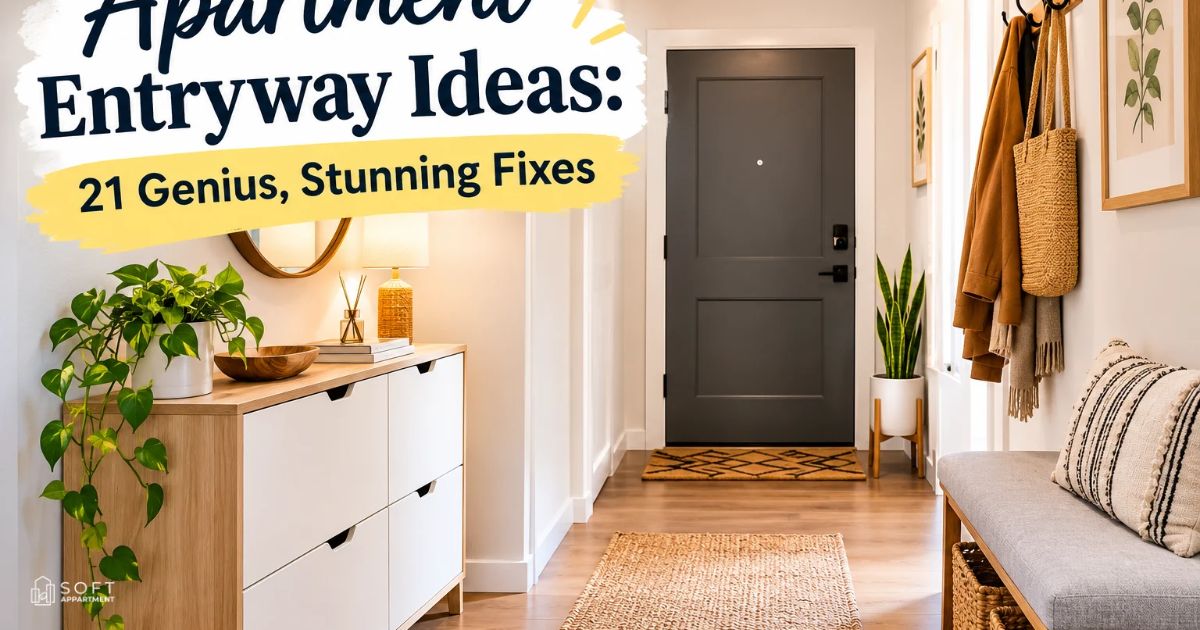
Apartment entryway ideas can fix the daily chaos at your door. You walk in. You drop your keys somewhere. Your shoes land in a pile. Sound familiar? Most city homes skip the foyer. Many skip the closet too. Clutter grows fast without a proper home. That’s why an entryway with no closet feels messy so fast.
The good news is simple. You don’t need a renovation or a big budget. This guide shares 21 genius fixes for studios, one-bedrooms, and rentals. You’ll learn about wall hooks, a storage bench, a clever drop zone, and renter-friendly upgrades. Ready to build a welcoming entrance you’ll love coming home to? Let’s dive in.
How Do You Create an Entryway in an Apartment With No Foyer or Closet?
Start with the floor, the wall, and one piece of furniture. A no foyer entryway needs clear edges. Think of it like a stage. Once the stage is set, everything has a place to land.
Use these apartment entryway ideas as building blocks. Pick one for the floor, one for the wall, and one for storage. That simple trio helps you define the entry zone. It also keeps your entryway layout tidy and easy to use.
1. Anchor Your Apartment Entry With a Bold Rug
A rug marks the landing spot the moment you step inside. Choose a 2×3 foot mat or a 2×6 foot runner. Pick a low pile so the door swings freely. Washable rugs handle slush and road salt well. A bold pattern adds instant entryway decor. It also creates a drop zone for shoes.
2. Define the Zone With a Slim Console Table
A console table gives you a shelf at hand height. Look for one under 12 inches deep and about 30 to 32 inches tall. A narrow console table won’t block your walkway. Slide two baskets underneath for hidden storage. Now your keys, mail, and sunglasses have a home.
3. Use a Mirror to Make It Feel Bigger
A mirror doubles the light and the sense of space. Hang it at eye level, about 57 to 60 inches from the floor to its center. Place it across from a window or lamp if you can. It makes a narrow entryway feel wider. It also gives you a welcoming entrance and a quick last-look check.
What Is the Best Entryway Storage Without a Closet?
The best entryway storage works with your walls first. Floor space is tight in small homes. Walls are usually free. Go up instead of out. This is the easiest way to organize without a closet.
Mix a few types of storage for the best result. Combine hooks, a bench, and a shelf. Each one handles a different item. Together they maximize vertical space and keep the floor clear for walking. For more ideas like these, browse our small space living guides.
4. Install Wall Hooks or a Board and Batten Panel
Heavy coats need strong wall hooks. A row of hooks works like a mini coat rack without the bulky base. Board and batten panels add a custom look and hold the screws firmly. Use the heights below as a starting guide. Adjust them for your own family.
| Item | Typical Hook Height |
|---|---|
| Adult coats | 60 to 66 inches |
| Everyday bags | 48 to 54 inches |
| Kids’ jackets | 40 to 48 inches |
| Hats and scarves | 66 to 72 inches |
5. Add a Slim Storage Bench With Hidden Shoe Storage
A storage bench does three jobs at once. You sit on it. You store things inside it. It also hides clutter from view. Pick one with cubbies or a lift-up lid for shoe storage. This is smart space-saving furniture for any small apartment entry. Keep one pair per person on display.
6. Hang an Over-the-Door Shoe Organizer
This is the cheapest fix on the list. Hang it on the back of your front door. No drilling is needed. Clear pockets hold shoes, gloves, scarves, and dog leashes. It’s a quick win for entryway organization. Choose a fabric style if you want a softer look.
How Can You Get a Mudroom Feel Without a Mudroom?
A mudroom is really just a system. It catches wet, dirty, and bulky things before they spread. You can copy that system in a tiny space. In snowy states, this matters even more. Salt stains ruin floors fast.
Focus on three jobs: hang, drip, and sort. Coats hang on a rail. Boots drip on a tray. Small items sort into baskets. That setup gives you a functional entryway that handles real weather. It works in Chicago winters and rainy Seattle springs alike.
7. Mount a Peg Rail at Coat Height
A Shaker-style peg rail looks custom and holds a lot of weight. Mount it into studs when you can. Space the pegs about 6 to 8 inches apart. It feels like a classic mudroom wall. Paint it the same color as the wall for a calm, built-in look.
8. Add a Boot Tray for Wet Shoes
Wet boots are the number one floor killer. A boot tray with a raised lip stops puddles from spreading. Add a layer of smooth river stones so water drains away from the soles. Wipe the tray weekly. Place it beside your shoe storage so everything stays together.
9. Hang a Small Basket for Umbrellas and Reusable Bags
A wall-mounted basket frees up the floor. Use it for umbrellas, tote bags, or dog-walk supplies. Choose metal or woven styles that match your entryway decor. Hang it near the door so you grab it on the way out. Small habits like this help you declutter your entry.
How Do You Create a Drop Zone in a Small Space?
A drop zone is the spot where your daily items land. It can be a tray, a hook, or a basket. The goal is simple. Every item gets one home. Then you stop hunting for your keys at 8 a.m.
Keep the zone small and clear. Too many items create new clutter. Choose the five things you carry daily. Those are your keys, wallet, phone, earbuds, and mask or sunglasses. Everything else lives somewhere else.
10. Use a Key Tray and Catch-All Bowl
A small tray holds your keys, sunglasses, and transit card. A bowl catches loose change and earbuds. Place both on your console table or a floating shelf. Pick materials like ceramic or brass for a classy look. This tiny step makes your entryway organization feel effortless.
11. Pack a Drop Zone Basket for Tomorrow’s Items
Think of this basket as a launch pad. Put tomorrow’s gym bag, mail, and returns inside it tonight. In the morning you grab it and go. It takes about 30 seconds each evening. Choose a lidded basket so the pile stays out of sight.
12. Build a Mini Mudroom Next to the Kitchen Door
Many apartments open straight into the kitchen. Don’t fight it. Use the wall beside the fridge for hooks and a slim shelf. A magnetic hook can even attach to the fridge side. It’s one of the best small space solutions for tight layouts. Short on cabinets too? Try our kitchen without pantry storage ideas to free up more room.
What Are the Best Renter-Friendly Entryway Ideas?
Renters need ideas that leave no trace. Landlords often ban drilling and painting. That doesn’t mean your entry must stay boring. Many renter-friendly products stick, lean, or plug in. They come off clean when you move.
These renter-friendly apartment entryway ideas also save your deposit. Test every adhesive on a hidden spot first. Read the weight rating on the package. Then enjoy a stylish space with zero damage. That’s renter-friendly decor done right. You can find more in our rental friendly upgrades section.
13. Use Adhesive Hooks for Bags and Hats
Adhesive hooks stick to smooth, clean walls. Wipe the surface with rubbing alcohol before you press. Hold each hook for the time listed on the package. Wait an hour before you hang anything. Always check the weight limit. For example, the 3M Command 15 lb X-Large Hook holds up to 15 pounds on painted walls. Smaller hooks suit light bags, hats, and keys.
14. Lean a Full-Length Mirror Against the Wall
A leaning mirror needs no tools. It adds height and light at once. It also gives you a full outfit check before you leave. Pick a wide, sturdy frame so it can’t tip over. Add a small rug or a basket at its base to define the entry zone.
15. Add Plug-In Sconces and Removable Wall Solutions
Plug-in sconces give you wall light without an electrician. Use a cord cover painted to match your wall. Peel-and-stick wallpaper adds color and pattern too. Both options are easy to remove. They make your entryway decor feel custom even in a short-term lease.
How Do You Define an Entryway in a Living Room or Open Layout?
Open layouts blur the line between the door and the sofa. Studio dwellers know this problem well. The fix is visual. You create a border with furniture, a rug, or both. Your eyes then read the area as an entry.
Here’s a quick example. Picture a 450-square-foot studio. The owner placed a round table and a rug right inside the door. Now guests have a clear place to set bags. This kind of entryway layout turns a pass-through into a real zone.
Quick tip: If you can see your bed from the door, add a divider before anything else.
16. Place a Round Entry Table as a Focal Point
A round table has soft edges. That makes it safer in a tight walkway. It also draws the eye and gives your entry a center. Top it with a lamp, a bowl, and a small plant. Round pieces suit apartment living because people move around them easily.
17. Swap the Console for a Bench
If the wall is short, choose an entryway bench over a console. It gives you a seat for tying shoes. Add baskets underneath for hidden storage. A bench also reads as furniture, not clutter. It’s perfect for a no foyer entryway in a studio.
18. Use a Rug and Furniture to Create Separation
Float a narrow bookcase or the back of a sofa near the door. This forms a soft wall without any construction. Pair it with a rug to mark the floor. Together they define the entry zone clearly. Keep the bookcase open so light still flows through.
How Do You Make a Narrow Entryway Look Bigger and Brighter?
Light and reflection are your best tools here. A narrow entryway often feels like a dark hallway. Fix the light first. Then fix the color. Small changes can add visual width fast.
Keep the palette simple. Soft whites, warm creams, and pale greens open a space. Avoid heavy dark furniture in tight corridors. Choose slim, leggy pieces instead. They let the floor show and make the room feel larger.
Add Reflective Finishes and Light Neutral Paint
Satin or eggshell paint bounces more light than flat paint. Glossy trim adds a subtle shine. Brass, glass, and mirrored accents help too. A light, neutral color keeps the walls from closing in. Renters can use removable wallpaper in a pale shade instead of paint.
Choose Warm Statement Lighting
Warm light makes a welcoming entrance. Use 2700K bulbs for a cozy glow. A slim flush mount fits low ceilings. A plug-in pendant works when you can’t change the wiring. Good lighting is the cheapest way to make entryway decor look expensive.
Install Floating Shelves for Vertical Storage
Floating shelves draw the eye upward. They also keep the floor clear. Place one at about 48 to 54 inches for keys and mail. Add a second above for baskets or books. This helps you maximize vertical space in a tight hall. Keep the styling light so it doesn’t crowd the wall.
Which Entryway Styles Work Best for Apartments?
Your style should match the rest of your home. Pick one look and repeat its colors and materials. That makes a small area feel planned. These apartment entryway ideas work in any of four popular styles. Choose the mood that fits you best.
Each style below can be stylish and functional. You don’t need a big budget. A few key pieces set the tone. Add texture through baskets, rugs, and wood tones. Then edit the rest down to the essentials.
Scandinavian
Scandinavian style loves light wood, white walls, and clean lines. Use simple black or brass hooks. Add a sheepskin on the bench for warmth. It keeps the look airy and calm. This style is perfect for a narrow entryway with limited natural light.
Japandi
Japandi blends Japanese calm with Nordic comfort. Think warm oak, linen, and quiet textures. Keep surfaces clear and choose one handmade piece. A paper lantern or ceramic vase works well. The mood is peaceful. It helps you declutter your entry without effort.
Bohemian
Bohemian style is about layers. Stack a vintage rug over a flat one. Add woven baskets, macramé, and a leafy plant. Mix wood tones for warmth. The look feels collected and personal. Use baskets as entryway organization so the layers still stay neat.
Contemporary and Luxury
This style relies on crisp lines and rich finishes. Fluted wood, marble-look trays, and matte black hardware set the tone. Choose a sleek console table with a metal frame. Use a large mirror with a slim edge. Keep everything tidy for a polished, hotel-lobby feel.
How Do You Make a Small Entryway Feel Personal and Welcoming?
Function matters, but feeling matters too. Your entry is the first thing you see after a long day. Make it a happy sight. A few personal touches turn a utility zone into a welcoming entrance. These details don’t take much space.
Pick items that speak to your senses. Add something living, something fragrant, and something meaningful. That trio makes any of these small entryway ideas feel warm. Guests will notice it too. Your home starts to feel like you the second the door closes.
19. Add One Plant in the Corner
One plant adds life and color. Choose a low-light type like a snake plant or a ZZ plant. Both forgive missed waterings. Set it on the floor in a corner or on a stool. Own a cat or dog? The ASPCA lists the snake plant as toxic to pets, so check before you buy. It’s fresh entryway decor with almost no effort.
20. Place a Candle or Diffuser for a Signature Scent
Scent is strongly tied to memory. A candle or reed diffuser gives your home a signature smell. Choose soft notes like cedar, vanilla, or linen. Place it on your console table away from the door’s draft. Never leave a flame unattended. A diffuser is the safer pick for tight spaces.
21. Keep a Decorative Bowl for Beautiful Junk
Every home has small clutter. A pretty bowl turns that clutter into a feature. Use it for loose change, pins, or spare keys. Pair it with a small framed print on the wall. This adds personality to your entryway decor. It also keeps the console top neat.
Final Thoughts
You don’t need a foyer to have a great entry. These apartment entryway ideas prove that clever choices beat square footage. Start with the three biggest wins: wall hooks, a storage bench, and a drop zone tray. Those alone change your daily routine.
Then add your style one layer at a time. Take your time and test what works for you. Small upgrades add up quickly. Setting up a new place? Check our apartment needs list for the rest of your essentials. Use the table below to pick your first project by cost, time, and lease rules.
| Idea | Typical Cost | Renter-Friendly | Time to Install |
|---|---|---|---|
| Bold rug | $20 to $80 | Yes | 5 minutes |
| Leaning mirror | $40 to $150 | Yes | 10 minutes |
| Adhesive hooks | $8 to $20 | Yes | 15 minutes |
| Over-door shoe organizer | $10 to $25 | Yes | 5 minutes |
| Console table | $60 to $250 | Yes | 30 minutes |
| Peg rail | $25 to $70 | Check lease | 45 minutes |
| Plug-in sconce | $25 to $80 | Yes | 15 minutes |
Prices are rough estimates and vary by store and brand.
Apartment Entryway FAQ
Here are quick answers to the questions readers ask most. Each one is short and easy to use. These apartment entryway ideas work for studios, lofts, and shared homes alike. If you still have questions, leave a comment and share your own entry setup.
How do you make a small entryway feel welcoming?
Add warm lighting, a bold rug, and one plant. Hang a mirror to bounce light around. A scented candle or diffuser also helps. Keep surfaces clear so the space feels calm. These steps create a welcoming entrance without taking much room.
How do I organize my entryway without a closet?
Use your walls first. Hang wall hooks for coats and a peg rail for bags. Add a storage bench for shoes. Place a tray on a console table for keys. This approach lets you organize without a closet easily.
What storage works in a tiny apartment entryway?
Slim and vertical pieces work best. Try floating shelves, an over-the-door shoe organizer, and a bench with hidden storage. Choose space-saving furniture under 12 inches deep. These small space solutions keep floors clear and your entryway storage neat.
What are rental-friendly entryway ideas?
Choose items that don’t need drilling. Adhesive hooks, a leaning mirror, plug-in sconces, and peel-and-stick wallpaper all work well. Rugs and baskets add style too. These renter-friendly picks come off clean when you move out.
How do I create a drop zone in a small space?
Pick one spot near the door. Add a tray for keys and a basket for tomorrow’s items. Place a hook for your daily bag. Keep it small so it stays tidy. A good drop zone takes only a few inches.