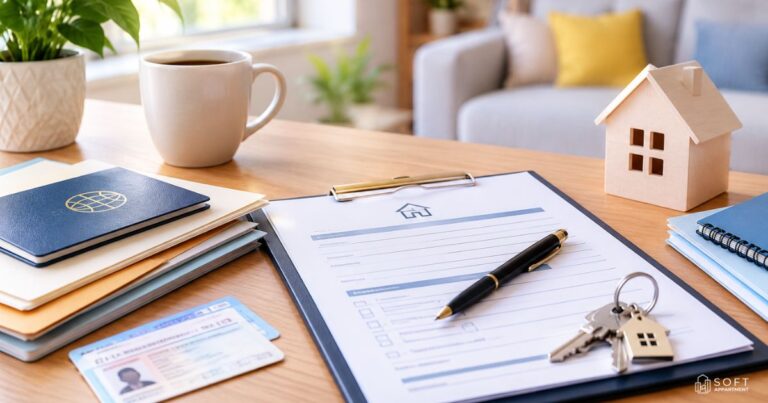






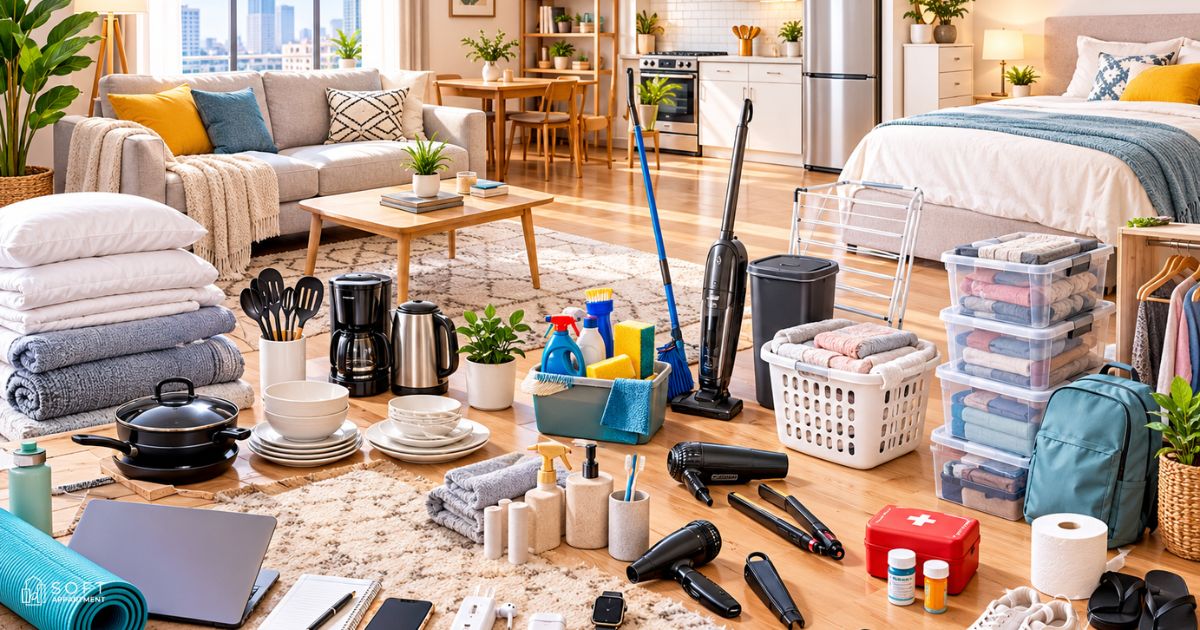
Picture your first night in a new place. The boxes tower over you. You’re hungry. Then you spot the problem. There’s no toilet paper and no shower curtain. There isn’t even a fork. Don’t let that happen. This apartment needs list gives you 75 must-haves, sorted room by room. It works as a simple apartment setup guide for US renters. You’ll also get prices, savings tips, and mistakes to skip.
Apartment Needs List: What Do You Really Need?
A solid apartment checklist saves you time and money. Without one, you make panic runs to the store and buy things twice. This guide is a room-by-room checklist, so you can shop one space at a time. It covers the first apartment essentials and answers the big question: what do I need for a new apartment?
Not everything is urgent, so we sort items into three tiers. Day-One items cover sleep, hygiene, and basic food. Week-One items make daily life smoother. Month-One items add comfort and style. This tier system turns a long new apartment checklist into a calm, step-by-step plan.
Must-Have vs Nice-to-Have Items
A must-have solves a daily problem. A nice-to-have only improves the look. A shower curtain is a must-have because you can’t shower without one. A throw pillow is a nice-to-have. Apply this rule to every one of the first apartment must-haves, and your apartment shopping list will stay short and smart.
Day-One, Week-One and Month-One Priority List
Buy Day-One items before you sleep in the new place. Pick up Week-One items within your first seven days. Save Month-One items for later, once you know how you use the space. This simple order keeps your budget safe. It also helps with moving into a new apartment without feeling overwhelmed.
| Tier | When to Buy | Examples |
|---|---|---|
| Day-One | Before your first night | Bedding, toilet paper, shower curtain, trash bags, light bulbs |
| Week-One | Within seven days | Cookware, dishes, towels, cleaning supplies, laundry basics |
| Month-One | Within thirty days | Rug, decor, extra storage, side table, plants |
Smart Shopping Tips for Your First Apartment on a Budget
Before you spend a dollar, measure every room. Then check what your landlord already provides. Many US rentals include a fridge and a stove. Some include a dishwasher. Ask about laundry access too. This one step stops you from buying things that don’t fit. It’s the smartest move on any apartment needs list.
Next, hunt for deals. First apartment on a budget shopping works best when you mix stores and timing. Try Target Circle, IKEA Family, Facebook Marketplace, and Goodwill. Big sales land around Labor Day and Black Friday. Also ask your leasing office about move-in specials. As Alan Lakein said, “Failing to plan is planning to fail.”
Create a Budget and Compare Prices
Most first-timers spend between $1,500 and $5,000 to set up. Put about half toward must-haves, thirty percent toward comfort, and the rest toward extras. Here’s a sample case. Jordan, a new renter in Denver, set a $2,400 limit. He tracked every purchase in a phone note. He finished $180 under budget because he compared prices before buying. That habit works for cheap apartment essentials too.
| Room | Rough Budget Range (USD) |
|---|---|
| Kitchen and dining | $200 to $550 |
| Bedroom | $350 to $1,000 |
| Living room | $350 to $1,300 |
| Bathroom | $70 to $170 |
| Laundry and cleaning | $90 to $250 |
| Storage, safety, and decor | $150 to $400 |
Buy Used Furniture, Buy New Essentials
Buy used apartment furniture like couches, tables, and shelves. These pieces last for years and cost far less secondhand. However, buy mattresses, pillows, and cookware new. Used versions can carry bugs, germs, or worn coatings. This split gives you the best of both worlds. You save money without risking your health.
Split Costs with Roommates
If you share your place, split the big items. One couch, one TV, and one set of cleaning supplies are enough for everyone. Agree on who owns what before you buy. Write it down, because moving out later gets messy without a record. Sharing can cut your household items list costs by a third or more.
Kitchen and Dining Essentials
Takeout every night is a sneaky budget killer. A few smart purchases fix that fast. Good kitchen essentials let you cook simple meals at home. You don’t need a wall of gadgets. A small apartment starter kit covers about ninety percent of everyday cooking. For a deeper look at every pot and pan, read our guide to first apartment kitchen essentials.
Start with sturdy basics and skip the giant sets. Fewer, better pieces beat a twelve-piece block of dull knives. These sixteen items are essential household items for any kitchen. They’re also the things to buy when moving into an apartment that you’ll use every single day.
Cookware, Utensils and Small Appliances
Eight core items handle most recipes. A nonstick skillet cooks eggs and stir-fry. Two pots handle pasta, soup, and rice. A baking sheet roasts vegetables. A sharp chef’s knife and a cutting board make prep safe. Finish with a utensil set and a coffee maker or kettle.
| # | Item | Why You Need It | Typical Price |
|---|---|---|---|
| 1 | Nonstick skillet | Eggs, stir-fry, pancakes | $20 to $40 |
| 2 | Saucepan with lid | Rice, sauces, oatmeal | $20 to $40 |
| 3 | Stockpot | Pasta and soup | $25 to $50 |
| 4 | Baking sheet | Roasting and cookies | $10 to $20 |
| 5 | Chef’s knife | Safe, fast chopping | $20 to $50 |
| 6 | Cutting board | Protects counters | $10 to $25 |
| 7 | Utensil set | Stirring, flipping, serving | $15 to $30 |
| 8 | Coffee maker or kettle | Morning drinks | $20 to $60 |
Dinnerware, Glassware and Food Storage
The next eight items cover eating, drinking, and storing food. Pick plain plates and bowls for four people. Add silverware, glasses, and mugs. Food storage containers keep leftovers fresh. A can opener and peeler handle daily prep. Mixing bowls with a colander and a dish rack finish the set.
| # | Item | Why You Need It | Typical Price |
|---|---|---|---|
| 9 | Plates and bowls | Daily meals | $20 to $50 |
| 10 | Silverware set | Eating and serving | $15 to $30 |
| 11 | Drinking glasses | Water and juice | $10 to $25 |
| 12 | Mugs | Coffee and tea | $10 to $20 |
| 13 | Food storage containers | Leftovers and meal prep | $15 to $25 |
| 14 | Can opener and peeler | Everyday prep | $10 to $20 |
| 15 | Mixing bowls with colander | Salads, pasta, batter | $15 to $30 |
| 16 | Dish rack | Drying dishes | $12 to $25 |
Bedroom and Bedding Essentials
Good sleep comes first, so start with the bed. Bedroom essentials shape how you feel every morning. A bad mattress can wreck your mood and your back. Spend a bit more here than anywhere else. It’s the one place where cheap choices cost you later. For style ideas, browse our bedroom and closet styling articles.
Size matters in the US. Twin XL, Full, and Queen are the common choices. Many small apartments fit a Full or Queen best. Measure your bedroom first. Check your door and hallway width too. Smart advice on how to furnish your first apartment always starts with the bed.
Mattress, Sheets, Pillows and Comforter
Six items build a comfortable bed. Buy two sets of sheets so laundry day never leaves you with a bare mattress. A mattress protector guards against spills and dust mites. A good comforter keeps you warm without a heavy price. This simple bedding set forms the base of your apartment necessities for sleep.
| # | Item | Why You Need It | Typical Price |
|---|---|---|---|
| 17 | Mattress | Core of good sleep | $300 to $900 |
| 18 | Bed frame | Lifts the bed, adds storage | $60 to $200 |
| 19 | Two sheet sets | Fresh bed every week | $40 to $90 |
| 20 | Pillows | Neck support | $20 to $60 |
| 21 | Comforter | Warmth and style | $40 to $100 |
| 22 | Mattress protector | Spill and dust defense | $20 to $50 |
Window Coverings and Sleep Comfort
Don’t forget your windows. Blackout curtains block early sun and streetlights. A curtain rod holds them up. A bedside lamp gives soft light for reading. A small nightstand holds your phone, glasses, and water. These four items turn a plain room into a restful retreat.
| # | Item | Why You Need It | Typical Price |
|---|---|---|---|
| 23 | Blackout curtains | Better sleep and privacy | $25 to $60 |
| 24 | Curtain rod | Holds curtains | $10 to $25 |
| 25 | Bedside lamp | Soft evening light | $15 to $35 |
| 26 | Nightstand | Holds daily items | $30 to $80 |
Bathroom Essentials
The bathroom is the most forgotten room on moving day. You won’t think about it until you step out of your first shower. Then you’ll need a towel right now. Smart bathroom essentials shopping prevents that soggy surprise. Buy these items before you sleep in the new place.
Keep it simple and buy in small amounts. Towels, a curtain, and a few extras do the job. Many renters forget small things like a toilet brush or a trash can. These nine pieces are true basic home supplies. They also fit neatly into any plan for first-time renter essentials.
Towels, Shower Items and Bath Accessories
Start with bath towels, hand towels, and washcloths. Buy a shower curtain with a liner and hooks. Add a bath mat so you don’t slip. Stock toilet paper before anything else. Finish with a toilet brush, a small trash can, and a toiletry caddy for your daily products.
| # | Item | Why You Need It | Typical Price |
|---|---|---|---|
| 27 | Bath towels | Drying off | $20 to $50 |
| 28 | Hand towels | Sink use | $10 to $20 |
| 29 | Washcloths | Face and body | $8 to $15 |
| 30 | Shower curtain, liner, hooks | Privacy and water control | $15 to $30 |
| 31 | Bath mat | Prevents slips | $10 to $25 |
| 32 | Toilet paper | Daily need | $15 to $30 |
| 33 | Toilet brush | Hygiene | $5 to $12 |
| 34 | Bathroom trash can | Waste | $8 to $20 |
| 35 | Toiletry caddy | Keeps products tidy | $10 to $25 |
Living Room and Dining Area Essentials
In a small apartment, the living room works hard. It’s your lounge, office, and dining space all at once. So choose pieces that do more than one job. Storage ottomans hide clutter and double as seats. A fold-out table works for dinner and for your laptop. Smart apartment furniture keeps the room open and calm. See more ideas in our living room essentials guide.
Lighting matters more than most people think. Overhead lights in rentals can feel harsh and cold. Warm LED bulbs fix that for a few dollars. They make the room feel like home right away. These home essentials also support apartment organization, because a tidy, well-lit room stays tidy.
Furniture, Lighting and Rugs
Nine items round out the space. A couch or loveseat anchors the room. A coffee table and TV stand add function. A floor lamp gives soft light. An area rug warms hard floors and muffles noise for your downstairs neighbors. A surge protector keeps electronics safe. These are the things needed for a new home in this room.
| # | Item | Why You Need It | Typical Price |
|---|---|---|---|
| 36 | Couch or loveseat | Seating and relaxing | $250 to $900 |
| 37 | Coffee table | Drinks and remotes | $50 to $150 |
| 38 | TV stand | Holds screen and cables | $50 to $150 |
| 39 | Floor lamp | Soft, flexible light | $25 to $70 |
| 40 | Area rug | Warmth and sound control | $50 to $200 |
| 41 | Surge protector | Protects electronics | $15 to $30 |
| 42 | Dining table with chairs | Meals and desk space | $100 to $300 |
| 43 | Throw blanket | Cozy comfort | $15 to $40 |
| 44 | Side table | Extra surface | $25 to $60 |
Laundry and Cleaning Supplies
Clean before you unpack. It’s much easier to wipe an empty cabinet than a full one. Good cleaning supplies give you a fresh start in your new home. You don’t need a whole store aisle. A few multipurpose products do most of the work. Our cleaning essentials page goes into even more detail.
Many people skip the hidden spots. Baseboards, the oven, and fridge shelves collect dust and old crumbs. Wipe them in your first week. This habit can also protect your security deposit. Move-in cleaning pays off later, because you’ll know exactly what shape the place started in.
Cleaning Tools and Products
Eight items handle nearly every mess. An all-purpose cleaner covers counters and sinks. Disinfectant wipes kill germs fast. Dish soap and sponges keep the kitchen fresh. A broom with a dustpan tackles hard floors. A mop finishes the job, and a vacuum handles rugs. Trash bags are the last must-have.
| # | Item | Why You Need It | Typical Price |
|---|---|---|---|
| 45 | All-purpose cleaner | Counters, sinks, tables | $4 to $8 |
| 46 | Disinfectant wipes | Fast germ control | $4 to $8 |
| 47 | Dish soap | Dishes and spills | $3 to $6 |
| 48 | Sponges | Scrubbing | $3 to $8 |
| 49 | Broom and dustpan | Floor cleanup | $10 to $20 |
| 50 | Mop | Floor shine | $15 to $30 |
| 51 | Trash bags | Waste removal | $8 to $15 |
| 52 | Vacuum | Rugs and carpet | $60 to $150 |
Laundry Basics
Four items keep your clothes fresh. A hamper holds dirty laundry between wash days. Detergent is the obvious must-have. A drying rack saves your delicate clothes from the dryer. Stain remover rescues shirts after a spaghetti night. Many apartments share laundry rooms, so bring quarters or check for a laundry app.
| # | Item | Why You Need It | Typical Price |
|---|---|---|---|
| 53 | Hamper | Holds dirty clothes | $10 to $25 |
| 54 | Laundry detergent | Clean clothes | $8 to $20 |
| 55 | Drying rack | Air-dry delicates | $15 to $35 |
| 56 | Stain remover | Rescues shirts | $4 to $10 |
Organization, Closet and Storage Essentials
Small apartments fill up fast. Vertical space becomes your best friend. Use walls, doors, and the area under your bed. Good apartment organization keeps clutter from taking over. It also makes your space feel bigger and calmer. Need layout ideas? Check our closet styling ideas for inspiration.
Storage is like a seatbelt. You’ll wish you had it sooner. The entryway deserves attention too. A doormat and a shoe rack keep dirt out of your living space. Over-the-door hooks hold coats and bags. These small buys make your household items list feel complete and your home feel cared for.
Closet, Entryway and Vertical Storage
Seven items solve most storage problems. Hangers keep clothes neat. A shoe rack tames the pile by the door. A doormat catches mud. Over-the-door hooks free up wall space. Storage bins hide the rest. Drawer organizers tidy small items, and under-bed storage uses space you’d otherwise waste.
| # | Item | Why You Need It | Typical Price |
|---|---|---|---|
| 57 | Hangers | Closet order | $10 to $20 |
| 58 | Shoe rack | Entry order | $15 to $35 |
| 59 | Doormat | Keeps dirt out | $10 to $25 |
| 60 | Over-the-door hooks | Coats and bags | $8 to $15 |
| 61 | Storage bins | Hides clutter | $15 to $40 |
| 62 | Drawer organizers | Small item control | $10 to $25 |
| 63 | Under-bed storage | Uses empty space | $15 to $35 |
Home Improvement, Safety and Other Must-Haves
Safety items protect your wallet and your loved ones. They’re easy to overlook because they’re boring. Yet they matter most in an emergency. Many US states require smoke detectors in rentals. Your landlord may supply them. Test every one on day one anyway. The National Fire Protection Association shares clear smoke alarm tips. As Benjamin Franklin is often credited with saying, “An ounce of prevention is worth a pound of cure.”
Add a first aid kit and a fire extinguisher to your cart. Keep a flashlight near your bed too. Power cuts happen when you least expect them. Read the CPSC carbon monoxide guide before you pick a detector. Also check your lease before you drill holes. Many landlords limit nails and paint. These apartment essentials give you peace of mind.
Toolkit, First Aid Kit and Smoke Detector
Eight items finish the safety list. Renters insurance is the odd one out because it isn’t a physical product. Still, it’s essential. It often costs around $15 to $20 a month and covers theft, fire, and liability. Many buildings now require it. The Insurance Information Institute is a helpful place to learn more and compare quotes.
| # | Item | Why You Need It | Typical Price |
|---|---|---|---|
| 64 | Basic toolkit | Shelves and small fixes | $20 to $40 |
| 65 | First aid kit | Cuts, burns, minor injuries | $15 to $30 |
| 66 | Fire extinguisher | Kitchen safety | $20 to $40 |
| 67 | Carbon monoxide detector | Silent gas warning | $20 to $40 |
| 68 | Flashlight | Power cuts | $8 to $20 |
| 69 | Extension cords | Reach far outlets | $10 to $20 |
| 70 | Spare light bulbs | Burned-out lamps | $8 to $15 |
| 71 | Renters insurance | Protects your belongings | $15 to $20 per month |
Decor and Personal Touches
Decor makes a rental feel like yours. Use renter-friendly adhesive hooks so you don’t damage the walls. A full-length mirror makes small rooms look bigger. A plant adds life and color. Throw pillows add comfort and style for very little money. Buy these last, once the basics are done.
| # | Item | Why You Need It | Typical Price |
|---|---|---|---|
| 72 | Adhesive hooks | Hang art without holes | $8 to $15 |
| 73 | Full-length mirror | Space and daily use | $25 to $60 |
| 74 | Plant | Fresh look and air | $10 to $30 |
| 75 | Throw pillows | Comfort and style | $15 to $40 |
Common Mistakes to Avoid
Many first-timers make the same errors. The biggest is buying everything at once. Another is skipping measurements and bringing home a couch that won’t fit. Some people ignore storage. Others spend on decor before buying a pan. Slow down, and your apartment needs list will work far better. Also skip gadgets like air fryers and fancy wall art for now.
Here’s a costly mistake few people expect. They forget to set up utilities and Wi-Fi before moving day. That can mean days without lights or internet. Call providers a week ahead. File your change of address early on the official USPS Mover’s Guide too. Then use this new home checklist to track every purchase.
FAQs
What do I need for a new apartment? Start with this apartment needs list. Buy bedding, towels, toilet paper, a shower curtain, and trash bags first. Then add cookware, cleaning supplies, and storage. Save decor for last.
How much does it cost to furnish a first apartment? Most renters spend between $1,500 and $5,000. Buying used furniture and shopping sales can lower that number.
What should I buy first when moving in? Focus on the Day-One tier. Sleep, hygiene, and basic food come before everything else.
Is it cheaper to buy furniture used? Yes. Used couches, tables, and shelves often cost half the retail price. Just avoid used mattresses and pillows.