









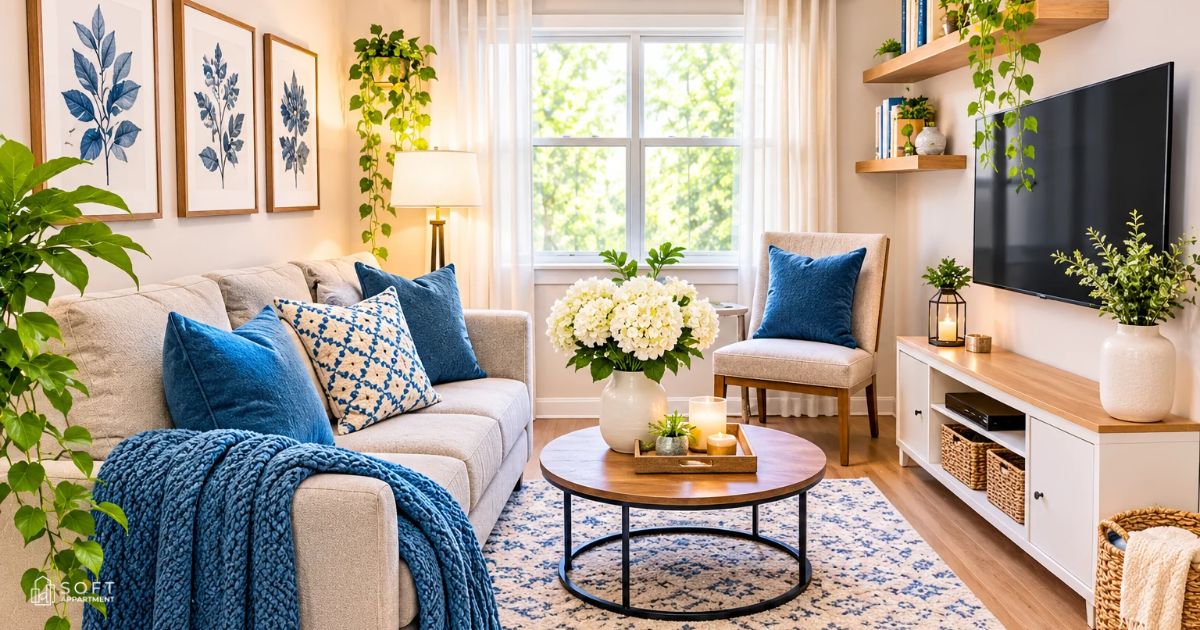
Does your sofa swallow the whole room? You’re not alone. Millions of Americans live in condos, starter homes, and rentals with tight floor plans. These small living room ideas show you how to fix that. You’ll get a cozy living room without a big budget.
Here’s what you’ll learn. We cover 21 tips on layout, color, lighting, storage, and decor. Many work for renters too. Each tip includes real measurements you can use today. Grab a tape measure and let’s start.
Best Small Living Room Layout Ideas to Maximize Space
Layout matters more than size. The best small living room ideas start with a plan on paper. Measure the room first. Mark the doors, windows, and vents. Then test where each big piece fits before you move any heavy furniture.
An interior designer always starts with a focal point. It might be a window, a fireplace, or the TV. Arrange everything around it. Use the clearances below as your guide. They keep the room easy to walk through.
| Space | Ideal Distance |
|---|---|
| Main walkway | 30 to 36 inches |
| Sofa to coffee table | 14 to 18 inches |
| Sofa to TV | 1.5 to 2.5 times the screen diagonal |
| Chair to chair (talking distance) | 4 to 8 feet |
Tip 1: Create Distinct Zones
Even one room can hold several zones. Think of a conversation area, a reading nook, and a tiny work corner. Define each zone with a rug or a lamp. Zones give the eye clear stopping points. That makes the room feel planned instead of crowded.
Tip 2: Float Furniture Away From the Walls
Pushing everything against the wall feels logical. It actually makes the room look flat. Pull your sofa a few inches forward. Floating furniture creates breathing room and better furniture placement. Even a six-inch gap adds depth. It also gives cords a hiding spot.
Tip 3: Choose an L-Shaped Sofa or Sectional
Corners often go to waste. An L-shaped sofa fills that dead zone and seats more people. A compact sectional also works as a room divider in an open space. Pick a version with a chaise. It doubles as a footrest for movie nights.
Narrow Living Room Layout: Where to Place Your TV and Sofa
A narrow living room can feel like a bowling alley. Everything lines up in one long row. The fix is simple. Break the length into two smaller areas. Then each half feels like its own cozy room.
A good long living room layout puts the TV on a short wall. That keeps the viewing distance comfortable. Place the sofa facing it. Add a small seating pair or desk in the other half. Use the chart below for TV distance.
| TV Size | Comfortable Viewing Distance |
|---|---|
| 43 inches | About 5.5 to 9 feet |
| 55 inches | About 7 to 11.5 feet |
| 65 inches | About 8 to 13.5 feet |
Tip 4: Best Place for a TV in a Long Living Room
Mount the TV on a short wall. Keep the screen center at eye level when you sit. That’s usually about 42 inches from the floor. Avoid placing it across from a bright window. Glare ruins the picture. Run cords through a slim cable cover.
Tip 5: Sofa and Seating Placement for Long Rooms
Float the sofa in the middle to split the length. Its back then acts like a gentle wall. Put two chairs on the far side for a second living room seating arrangement. Keep one clear path along the edge. People can then pass without bumping furniture.
Space-Saving Furniture Ideas for Small Living Rooms
Every piece should earn its spot. That’s the golden rule of small space design. Dieter Rams, the famous German designer, said it well: “Less, but better.” Choose fewer items. Make each one count.
Smart space-saving furniture keeps the floor visible. Look for raised legs, slim arms, and light finishes. Exposed floor under a piece tricks the eye. The room seems wider. In a small apartment living room, that trick works wonders.
Tip 6: Scale Down Your Furniture
Oversized sofas crush tiny rooms. Look for apartment-size sofas about 72 to 80 inches long. Slim arms save precious inches. Test a piece by marking its size with painter’s tape on the floor. You’ll know quickly if it fits.
Tip 7: Choose Micro Seating and Loveseats
Not every seat needs to be a sofa. Poufs, stools, and small accent chairs slide in anywhere. A loveseat paired with two poufs seats four people. You can tuck the poufs away when guests leave. The room opens up again.
Tip 8: Pick Multifunctional Pieces
Multifunctional furniture works double duty. A storage ottoman holds blankets and serves as a footrest. Nesting tables appear only when needed. A sleeper sofa turns the room into a guest bedroom. Round tables also cut down on bumped shins.
Smart Storage Solutions: Built-Ins, Bookshelves and Wall-Mounted Storage
Clutter makes small rooms feel smaller. Good living room storage solutions hide the mess. They also use vertical space. Look up. Most rooms have plenty of empty wall above eye level.
Pick storage that fits your style and lease. Owners can add custom built-in shelving. Renters can choose freestanding units with a built-in look. Baskets with lids keep small items out of sight. Those lids matter. Open bins still look messy. For more tight-quarters tricks, browse our small space living guides.
Tip 9: Use Built-Ins and Tall Bookshelves
Tall shelves draw the eye upward. That makes ceilings feel higher. Use dead corners and the space around windows. Built-in shelving around a fireplace adds charm and storage. Fill shelves about two-thirds full. Leave breathing room for a few decor pieces.
Tip 10: Go Wall-Mounted
Floating shelves free up the floor. Wall desks fold away after work. A slim media console keeps the TV area tidy. Mount shelves at different heights for interest. A narrow console behind the sofa adds a surface without stealing space.
Best Paint Colors and Color Schemes for a Small Living Room
Paint is the cheapest makeover you can make. Smart living room color schemes change how big a space feels. Light shades bounce light around. Dark shades wrap the room in a hug. Both can work if you commit.
Start with a simple color palette and follow the 60-30-10 rule. Use 60 percent main color, 30 percent secondary, and 10 percent accent. Always test swatches first. Paint looks different in morning and evening light. Check undertones too. The best small living room ideas always begin with a tested color.
Tip 11: Use Light and Muted Tones
Warm whites, soft greige, and pale sage open up a room. Benjamin Moore White Dove and Sherwin-Williams Alabaster are popular picks. North-facing rooms look cooler and grayer. Choose a warmer white there. South-facing rooms handle cooler tones well.
Tip 12: Color-Drench or Go Dark for Coziness
Color-drenching means painting walls, trim, and ceiling one shade. Edges disappear and the room feels wrapped. A deep navy or forest green can even hide corners. Try an accent wall first if you feel nervous. You can always expand later.
Lighting Ideas: Sconces, Floor Lamps and Statement Fixtures
Bad lighting flattens even a gorgeous room. Good lighting adds depth and mood. Think in layers. You need ambient light for the whole room, task light for reading, and accent light for decor. No ceiling fixture at all? Our apartment lighting ideas guide shows nine easy fixes.
Warm bulbs around 2700K create a cozy living room glow. Put lamps on dimmers or smart bulbs. Then you can change the mood in seconds. Aim for at least three light sources at different heights. Overhead light alone feels harsh.
Tip 13: Layer Three Types of Light
Use a ceiling fixture for ambient light. Add a floor lamp by your reading chair for task light. Finish with a small table lamp or picture light for accents. An arc lamp can even replace a side table. It saves floor space.
Tip 14: Save Floor Space With Sconces and Statement Pendants
A wall sconce adds light without using a single inch of floor. Renters can buy plug-in versions that hang on a hook. A statement pendant becomes art. Hang it 30 to 36 inches above a table. In walkways, keep it at least 7 feet up.
How to Make a Small Living Room Look Bigger With Mirrors and Natural Light
You can make a small living room look bigger by borrowing space from your windows. Light makes walls feel farther away. Mirrors double that effect. Start by clearing anything that blocks natural light.
Keep window sills clear. Skip heavy drapes that swallow the glass. A sense of visual balance also helps. Spread light, color, and height evenly around the room. When one side feels heavy, the whole room feels tight.
Tip 15: Use Mirrors and Reflective Elements
Hang a large mirror across from a window. It bounces daylight deep into the room. Glass, brass, and glossy finishes add sparkle too. Be careful what the mirror reflects. A mirror facing clutter just doubles the mess.
Tip 16: Hang Ceiling-Height and Sheer Curtains
Mount the curtain rod 4 to 6 inches above the window frame. Better yet, hang it near the ceiling. Walls then look taller. Extend the rod wider than the window so the glass stays fully exposed. Sheer panels soften light without blocking it. Prefer no panels at all? Learn how to dress a window without curtains.
Rugs, Textures and Layers for a Cozy Small Living Room
Texture is the secret sauce of a cozy living room. A room full of smooth surfaces feels cold. Mix soft with rough and matte with shiny. Your eyes and your feet will thank you.
The right area rug also anchors your furniture. Too small and it looks like a postage stamp. Aim for the front legs of your sofa and chairs to sit on the rug. The table below shows common sizes.
| Rug Size | Best For |
|---|---|
| 5 x 8 feet | Tiny rooms or apartment layouts |
| 8 x 10 feet | Most average living rooms |
| 9 x 12 feet | Larger open spaces |
Tip 17: Choose the Right Area Rug Size
Go as big as the room allows. A larger rug makes the space feel wider. Add a rug pad to stop slipping and add cushion. Living on carpet? Layer a smaller rug on top. Pick a flat weave to avoid tripping.
Tip 18: Layer Textures
Mix wool, linen, boucle, and velvet for rich living room decor ideas. Toss a chunky knit blanket over the sofa arm. Add pillows in two or three fabrics. Keep the color palette tight. Texture does the talking, so color can stay calm.
Wall Decor Ideas: Gallery Walls, Wallpaper, Art and Feature Walls
Walls are free real estate. Smart wall choices add personality without eating floor space. Think big and think up. A few bold pieces beat dozens of tiny ones.
The right art also guides the eye. Hang pieces so they feel connected. Center art about 57 inches from the floor. That’s average eye level in galleries. Keep this number handy before you grab the hammer.
Tip 19: Build a Gallery Wall or Hang Oversized Art
A gallery wall tells your story. Lay frames on the floor first. Keep 2 to 3 inches between them. Prefer simplicity? One oversized piece makes a stronger statement. Large art makes the wall feel grand rather than cluttered.
Tip 20: Add Wallpaper or a Feature Wall
Peel-and-stick wallpaper suits renters. It removes cleanly in most cases. Vertical stripes make ceilings look taller. Put the pattern on one wall behind the sofa. That accent wall becomes your room’s star. Use calmer colors everywhere else.
Finishing Touches: Plants, Bar Cart, Throw Pillows and Personal Decor
The last 10 percent makes a room feel like yours. Think of these as the jewelry of living room decor ideas. Small details bring warmth. They also show off your taste. Many of the best small living room ideas cost under $50.
Follow the “edit before you add” rule. Remove one item for every new item you bring in. Group objects in odd numbers, like three or five. Odd groupings feel natural and balanced. Even sets can look stiff.
Tip 21: Style With Plants, a Bar Cart, Pillows and Personal Items
Pothos and snake plants thrive in low light. A compact bar cart adds a social touch and tucks into a corner. Layer throw pillows in varied sizes. Add family photos and a candle for scent. Together they make the room feel lived in.
Final Thoughts
You don’t need a bigger room. You need a better plan. Smart layout, light colors, layered lighting, and pieces that earn their space make the biggest difference. These small living room ideas work in any home.
Start with one tip this weekend. Maybe move your sofa away from the wall. Or swap a heavy lamp for a sconce. Small changes add up fast. Which tip will you try first? Tell us in the comments.
FAQs About Small Living Room Ideas
How do I arrange furniture in a small living room?
Pick one focal point and arrange seating around it. Pull the sofa slightly off the wall. Keep walkways 30 to 36 inches wide. Choose a smaller coffee table. Use a rug to define the seating zone.
What colors make a small living room look bigger?
Light, warm colors work best. Soft white, pale gray, and gentle sage reflect light. Painting walls and trim the same shade also helps. Dark colors can work too. They create a cozy, wrapped-in feeling when done boldly.
Where should the TV go in a long, narrow living room?
Place it on one of the short walls. That keeps seating close enough for comfortable viewing. Mount it at eye level. Avoid placing it opposite a bright window. Glare is the enemy. Hide cords with a cable cover.
What size rug works best in a small living room?
An 8 x 10 foot rug suits most rooms. In tiny spaces, a 5 x 8 foot rug can work. The front legs of your furniture should rest on it. This ties the seating together visually.
How can renters decorate a small living room without damage?
Use peel-and-stick wallpaper, plug-in sconces, and removable hooks. Add large rugs and floor lamps. Choose freestanding shelves with a built-in look. Plants, pillows, and throws add color too. For more ideas, see our rental-friendly upgrades section.

One thought on “Small Living Room Ideas: 21 Cozy Layout & Decor Tips”