






![Documents Needed to Rent an Apartment: 11 Must-Have Papers [2026]](https://softappartment.com/wp-content/uploads/2026/10/documents-needed-to-rent-an-apartment-11-must-have-papers-150x150.jpg)



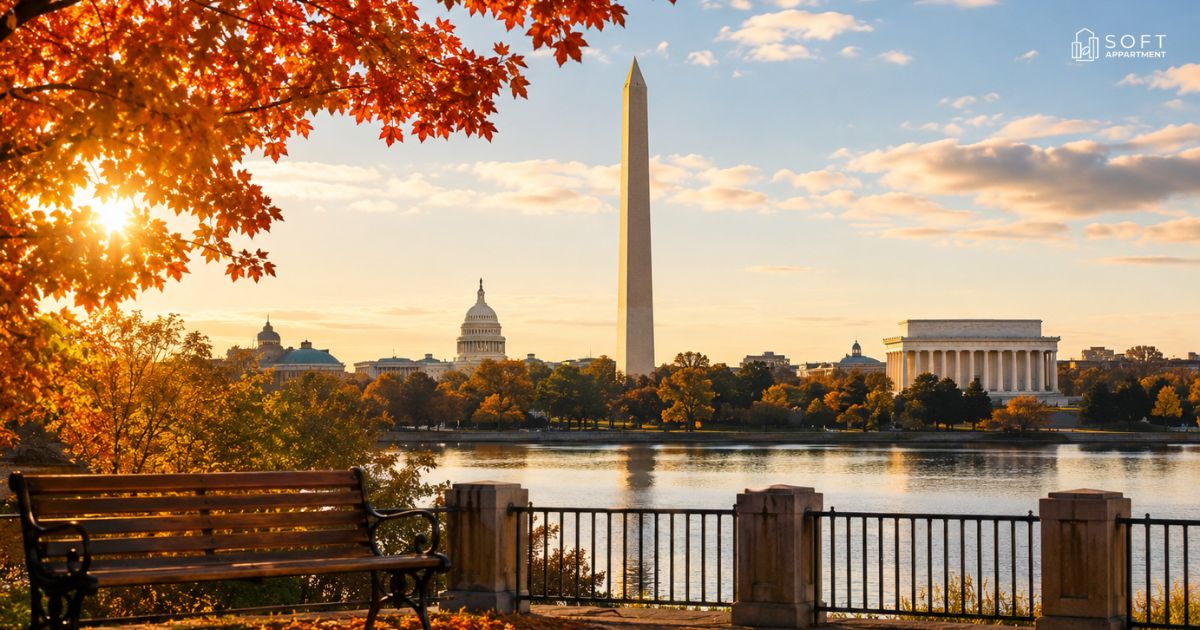
Washington, DC, rewards curious travelers with far more than marble monuments and government buildings. This Washington DC bucket list brings together iconic sights, remarkable museums, lively neighborhoods, outdoor escapes, local food, nightlife, and unusual experiences. Whether you’re visiting for one weekend or several days, you’ll find plenty worth adding to your itinerary.
The trick is knowing how to group your stops. The National Mall alone connects major memorials, museums, and historic spaces, while nearby neighborhoods reveal a more relaxed side of the capital. Most major memorials are free to visit, and the Smithsonian says its Washington museums offer free admission. If you’re building out a broader seasonal travel calendar, our Fall Bucket List has 50 more ideas to pair with a DC trip.
50 Washington DC Bucket List Experiences at a Glance
| # | Experience | # | Experience |
| 1 | Walk the National Mall | 26 | Explore Eastern Market |
| 2 | Visit the Lincoln Memorial | 27 | Discover Union Market |
| 3 | See the Washington Monument | 28 | Dine around Georgetown |
| 4 | Visit the World War II Memorial | 29 | Eat along The Wharf |
| 5 | See the Korean War Memorial | 30 | Try a local DC bakery |
| 6 | Visit the MLK Memorial | 31 | See monuments after dark |
| 7 | Explore the Thomas Jefferson Memorial | 32 | Watch a Kennedy Center show |
| 8 | Visit the Vietnam Veterans Memorial | 33 | Hear live music at 9:30 Club |
| 9 | Tour the U.S. Capitol | 34 | See a show at Arena Stage |
| 10 | Explore the Library of Congress | 35 | Explore DC nightlife |
| 11 | See the White House | 36 | Walk The Wharf at night |
| 12 | Visit the Supreme Court | 37 | Walk the National Mall at night |
| 13 | Explore the National Archives | 38 | Climb the Exorcist Steps |
| 14 | Visit Ford’s Theatre | 39 | Explore the Mansion on O Street |
| 15 | Tour Arlington National Cemetery | 40 | Visit the Franciscan Monastery |
| 16 | Visit the Pentagon Memorial | 41 | Explore Folger Shakespeare Library |
| 17 | Tour the Smithsonian museums | 42 | Visit the Bureau of Engraving and Printing |
| 18 | Explore the National Air and Space Museum | 43 | Take a Potomac River cruise |
| 19 | Visit the National Museum of American History | 44 | Visit Washington National Cathedral |
| 20 | Explore the Natural History Museum | 45 | Walk the C&O Canal |
| 21 | Visit the National Gallery of Art | 46 | See the Cherry Blossom Festival |
| 22 | Explore the National Portrait Gallery | 47 | Enjoy Jazz in the Garden |
| 23 | Visit the International Spy Museum | 48 | Attend the H Street Festival |
| 24 | Explore Georgetown | 49 | Visit Dupont galleries |
| 25 | Walk Dupont Circle | 50 | Go winter ice skating |
1. Explore the National Mall and Washington DC’s Iconic Monuments
The National Mall forms the heart of Washington sightseeing. Stretching between the Capitol and Washington Monument, this monumental landscape connects many of the city’s most recognizable sites. The National Park Service manages more than 1,000 acres within the broader park system, and its official National Mall and Memorial Parks site has up-to-date hours, maps, and closures worth checking before you go.
For first-time travelers, this area delivers an impressive concentration of Washington DC monuments and Washington DC memorials. You can walk between several landmarks without paying admission, although some experiences require reservations.
See the National Mall, Monuments, and Memorials
Start with the Lincoln Memorial, then follow the Reflecting Pool toward the Washington Monument and continue toward the Thomas Jefferson Memorial. Add the World War II, Korean War, Vietnam Veterans, and Martin Luther King Jr. Memorial for a powerful history-focused walk.
2. Visit Washington DC’s Famous Museums
Washington has an extraordinary museum scene, which makes Washington DC museums essential for nearly every traveler. The Smithsonian currently includes 21 museums and the National Zoo, with Smithsonian museums in Washington offering free admission you can confirm current hours and any timed-entry requirements on the official Smithsonian visitor site.
Don’t attempt to conquer every gallery in one day. Instead, choose two or three that match your interests. Art lovers may prefer the National Gallery of Art, while families often enjoy aviation, natural history, or American history collections.
Explore the Smithsonian and Other Must-See Museums
The Smithsonian Museums include the National Air and Space Museum, National Museum of American History, and National Museum of Natural History. Add the National Portrait Gallery or International Spy Museum when you want something different. Some popular Smithsonian locations require free timed passes, so check official visitor information first.
3. Tour the Capitol, White House, and Historic Landmarks
Some of the most fascinating Washington DC landmarks tell stories about how American government developed. Instead of viewing these buildings merely as photo opportunities, take time to understand their architecture, political role, and historical context.
The U.S. Capitol, White House, and Library of Congress create a natural sightseeing cluster. Nearby sites such as the National Archives and Ford’s Theatre add another layer of American history without requiring long cross-city travel.
Discover Washington DC’s Most Important Historic Sites
Visit the U.S. Capitol, admire the Library of Congress, and see the White House from the public areas around President’s Park. Then explore the National Archives, Ford’s Theatre, Arlington National Cemetery, and Pentagon Memorial for a deeper look at the country’s past.
4. Discover Washington DC’s Most Interesting Neighborhoods
The best Washington DC neighborhoods feel completely different from the monumental core. Georgetown brings cobblestone streets and waterfront scenery, while Dupont Circle offers galleries, cafés, bookstores, and lively streets.
Give yourself time to wander rather than racing between attractions. A neighborhood walk can reveal independent shops, historic houses, small restaurants, and everyday city life that a standard sightseeing route often misses.
Explore Georgetown, Dupont Circle, Capitol Hill, and More
Spend an afternoon in Georgetown, walk around Dupont Circle, and explore Capitol Hill near Eastern Market. Then consider Embassy Row, Chinatown, Adams Morgan, and The Wharf. Each area offers a distinct personality, making neighborhood hopping one of the most rewarding things to do in Washington DC.
5. Enjoy Washington DC’s Parks, Gardens, and Outdoor Spaces
Washington offers surprisingly varied green spaces for a major capital city. Its Washington DC parks range from formal gardens to wooded trails and waterfront paths, giving travelers an easy break from museums.
Outdoor time also helps balance a packed sightseeing schedule. Instead of spending every hour indoors, mix cultural stops with walking, gardens, river views, or peaceful trails. The change of pace can make a busy trip feel much less exhausting.
Find Peaceful Parks, Gardens, Trails, and Waterfront Views
Explore Rock Creek Park, the U.S. Botanic Garden, National Arboretum, Georgetown Waterfront Park, Theodore Roosevelt Island, Tidal Basin, Meridian Hill Park, and Great Falls Park. These Washington DC outdoor activities work particularly well when pleasant weather makes walking part of the experience.
6. Experience Washington DC’s Food, Markets, and Local Favorites
Food can transform a sightseeing trip into a more memorable city experience. Washington’s markets and restaurant districts give you chances to pause between attractions while discovering flavors from across the region and beyond.
Rather than eating every meal beside a major landmark, venture into nearby neighborhoods. Eastern Market and Union Market offer lively food scenes, while Georgetown and The Wharf provide dining with distinctly different surroundings.
Taste Your Way Through DC’s Markets, Restaurants, and Food Neighborhoods
Explore Eastern Market and Union Market, then try restaurants around Georgetown and The Wharf. Add a local bakery or coffee shop to your morning routine. These stops broaden your Washington DC tourist attractions beyond museums and monuments while giving your itinerary a more local rhythm.
7. Find the Best Things to Do in Washington DC at Night
Washington becomes surprisingly atmospheric after sunset. Illuminated monuments look dramatically different from their daytime versions, while theaters, music venues, and waterfront restaurants create plenty of evening options.
Nighttime sightseeing also offers one practical advantage: cooler temperatures. A late walk around major landmarks can feel calmer than a crowded midday visit, especially during warmer months.
Experience DC’s Monuments, Music, Theater, and Nightlife After Dark
See the Washington DC monuments after dark, watch a performance at the Kennedy Center, hear live music at 9:30 Club, or attend Arena Stage. You can also explore Georgetown, Dupont Circle, Adams Morgan, or The Wharf for dinner and evening entertainment.
8. Experience Unique and Unusual Things to Do in Washington DC
Once you’ve seen the famous landmarks, dig deeper. Some of the city’s most memorable experiences hide outside the standard tourist circuit, from strange literary connections to peaceful religious architecture.
These unusual stops are particularly useful when you’re building a longer itinerary. They also give repeat visitors fresh reasons to return after checking the obvious attractions off their list.
Discover Hidden Gems and Unforgettable Washington DC Experiences
Climb the Exorcist Steps, explore the Mansion on O Street, visit the Franciscan Monastery, and discover the Folger Shakespeare Library. Add the Bureau of Engraving and Printing, a Potomac River cruise, Washington National Cathedral, or the C&O Canal for unusual Washington DC historic sites and experiences.
9. Enjoy Seasonal Events and Special Experiences
Your experience can change dramatically depending on when you visit. Spring brings famous blossoms, summer encourages outdoor events, fall offers comfortable walking weather, and winter creates a quieter atmosphere around many attractions.
Before finalizing your itinerary, check official event calendars. Seasonal programming changes, and some popular experiences use timed entry or specific schedules. That small step can save you from an avoidable disappointment. If your trip lands in the cooler months, our Cozy Fall Books list makes good travel-day reading too.
Experience Washington DC Throughout Every Season
Plan around the National Cherry Blossom Festival in spring, Jazz in the Garden during warmer months, H Street Festival, First Friday Dupont galleries, and winter ice skating. The official tourism site also maintains current event and attraction information for visitors planning seasonal Washington DC attractions.
10. Washington DC Travel Tips for First-Time Visitors
A smart itinerary isn’t simply a long list of attractions. Group nearby places together, allow time for security checks, and leave breathing room between major stops. The National Mall itself is larger than many first-time visitors expect.
Walking remains essential, but public transportation can save your legs when distances become substantial. The National Park Service recommends using public transportation, bicycles, cars, or other options to reach the Mall depending on your route.
Plan Your Washington DC Trip Like a Local
For useful Washington DC travel tips, choose attractions by neighborhood, reserve timed-entry experiences early, wear comfortable shoes, and check official hours before leaving your hotel. If you’re planning a first visit, prioritize the Washington DC attractions for first-time visitors before adding lesser-known stops.
A Simple Way to Build Your Washington DC Itinerary
A successful trip doesn’t require seeing all 50 experiences. Think of this Washington DC bucket list as a menu rather than a race. Pick a few major landmarks, one or two museums, a neighborhood, and an evening activity each day.
For a weekend trip, dedicate one day to the National Mall and museums, then use another day for Capitol Hill, Georgetown, Dupont Circle, or The Wharf. Longer stays give you room for outdoor spaces, unusual attractions, seasonal events, and slower meals.
| Trip Length | Best Focus |
| 1 Day | National Mall, major memorials, and one museum |
| 2 Days | National Mall, museums, Capitol Hill, and Georgetown |
| 3 Days | Add neighborhoods, food markets, and evening activities |
| 4–5 Days | Add parks, hidden gems, seasonal events, and day trips |
The strongest Washington DC attractions aren’t always the flashiest ones. Sometimes a quiet garden, bookstore, waterfront path, or historic neighborhood becomes the memory you carry home. Give yourself enough freedom to wander, because Washington is at its best when your itinerary leaves room for discovery.
FAQ About the Washington DC Bucket List
What are the best things to do in Washington DC for first-time visitors?
Start with the National Mall, Lincoln Memorial, Washington Monument, major museums, U.S. Capitol, and White House. Then add one neighborhood such as Georgetown.
How many things should you do in Washington DC in one day?
Aim for several nearby attractions rather than racing across the city. Three to six meaningful stops can create a much better day than checking off dozens hurriedly.
What is the number one attraction in Washington DC?
The National Mall is the best starting point because it connects numerous monuments, memorials, museums, and historic spaces in one central area.
Are there free things to do in Washington DC?
Yes. Many major memorials and Smithsonian museums are free. The National Park Service says National Mall and Memorial Parks sites are generally free, while the Smithsonian confirms free admission at its Washington museums.
What is the best month to visit Washington DC?
Spring and fall are especially appealing for comfortable sightseeing. Spring attracts travelers for cherry blossoms, while fall often brings pleasant temperatures and colorful scenery. Always check current event schedules before booking.





![Documents Needed to Rent an Apartment: 11 Must-Have Papers [2026]](https://softappartment.com/wp-content/uploads/2026/10/documents-needed-to-rent-an-apartment-11-must-have-papers-768x403.jpg)

