







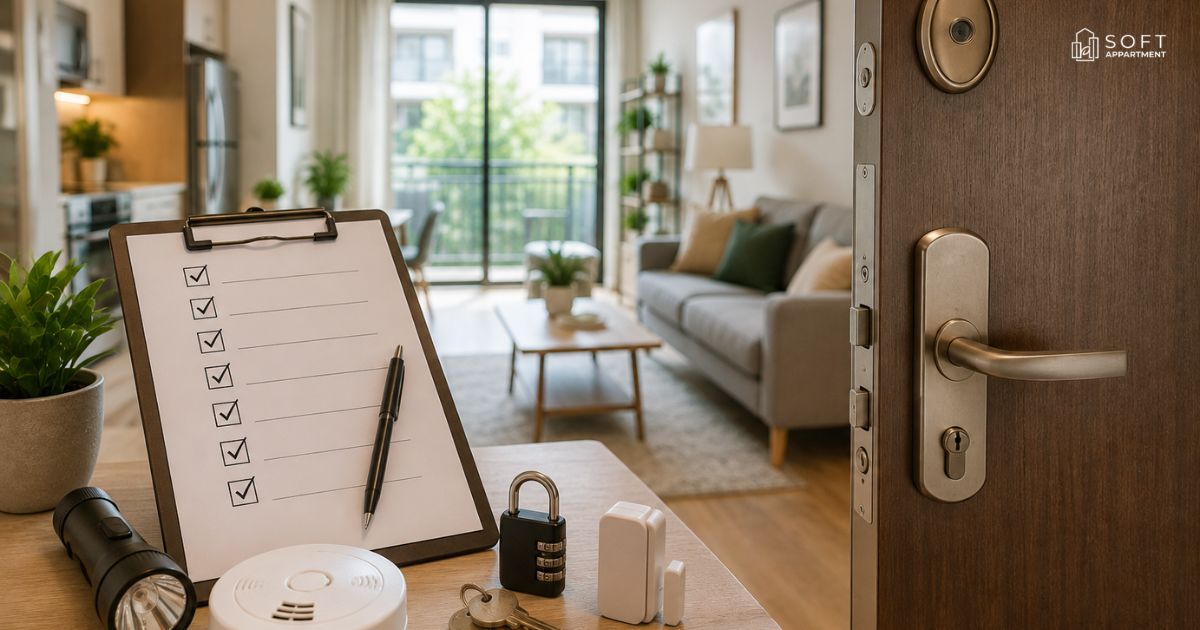
Keeping your rental safe takes more than locking the front door each night. A practical apartment safety checklist helps you spot risks before they become serious problems.
Whether you’re moving into your first rental or settling into a long-term home, small safety checks can make a big difference. Good apartment security starts with strong locks, working alarms, clear exits, and smart daily habits. You should also understand your building’s fire safety, prepare for unexpected emergencies, and protect important belongings.
These simple apartment safety tips can help you create a safer and more comfortable living space. With the right rental safety routine, you can enjoy your apartment with greater confidence while staying prepared for everyday hazards and unexpected situations.
Before You Move In: Complete Apartment Safety Checks
The best time to inspect a rental is before you move your belongings inside. Your first apartment safety checklist before moving in should cover the entire property. Walk through the apartment slowly instead of relying on a quick tour. Check the front door, windows, stairways, smoke alarms, electrical outlets, plumbing, and emergency exits. Look for loose railings, damaged outlets, water stains, broken locks, poor lighting, and blocked pathways. Also inspect the building entrance and parking area. These details can tell you a lot about the property’s overall condition.
If you are wondering what to check before moving into an apartment, start with safety systems. Ask the property manager how emergency repairs work. Find out who handles security concerns after normal business hours. Ask whether previous residents reported recurring problems. Check the lighting around entrances and parking areas at night if possible. Take photographs of existing damage before signing your move-in inspection report. This record can protect you later if a landlord claims that you caused the damage.
| Area | What to Inspect |
| Entry door | Lock, deadbolt, frame, peephole |
| Windows | Latches, locks, screens |
| Alarms | Smoke and carbon monoxide alarms |
| Electrical | Outlets, switches, visible wiring |
| Exits | Stairways and emergency doors |
| Exterior | Lighting, parking, entrances |
| Plumbing | Leaks, stains, unusual moisture |
Check Your Apartment’s Doors, Windows, and Locks
Strong door and window locks create an important first layer of apartment security. Test every lock before moving in. The key should turn smoothly without excessive force. The door should close completely and sit firmly inside its frame. If you want to know how to check apartment door locks, test them from both sides when appropriate. Also inspect the door frame, hinges, strike plate, and peephole. A strong lock cannot help much if the surrounding frame is damaged.
Windows need equal attention. Ground-floor windows deserve special care because they may provide easier access from outside. Check sliding doors and balcony doors too. Ask your landlord about approved security devices before installing anything permanent. A renter should understand how to secure an apartment without damaging property or breaking lease rules. Keep exterior doors locked even when you are home. Convenience should never replace basic security habits.
Simple Apartment Lock Check
| Security Point | What Good Condition Looks Like |
| Deadbolt | Locks firmly without sticking |
| Door frame | Solid with no major damage |
| Peephole | Clear and securely fitted |
| Window latch | Closes tightly |
| Sliding door | Cannot move freely when locked |
| Balcony door | Closes and locks completely |
Understand Your Building’s Security Features
Your apartment is part of a larger building system. Strong apartment security features can make everyday life safer. Look for controlled entrances, working intercoms, security cameras, key fobs, secure mail areas, and well-lit common spaces. Ask how visitors enter the building. You should also know whether former tenants keep access cards or keys. Good building management should have a clear process for removing old access.
Parking areas deserve attention too. A garage may look secure while still having poorly lit corners or unsecured pedestrian doors. Check entrances, stairwells, elevators, and package rooms. These areas often experience more traffic than individual apartments. Effective home security for apartments works best when the building, unit, and resident habits all support one another.
Apartment Security Features Worth Checking
| Feature | Why It Matters |
| Controlled entrance | Limits unauthorized access |
| Intercom | Helps identify visitors |
| Security cameras | Can monitor shared spaces |
| Key fob system | Controls building entry |
| Secure parking | Reduces access risks |
| Package lockers | Helps prevent package theft |
| Good lighting | Improves visibility |
Make Fire Safety a Top Priority
Fire can spread quickly through an apartment building. That makes fire safety one of the most important parts of your rental inspection. Test every smoke alarm when you move in. Make sure alarms are present where required and report missing or damaged devices. You should also understand where to place smoke detectors in an apartment according to local requirements and manufacturer instructions. Never remove an alarm because it becomes annoying.
Carbon monoxide creates another serious risk because the gas has no smell or visible warning. Check your carbon monoxide detectors and report missing devices to management. A carbon monoxide detector for apartment living is especially important where fuel-burning appliances or attached garages create potential exposure. Learn every emergency exit and create a fire escape plan before you need it. During a fire, use stairs when instructed and never rely on an elevator as your main escape route.
Apartment Fire Safety Checklist
| Fire Safety Item | Recommended Action |
| Smoke detectors | Test regularly |
| CO detectors | Confirm they work |
| Fire extinguisher | Know its location and use |
| Exit routes | Keep them clear |
| Stairways | Learn their locations |
| Escape plan | Practice with household members |
| Emergency number | Keep it easily available |
Improve Apartment Safety Inside Your Home
Not every apartment hazard involves crime. Everyday household risks can cause injuries, fires, or property damage. Check electrical outlets and cords for cracks, burn marks, or loose connections. Avoid overloading power strips. Keep heaters away from curtains and furniture. In the kitchen, stay nearby while cooking. A small mistake can become a serious fire when nobody notices it quickly.
Furniture and clutter also affect safety. Tall shelves and televisions can become unstable if they are not properly secured. Keep walkways clear and deal with loose rugs that could cause falls. Bathrooms need attention because wet surfaces can become slippery. Store cleaning chemicals away from children and pets. These simple apartment safety tips can prevent many problems without requiring expensive equipment.
Common Indoor Safety Checks
| Risk | Safer Approach |
| Damaged cords | Replace or report them |
| Overloaded outlets | Reduce electrical load |
| Loose rugs | Secure or remove them |
| Tall furniture | Anchor when appropriate |
| Wet floors | Dry them quickly |
| Unattended cooking | Stay nearby |
| Blocked vents | Keep airflow clear |
Protect Your Valuables and Personal Information
Apartment safety also includes protecting documents, money, devices, and private information. If you are learning how to protect valuables in an apartment, start with simple habits. Keep expensive items away from windows where strangers can easily see them. Store passports, financial documents, and other important papers in a secure location. A small home safe can provide another layer of protection. Keep spare keys in a controlled location rather than obvious hiding spots.
Digital privacy matters as well. Smart locks, cameras, routers, and other connected devices need strong passwords. Change default passwords immediately. Use a secure Wi-Fi password and avoid sharing access casually. Renters insurance can also protect your finances against certain covered losses. Coverage differs by policy, so read the terms carefully. Your landlord’s insurance generally does not replace coverage for your personal belongings.
Valuable Items to Secure
| Item | Suggested Protection |
| Passport | Secure storage |
| Financial documents | Locked location |
| Spare keys | Controlled storage |
| Jewelry | Safe or secure container |
| Electronics | Keep away from visible windows |
| Digital accounts | Strong unique passwords |
Practice Personal Safety and Situational Awareness
Physical security works better when paired with personal safety habits. Pay attention when entering your building or parking area. Have your keys ready before reaching the door. Avoid using your phone in a way that completely distracts you from your surroundings. Get familiar with normal activity around your building. This makes unusual behavior easier to recognize.
The best personal safety tips for apartment renters are usually simple. Know your neighbors without sharing more personal information than necessary. Report broken lights, damaged doors, and suspicious activity through the proper channels. Avoid confronting strangers yourself. If you feel unsafe, create distance and contact building management or emergency services when appropriate. Good awareness is not about fear. It is about staying prepared.
Everyday Personal Safety Habits
| Situation | Safer Habit |
| Entering at night | Stay aware of surroundings |
| Unknown visitor | Verify before opening |
| Suspicious activity | Report rather than confront |
| Parking area | Stay alert near entrances |
| Lost key | Report and replace promptly |
| Building access | Keep codes private |
Prepare for Apartment Emergencies and Natural Disasters
Good emergency preparedness gives you options when normal services stop working. Build an apartment emergency kit before an emergency happens. Include drinking water, nonperishable food, a flashlight, batteries, first-aid supplies, phone charging equipment, hygiene items, and important documents. If you have pets, include suitable food and supplies. Keep the kit somewhere easy to reach rather than deep inside storage.
Your local climate should shape your preparation. Apartment safety during natural disasters may involve different risks depending on where you live. Coastal renters may need hurricane preparation. Some regions face tornadoes, earthquakes, wildfires, floods, or winter storms. Learn your building’s emergency procedures and identify safe areas. If you are unsure about what to keep in an apartment emergency kit, start with items that help you communicate, stay hydrated, manage minor injuries, and remain safe during temporary power loss.
Apartment Emergency Kit Guide
| Category | Useful Supplies |
| Water | Bottled drinking water |
| Lighting | Flashlight and spare batteries |
| Medical | First-aid supplies |
| Communication | Phone charger or power bank |
| Food | Shelf-stable foods |
| Documents | Copies of important records |
| Hygiene | Basic personal-care supplies |
| Pets | Food, water, and needed supplies |
Apartment Safety Checklist for Everyday Living
Safety should not end after move-in day. An everyday apartment safety checklist helps you catch small problems before they become serious. Test alarms, inspect locks, check emergency supplies, and report maintenance concerns. Look at your apartment with fresh eyes every few months. A loose lock or dead detector battery may seem minor today. During an emergency, however, that small issue can become a major weakness.
A strong apartment safety checklist should also include seasonal reviews. Before severe weather arrives, check emergency supplies and evacuation information. Review your apartment emergency preparedness plan after moving furniture or changing household members. Update emergency contacts when necessary. Review your renters insurance policy periodically and confirm that your coverage still fits your belongings. Safety becomes much easier when these checks become routine.
Everyday Apartment Safety Schedule
| Frequency | Safety Task |
| Weekly | Check unusual damage or hazards |
| Monthly | Inspect locks and emergency supplies |
| Regularly | Test alarms according to manufacturer guidance |
| Seasonally | Prepare for local severe weather |
| Annually | Review insurance and emergency plans |
| After moving | Update exits and emergency information |
Final Thoughts
A safe apartment is built through layers of sensible protection. Strong locks, working alarms, clear exits, secure belongings, and good habits all matter. Your building’s systems matter too. When these layers work together, they create a much stronger safety net for everyday life.
Use this apartment safety checklist when you move in and revisit it throughout the year. Pay attention to small problems before they become larger ones. Most importantly, understand your building, know your exits, protect your belongings, and prepare for emergencies. A few minutes of planning today can make a major difference when something unexpected happens.
Frequently Asked Questions About Apartment Safety
What should I check for apartment safety before moving in?
Check the locks, windows, smoke alarms, carbon monoxide detectors, electrical outlets, emergency exits, and visible safety hazards.
How can I make my apartment safer?
Use secure locks, test safety alarms, protect valuables, keep exits clear, and follow simple apartment security habits.
What security features should an apartment building have?
Look for controlled entrances, secure locks, good lighting, intercoms, security cameras, and secure parking areas.
What should I keep in an apartment emergency kit?
Keep water, nonperishable food, a flashlight, batteries, first-aid supplies, chargers, hygiene items, and important documents.
Do renters need renters insurance?
Renters insurance can help protect your belongings and provide liability coverage for certain covered events.