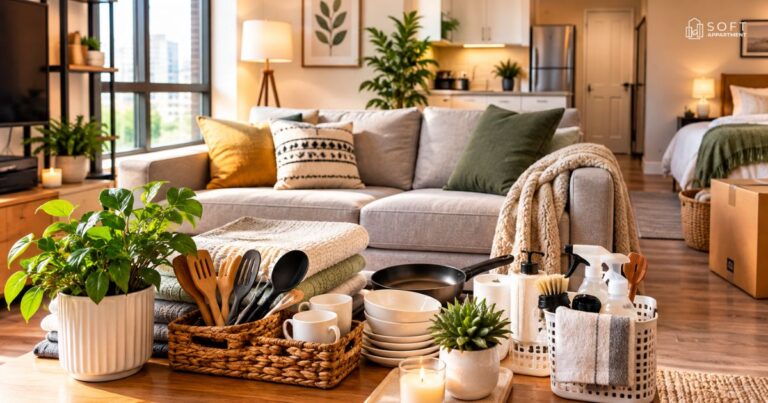








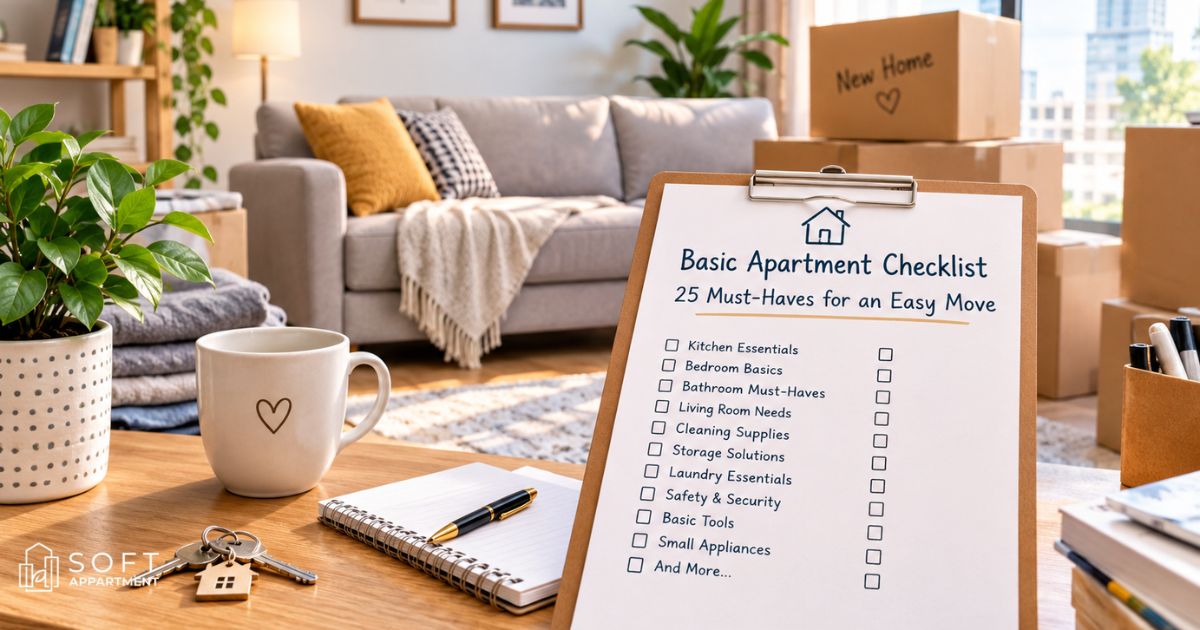
Picture yourself in an empty room holding one pizza box and no fork. That moment hits almost every renter. This basic apartment checklist fixes it with 25 must-haves and the hidden costs most guides skip. You’ll get a first 48 hours in a new apartment kit, a budget guide, and a buy vs thrift furniture table.
The 25 must-haves at a glance
| Section | Must-haves | Count |
|---|---|---|
| Kitchen | 1 to 5 | 5 |
| Bedroom | 6 to 8 | 3 |
| Bathroom | 9 to 11 | 3 |
| Living room | 12 to 14 | 3 |
| Cleaning and laundry | 15 to 18 | 4 |
| Tools, safety and weather | 19 to 23 | 5 |
| Storage and decor | 24 to 25 | 2 |
| Total | 25 |
Basic Apartment Pre-Move Checklist: Budget and Planning
Smart planning beats panic buying every time. Start four weeks before moving into a new apartment. Read your whole lease and measure each room. Write down what you already own. Two weeks out, reserve the elevator and order big items. Print this move-in checklist and tick items off as you go.
Most people budget for rent and forget everything else. However, move-in day brings a pile of extra bills. Your first apartment checklist should include every one of them. The table below shows typical U.S. ranges. Costs vary by city and landlord, so always confirm the real numbers before you sign.
| Move-in cost | Typical U.S. range | When you pay |
|---|---|---|
| Application fee | $25 to $75 | At application |
| Security deposit | One to two months’ rent | At lease signing |
| First month’s rent | Your monthly rent | Before you get keys |
| Utility deposits | $0 to $200 | During setup |
| Internet installation | $0 to $100 | First week |
| Renters insurance | About $10 to $25 a month | Before move-in |
How to Budget for Your First Apartment
A smart budget apartment setup starts with two buckets. The first holds one-time costs like deposits and furniture. The second holds monthly costs like rent, power, and internet. Then apply the 50/30/20 rule to your paycheck. Half goes to needs, thirty percent to wants, and twenty percent to savings. Every first-time renter should test this split.
Important Documents to Keep Ready
Build a simple folder before move-in day. Put a copy of your lease inside. Add your photo ID and your renters insurance policy. Take dated photos of every scratch and stain during your walkthrough. Those pictures protect your deposit later. Finally, file your mail forwarding request at the official USPS change of address site.
The “First 48 Hours” Survival Kit for Your New Apartment
Moving day drains you. You’ll feel tired and hungry, and stores may close early. That’s why the first 48 hours in a new apartment deserve their own box. Label it “OPEN ME FIRST” in thick marker. Then load it into your car yourself instead of handing it to movers.
This box works like a mini apartment starter kit. It keeps you comfortable while the rest of your stuff waits in boxes. You won’t dig through ten cartons for a toothbrush at midnight. Keep the box with you, not on the moving truck.
Day-One Essentials to Pack in a Separate Box
Pack your phone charger, toilet paper, and one towel. Add a set of sheets, a pillow, and your medications. Throw in snacks, bottled water, scissors, and trash bags. A roll of paper towels and a few paper plates also help. These essential household items cost little but save your first night.
What to Buy Immediately vs. Later
Not everything needs to happen on day one. Buying too fast wastes money on things you might not need. Use this quick split as your apartment shopping list guide.
| Buy right away | Buy later |
|---|---|
| Bedding and pillows | Wall art and frames |
| Toilet paper and soap | Side tables and rugs |
| Cleaning spray and trash bags | Air fryer or toaster |
| One pot, one pan, basic dishes | Extra storage bins |
| Light bulbs and power strip | Throw blankets and plants |
Kitchen Essentials for a Basic Apartment
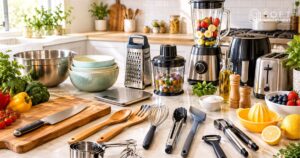
The goal is simple. You want to cook real meals without buying sixty items. Think of your kitchen like a small toolbox. You only need the tools that do most of the work. These apartment kitchen essentials cover about ninety percent of everyday cooking.
Try this 30-minute test. Could you boil pasta, chop a salad, and eat at a table? If yes, your kitchen works. If not, check what’s missing. Many home essentials for beginners turn out to be very cheap. A good knife matters more than a fancy gadget.
Cookware and Utensils (Essentials)
Must-have 1 is a small pots and pans set. Aim for one saucepan, one large pot, and one skillet. Must-have 2 is a sharp chef’s knife with a cutting board. Must-have 3 covers plates, bowls, cups, and silverware for four people. Add a spatula, a wooden spoon, and a can opener.
Small Appliances and Gadgets (Nice-to-Have)
Must-have 4 is a coffee maker or electric kettle plus microwave-safe dishes. After that, everything else can wait. A toaster and an air fryer are fun upgrades. Counter space runs short in most rentals. So buy one small appliance at a time. Let your daily habits guide you.
Food Storage and Dish Cleaning
Must-have 5 keeps leftovers fresh and dishes clean. Buy a set of food containers with tight lids. Grab dish soap, a sponge, and a dish rack. Also add a dish towel or two. A dishwasher may not come with your unit. Hand washing tools save you in that case.
Bedroom Must-Haves: Bedding and Sleep Setup
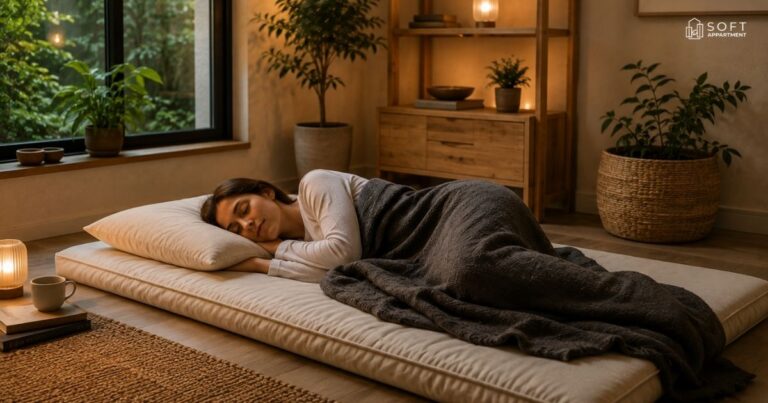
Sleep shapes your whole week. A bad night makes everything else feel harder. So set up your bed first. Even if the living room stays empty for a month, a good bed keeps you sane. Need layout ideas? Browse our bedroom and closet styling guides for inspiration.
Size matters in small U.S. bedrooms. A twin XL measures about 38 by 80 inches and fits tight spaces. A full is 54 by 75 inches. A queen is 60 by 80 inches and needs more room. Measure your bedroom before you shop. Also check that the mattress fits through the door.
Essentials: Mattress, Sheets, Pillows
Must-have 6 is a mattress with a frame or foundation. Must-have 7 is an apartment bedding set with two sets of sheets, a comforter, and two pillows. Two sheet sets let you wash one and use the other. Buy the mattress and pillows new. You can’t easily judge hygiene on used ones.
Nice-to-Have: Blackout Curtains, Nightstand, Lamp
Must-have 8 is blackout curtains or a sleep mask. City apartments often face bright streetlights. Curtains also add privacy right away. A small nightstand and a warm lamp come next. They make the room feel finished. However, none of these stop you from sleeping tonight.
Bathroom Necessities (Including the Ones People Forget)
Your bathroom starts completely empty. That includes toilet paper. Nobody wants to find that out at 11 p.m. So handle this room early. The bathroom essentials for apartment living are few but very important.
Now for the funny part. Many renters forget the plunger. Others skip the toilet brush and shower curtain liner. Then something goes wrong and panic sets in. Put these three items on your list today. You’ll thank yourself later.
Essentials: Towels, Shower Curtain, Toilet Paper, Plunger
Must-have 9 is a towel set with a shower curtain, liner, and hooks. Buy at least two bath towels and two hand towels. Must-have 10 is a plunger and a toilet brush. Stock a few rolls of toilet paper too. Most apartment living necessities live in this room.
Nice-to-Have: Storage Caddy, Bath Mat, Mirror
Must-have 11 is a non-slip bath mat. It’s a comfort item and a safety item. Wet tile gets slick fast. A shower caddy keeps bottles off the floor. A small mirror helps if your bathroom lacks one. These extras cost little and add real daily value.
Living Room Needs: Furnishing on a Budget
Furnish in phases. Start with seating and a spot for your laptop or TV. Then add extras as your paychecks come in. This approach lets you furnish an apartment on a budget without debt. Living with an empty corner for a while is fine.
Measure before you buy anything big. Check doorways, hallways, stairwells, and elevators. A sofa that won’t fit is a very expensive mistake. Renter-friendly tips help too. Pick furniture with legs so you can vacuum below. Your apartment furniture checklist should always include measurements, so see our living room essentials guide for more.
Essentials: Sofa, TV Stand, Lighting
Must-have 12 is comfortable seating like a sofa or loveseat. Must-have 13 is a table or TV stand. Add a floor lamp if your overhead light feels harsh or dim. Warm bulbs make small rooms cozy. Used sofas can work well after a deep clean.
Nice-to-Have: Rug, Side Table, Throw Blankets
Must-have 14 is a surge protector with an extension cord. U.S. rentals often have few outlets. A rug softens sound if you have neighbors below. A side table gives your drink a home. Throw blankets add comfort and color. You can buy all of these later.
Cleaning and Laundry Supplies Checklist
A clean start protects your deposit. Wipe cabinets, counters, and floors before you unpack. Take a few photos if anything looks dirty. Then keep up a light routine. Small weekly cleaning beats a huge scrub at move-out time.
Good apartment cleaning supplies don’t need to be fancy. A few basics handle most messes. Move-in cleaning is easier when boxes are still stacked. So do it before you fill the shelves. Landlords often deduct for dirt, so this step pays for itself. Our cleaning essentials list covers every product you need.
Essential Cleaning Supplies
Must-have 15 is an all-purpose cleaner with paper towels or microfiber cloths. Must-have 16 is a broom and dustpan. Must-have 17 is a trash can with bags. Add a toilet cleaner and a small mop or vacuum. Together they keep your space fresh for months.
Laundry Basics: Hamper, Detergent, Drying Rack
Must-have 18 covers laundry. Buy a hamper, detergent, and a folding drying rack. Shared laundry rooms often need quarters or a payment app. Ask your landlord which one applies. A mesh bag also protects delicate clothes. Stock stain remover for surprise spills.
Tools, Safety, Pet and Weather-Ready Supplies
Small emergencies strike every apartment sooner or later. A leaky faucet or a dead smoke alarm won’t wait for a better day. So prepare early. This is also where many guides fall short. They skip weather prep and pet items completely.
Think of this section as your insurance policy. A tiny toolkit and a few safety products cost less than one emergency call. They also give you peace of mind. The list is short and worth every dollar.
Basic Toolkit and Light Bulbs
Must-have 19 is a mini toolkit. Pack a screwdriver set, a hammer, pliers, and a tape measure. Add spare light bulbs in the right size. A flashlight app won’t fix a loose cabinet door. Tools do. Keep them in one small box under the sink.
Safety Products: First Aid Kit, Fire Extinguisher, Smoke Detector
Apartment safety essentials start with three items. Must-have 20 is a renters’ first aid kit with bandages, gauze, antiseptic wipes, and pain relievers. Must-have 21 is a small multipurpose fire extinguisher. Must-have 22 is spare batteries for smoke and carbon monoxide alarms. The U.S. Consumer Product Safety Commission says to test alarms every month and change batteries yearly.
Pet Supplies and Weather-Ready Items
Must-have 23 is a flashlight with extra batteries and a few seasonal items. Ready.gov suggests a basic kit with water, food, a flashlight, a first aid kit, and extra batteries. Add a heater or fan, ice melt, or storm supplies for your region. Pet owners should add bowls, food, litter, and ID tags.
Storage, Decor, and What to Buy vs. What to Thrift
Small spaces reward vertical thinking. Go up instead of out. Walls, doors, and the area under your bed all hold stuff. Decor then turns a plain rental into a home. It doesn’t need to cost much. A little creativity goes a long way.
Thrifting also stretches your budget. Try secondhand stores, Facebook Marketplace, and local buy-nothing groups. College move-out season in May is a goldmine for cheap furniture. Prices drop as students rush to leave town. Timing your search well can save hundreds.
Smart Storage Ideas for Small Apartments
Must-have 24 is a set of small apartment storage ideas that fit lease rules. Use over-the-door hooks, under-bed bins, and tall shelves. Add a slim rolling cart in the kitchen or bathroom. Good apartment organization also means giving every item a home. Label bins so you can find things fast.
Budget-Friendly Decor to Make It Feel Like Home
Must-have 25 is a few personal touches. Use removable wall hooks or strips so you keep your deposit. Add a plant, a framed photo, or a colorful throw. Small changes help you make an apartment feel like home. Warm lighting works wonders too. Pick things you truly love.
Buy New vs. Thrift Comparison
Some items belong on your new list. Others are perfect for secondhand shopping. Here’s a simple guide for any college graduate apartment.
| Buy new | Thrift or buy used |
|---|---|
| Mattress | Dressers |
| Pillows | Bookshelves |
| Towels | Side tables |
| Nonstick cookware | Glassware and mugs |
| Smoke alarms | Desks and chairs |
Mini case study (illustrative example): Imagine Maya, a recent graduate renting a studio. She bought a new mattress and towels. Then she thrifted a dresser, a bookshelf, and a desk for under $150 total. That smart buy vs thrift furniture split saved her a few hundred dollars compared with buying everything new.
Frequently Asked Questions (FAQs)
These quick answers cover the apartment essentials questions people ask most. Use them as a fast reference while you shop. Each one ties back to the checklist above. Bookmark this page so you can return anytime.
What are the must-haves for a basic apartment?
Focus on bedding, a few kitchen tools, towels, toilet paper, cleaning supplies, and a first aid kit. Add a plunger, light bulbs, and a surge protector. These apartment must-haves cover daily life. Everything else can wait until your first paycheck settles in.
What basic kitchen items do I need to cook my first meal?
You need a pot, a skillet, a knife, and a cutting board. Add a spatula, a wooden spoon, and a can opener. Plates, bowls, and silverware finish the set. With these, you can cook pasta, eggs, and simple stir-fries tonight.
Do I need a first aid kit right away?
Yes. Minor cuts and headaches don’t wait for you to unpack. Buy a small kit during move-in week. Include bandages, gauze, antiseptic wipes, tweezers, and pain relievers. Check expiration dates twice a year. Keep it in an easy-to-reach cabinet.
How much does it cost to furnish a basic apartment?
Costs vary widely. A thrifted setup can run around $500 to $1,500. A mostly new setup often costs $2,000 to $5,000 or more. Your city and choices matter. Start with a things to buy for a new apartment list and set a firm limit.
How do I make a new apartment feel like home?
Start with lighting, plants, and a few personal items. Hang photos with removable hooks. Add a soft rug and a cozy blanket. Play your favorite music while unpacking. Small touches create big comfort. Give yourself a few weeks to settle in.