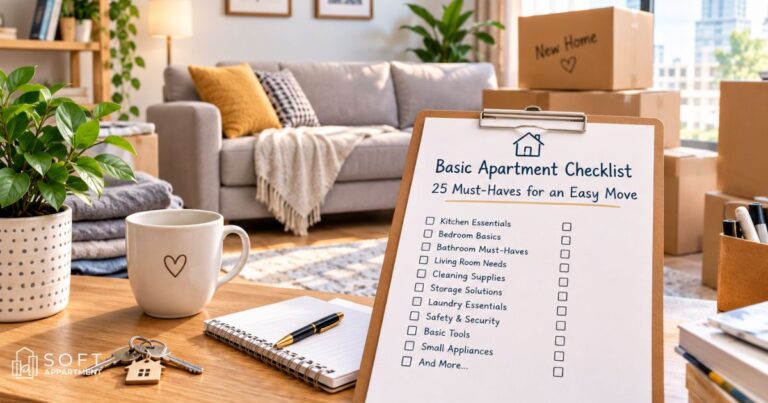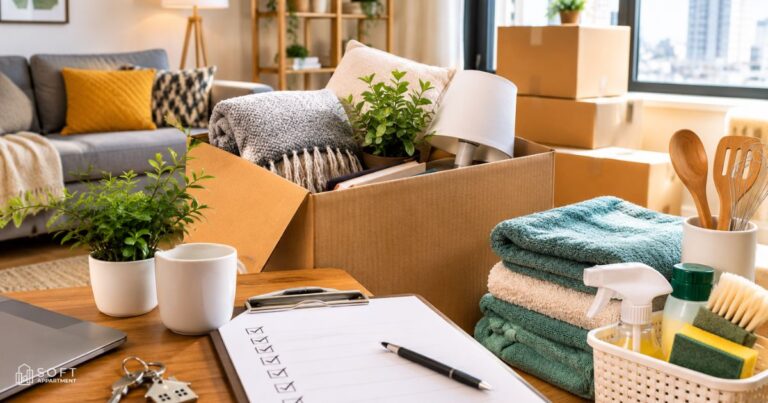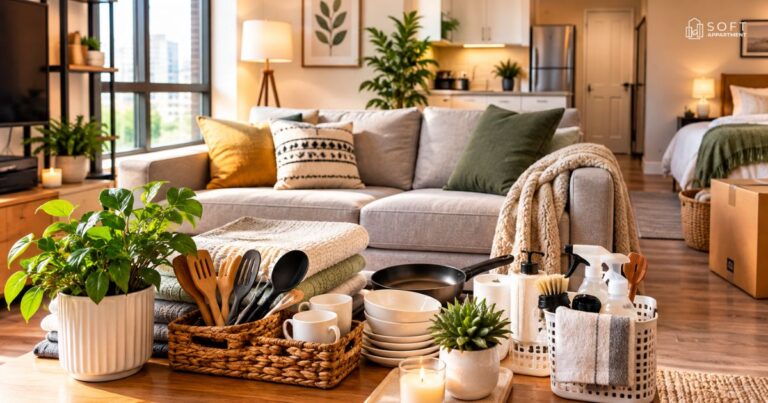








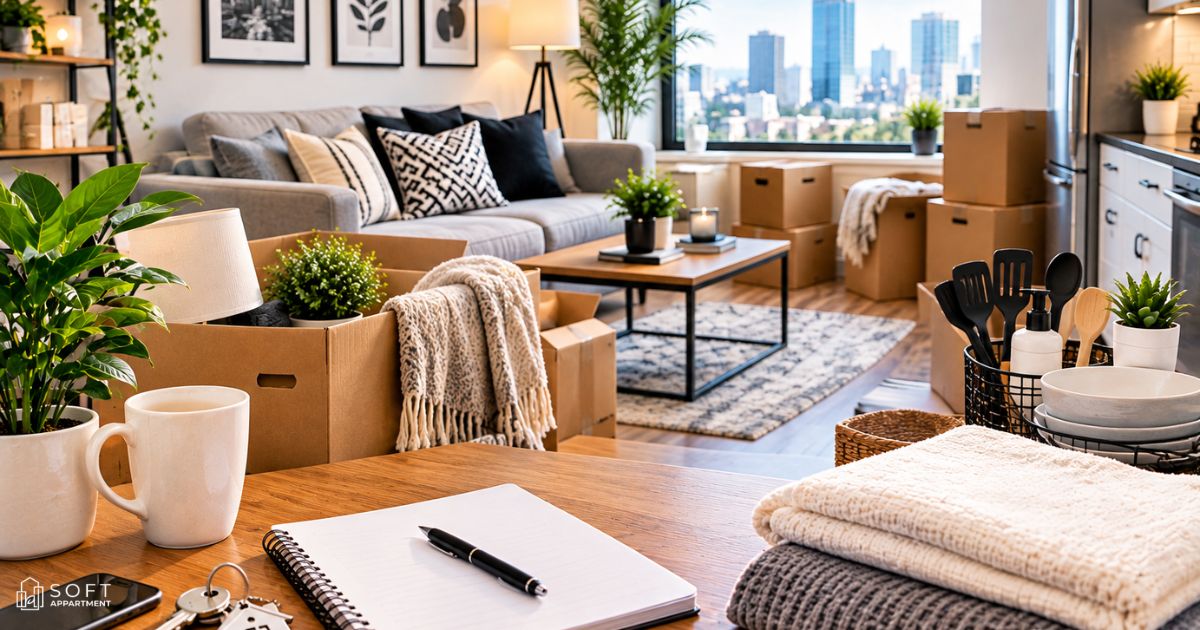
Picture your first night in a new place. The lights work. The keys feel great in your hand. Then you notice you have no toilet paper, no shower curtain, and a pizza box for a plate. Don’t worry. This guide fixes that.
Here are the things to buy for your first apartment, in a simple first apartment checklist of 50 items. You’ll get a smart buying order and real US price ranges. It also covers small items most lists miss. Whether you’re a student or a young professional, this is the new apartment shopping list you need.
- Note: prices below are rough US estimates. Check current prices before you buy.
What to Buy First When Moving Into Your First Apartment
Start with a plan, not a shopping cart. Ask your landlord what comes with the unit. Many US rentals include a fridge, stove, and blinds. Some also have a dishwasher and a smoke detector. Then measure every room. A sofa that doesn’t fit through the door is an expensive mistake. Finally, walk through with a move-in checklist and take photos of any damage.
Now think in layers. Sleep comes first, so buy a bed and bedding. Bathroom basics come next. Then grab a few kitchen items and some apartment cleaning supplies. Furniture and decor can wait. This order works because it covers your body’s needs before your eyes’ wants. It also keeps your first apartment on a budget from spiraling in week one.
Your First-Week Buying Order
The table below turns the priority list into a simple apartment starter kit schedule. Follow it day by day. You’ll avoid panic buying and stay calm when the boxes pile up.
| When | What to Buy | Why It Matters |
|---|---|---|
| Day 1 | Toilet paper, towel, phone charger, bedding, snacks | Your survival kit for the first night |
| Days 2 to 3 | Pots, plates, silverware, cleaning basics | You can cook and clean at home |
| Days 4 to 7 | Curtains, lamps, storage, tools | The place starts to feel finished |
Things to Check Before You Spend a Dollar
Before you shop, handle the boring paperwork. Set up electricity and internet before moving into first apartment day. Buy renters insurance too. The National Association of Insurance Commissioners explains how it works in its guide, Protecting Your Belongings With Renters Insurance. It protects your stuff from theft, fire, and water damage. Also learn where the breaker box and water shutoff sit. You’ll thank yourself during your first leak.
Kitchen Essentials to Buy for Your First Apartment
Start small. Buy only what you’ll cook with in your first month. Most new renters use the same three pans again and again. Fancy gadgets collect dust. Your apartment kitchen essentials should cover breakfast, lunch, and a simple dinner. Expect to spend about $100 to $400 depending on brands and whether you shop used.
A good-enough set beats an expensive one. A $25 frying pan cooks eggs just fine. A mid-range knife will last for years if you keep it sharp. Save your money for the items you touch daily. That’s usually the knife, the pan, and the cutting board. Everything else can be basic, cheap, and cheerful.
Cookware and Bakeware
Every kitchen needs a frying pan, a saucepan with a lid, and a large pot for pasta or soup. Add a baking sheet for roasting vegetables or reheating pizza. These four pieces of cookware and bakeware handle about 90 percent of home cooking. Nonstick pans are cheap and easy to clean. Just use wooden or silicone tools so the coating lasts longer.
Dishes, Cutlery and Utensils
Buy a dinnerware set for two to four people, plus silverware. Add a spatula, tongs, and a wooden spoon. Simple white plates match everything and replace easily if one breaks. Buy more only when you host guests. Most people don’t need a full set of twelve on day one.
Small Tools and Appliances
Your last four items are a chef’s knife, a cutting board, a can opener, and a kettle or coffee maker. If your unit has no microwave, add one. Among small appliances, a kettle and a microwave give the best value. Skip the stand mixer, the air fryer, and the knife block for now.
| # | Kitchen Item | Typical Cost |
|---|---|---|
| 1 | Frying pan | $15 to $40 |
| 2 | Saucepan with lid | $15 to $35 |
| 3 | Large pot | $20 to $50 |
| 4 | Baking sheet | $8 to $20 |
| 5 | Dinnerware set | $20 to $60 |
| 6 | Silverware and utensils | $15 to $40 |
| 7 | Chef’s knife | $15 to $60 |
| 8 | Cutting board | $8 to $25 |
| 9 | Can opener | $5 to $15 |
| 10 | Kettle or coffee maker | $15 to $60 |
Bedroom Essentials You Need
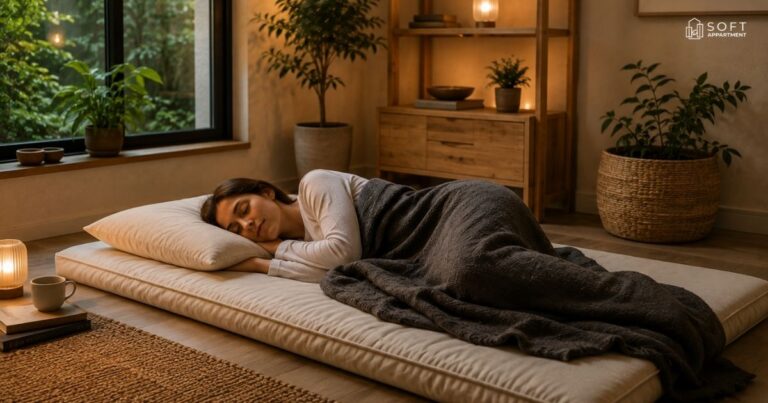
Sleep is the best investment you’ll make. A tired person makes poor choices, and that includes shopping choices. Your apartment bedroom essentials start with a mattress. Many US apartments fit a Twin XL, Full, or Queen. Measure first. A Queen feels lovely but can swallow a small room. Plan on $250 to $900 for the whole bedroom setup.
Next, think about privacy and comfort. Blackout curtains block streetlights and morning sun. A mattress protector guards your deposit against spills and stains. It also helps against bed bugs, and the EPA recommends a protective cover on your mattress and box spring. Buy these items new because you can’t see what happened to a used mattress. Everything else in the room can come from a garage sale or a friend.
Bed and Bedding Basics
You need a mattress, a bed frame, two sheet sets, pillows, and a comforter. A full bedding set often costs less than buying pieces one by one. Two sheet sets let you wash one while you sleep on the other. A simple metal frame is cheap and easy to move. It also fits most rental leases.
Storage, Lighting and Privacy
Add blackout curtains and a bedside lamp to finish the room. Then think about storage solutions. Cheap hangers, under-bed bins, and a small dresser keep clothes off the floor. For more ideas, browse our bedroom and closet styling posts. Good lighting matters more than most people think. A warm lamp beats a harsh ceiling bulb every evening.
Bathroom Essentials Checklist
Here’s a surprise for many new renters. Bathrooms come totally bare. You get a sink, a tub, and a toilet. That’s it. So buy the basics before you move in. Your apartment bathroom essentials cost less than any other room, usually $50 to $150. That makes it the easiest win on your list.
Keep it simple. Choose white or gray towels so everything matches. Pick a sturdy shower curtain that won’t cling to you. Then add small extras as you learn what you need. If the room is tiny, an over-the-toilet shelf adds storage without using floor space.
Shower and Towel Basics
Buy a shower curtain and bath mat first. Add a plastic liner and hooks if the set doesn’t include them. Then get two to four towels. Two towels per person let you rotate while one dries. A quick-dry towel is a smart pick because damp bathrooms grow mildew fast.
Toilet, Trash and Toiletries
Your last items are a toilet brush, a plunger, a small trash can, and a first aid kit. Stock toilet paper and basic toiletries too. You’ll use the plunger rarely. But when you need it, you’ll need it now. A basic kit with bandages, pain relievers, and antiseptic wipes solves most small emergencies.
Living Room Essentials
One comfy seat and good lighting make a room feel finished. That’s the secret. Your living room essentials don’t need to match or cost a fortune. Focus on a place to sit, a place to set a drink, and a way to power your devices. Expect to spend $200 to $800 depending on whether you buy new or used.
Furnish in stages. Start with a sofa and a lamp. Live with the room for a few weeks. You’ll learn where you actually sit and what feels missing. Then add a table, a shelf, or a rug. This slow approach saves money and helps your home organization feel natural instead of forced.
Seating and Surfaces
Pick a sofa or loveseat first. Then add a coffee table or side table and a TV stand or shelf. Budget-friendly furniture from IKEA, Target, or a local resale shop works well here. Choose sturdy pieces with simple lines. They’ll fit any future apartment too, which matters because most people move every couple of years.
Lighting and Power
Finish with lamps, a rug, and a power strip and extension cord setup. A rug warms up hard floors and cuts down on noise for your downstairs neighbors. Choose a surge protector for your TV and laptop. Also check your Wi-Fi plan. Renting a router from your provider costs extra each month. Buying your own often pays off within a year.
Cleaning and Laundry Supplies
A clean start makes a home feel like yours. Even a “move-in ready” unit needs a wipe-down. Grab a small kit of apartment cleaning supplies before the boxes arrive. Wipe cabinets, counters, and the inside of the fridge first. Spending $40 to $100 here saves you from living with someone else’s crumbs.
Laundry planning matters as much as cleaning. Some units include a washer and dryer. Many don’t. If yours doesn’t, find the nearest laundromat or shared laundry room. Ask what payment it uses, since some take quarters and others use an app. Knowing this early prevents a Sunday-night sock crisis.
Everyday Cleaning Kit
Buy a broom with a dustpan, a mop, all-purpose cleaner, dish soap, and sponges. That’s five items and they cover nearly every mess. Add rubber gloves if you have sensitive skin. Buy a small vacuum only if you have carpet. On hard floors, a broom and mop do the job.
Laundry Basics
Get a laundry basket or hamper and a bottle of detergent. That makes seven cleaning items in total. A collapsible basket is perfect for hauling clothes to a shared laundry room. It also stores flat in a closet. Buy a small stain remover too. It’s cheap and saves shirts.
Tools, Safety and Home Maintenance Items
A tiny toolkit saves you from calling maintenance for small jobs. Tightening a loose cabinet handle takes two minutes with a screwdriver. Waiting three days for a work order feels much longer. A basic tool kit usually costs $40 to $120 with safety gear included. Think of it as cheap insurance for your patience.
Safety comes next. Renters often forget that fire safety is their job too. Landlords must provide smoke alarms in most states, but you should still test them. Add a flashlight and a small fire extinguisher for the kitchen. And when you hang art, use damage-free hooks so you get your full deposit back.
Basic Toolkit
Your tools list is short. Get a screwdriver set, a hammer, a tape measure, and Command hooks. These four items handle picture hanging, furniture building, and quick fixes. Keep them in one small box near the door. When something wobbles at 9 p.m., you’ll know exactly where to look.
Safety Must-Haves
Buy a flashlight and a fire extinguisher, then test your smoke detector with the test button. The National Fire Protection Association advises you to test every alarm once a month and replace each unit every 10 years. Check for a carbon monoxide detector too. Those are your last three items. Please don’t skip renters insurance either. A common rule of thumb says to protect what you can’t afford to replace. That’s your laptop, your clothes, and your peace of mind.
Easy-to-Forget Things to Buy for Your First Apartment
Ever had a 3 a.m. discovery? You wake up thirsty and the light bulb in the kitchen is dead. Or the trash is full and you have no bags. Small things cause big annoyance. These are the first apartment necessities nobody puts on the big list. They cost little but save a lot of stress.
Here’s a trick that works. Keep a running note on your phone for the first two weeks. Each time you say “I wish I had a…” add it to the list. Then shop once. This beats ten small trips to the store. It also builds a personal first apartment checklist that fits your real life.
Small Items People Miss
Buy light bulbs, trash bags, a door mat, a doorstop, and an extra phone charger. Add basic spices and cooking oil for your first meals. That’s six quick wins. A lint roller is a nice bonus. These are the classic apartment must-haves that hide in plain sight until you suddenly need them.
Case study (an illustrative example): Imagine a renter named Maya. She moved into a one-bedroom in Ohio with a $1,000 budget. She bought a mattress, a bedding set, and basic pots on day one. She waited three weeks for a sofa and found one on Facebook Marketplace for $90. She finished with $140 left over. Her secret was patience, not luck.
How to Save Money on First Apartment Essentials
You don’t need a big budget to make a home. You need a smart plan. The best things to buy for your first apartment on a small budget come from used sources. Try thrift stores and Facebook Marketplace for furniture. Check Goodwill, Buy Nothing groups, and college move-out sales. Timing helps too. Back-to-school and holiday sales can cut prices sharply. That’s how you keep first apartment on a budget goals real.
Also ask around. Friends and family often have spare pans, extra plates, or a lamp they never use. Take the help. Then buy new only when the item touches your body or your food. That means a mattress, towels, and bedding. Hunting for cheap apartment essentials feels like a game once you get the hang of it.
Where to Shop for Cheap
Each store below has a sweet spot. Match the item to the store and you’ll save the most.
| Store | Best For | Typical Savings |
|---|---|---|
| Goodwill or thrift stores | Cookware, shelves, decor | 50% to 80% off retail |
| Facebook Marketplace | Sofas, dressers, tables | 40% to 70% off retail |
| IKEA | Storage, lamps, basic furniture | Low prices with flat-pack |
| Target and Walmart | Bedding, towels, cleaning gear | Frequent sales and bundles |
| Buy Nothing groups | Almost anything | Free |
What to Buy New vs. Used
Buy new for anything that touches your skin or food. That means the mattress, pillows, towels, and sheets. Buy used for anything hard and durable. That includes sofas, dressers, bookshelves, and cast iron pans. Wipe used items well before you bring them home. Also check couches and mattresses for bed bugs. The EPA’s bed bug guide shows what to look for and how to protect your home. It takes two minutes and protects your whole space.
Estimated Budget by Room
Use this table to plan your total spending. Low means mostly used items. High means mostly new items. Your final number will sit somewhere in between. Remember that these are estimates for renting an apartment in most US cities.
| Room | Low | Mid | High |
|---|---|---|---|
| Kitchen | $100 | $200 | $400 |
| Bedroom | $250 | $500 | $900 |
| Bathroom | $50 | $100 | $150 |
| Living room | $200 | $450 | $800 |
| Cleaning and laundry | $40 | $70 | $100 |
| Tools and safety | $40 | $80 | $120 |
| Easy-to-forget items | $30 | $50 | $80 |
| Total | $710 | $1,450 | $2,550 |
FAQs About Things to Buy for a First Apartment
Still have questions? That’s normal. Most people wonder the same few things before they shop. This section answers them in plain English. Keep in mind that the best things to buy for your first apartment depend on your space, your lifestyle, and your budget. So use these answers as a guide, not a rule.
Want a shortcut? Copy the lists above into your notes app and cross items off as you buy them. You can also print the article and tape it to your fridge. A physical list keeps you honest. It also helps with home organization because you’ll know what you already own.
What should I buy first for my first apartment?
Start with a bed, bedding, towels, toilet paper, and a few basic kitchen items. This covers sleep, hygiene, and food on day one. Everything else can wait a week or two while you learn how you live in the space.
How much does it cost to furnish a first apartment?
Most US renters spend between $700 and $2,500. Shopping used lands near the low end. Buying everything new lands near the high end. Your city also matters, because prices run higher in places like New York or San Francisco.
What do I not need to buy right away?
Skip large decor pieces, a stand mixer, an air fryer, and matching furniture sets. Wall art, plants, and extra throw pillows can wait too. Live in the space first. Then decide what’s missing.
What items do most first-timers forget?
The most common misses are light bulbs, trash bags, a plunger, a door mat, and a power strip. People also forget renters insurance and a spare phone charger. Keep a running list for two weeks to catch them all.