







![Documents Needed to Rent an Apartment: 11 Must-Have Papers [2026]](https://softappartment.com/wp-content/uploads/2026/10/documents-needed-to-rent-an-apartment-11-must-have-papers-150x150.jpg)


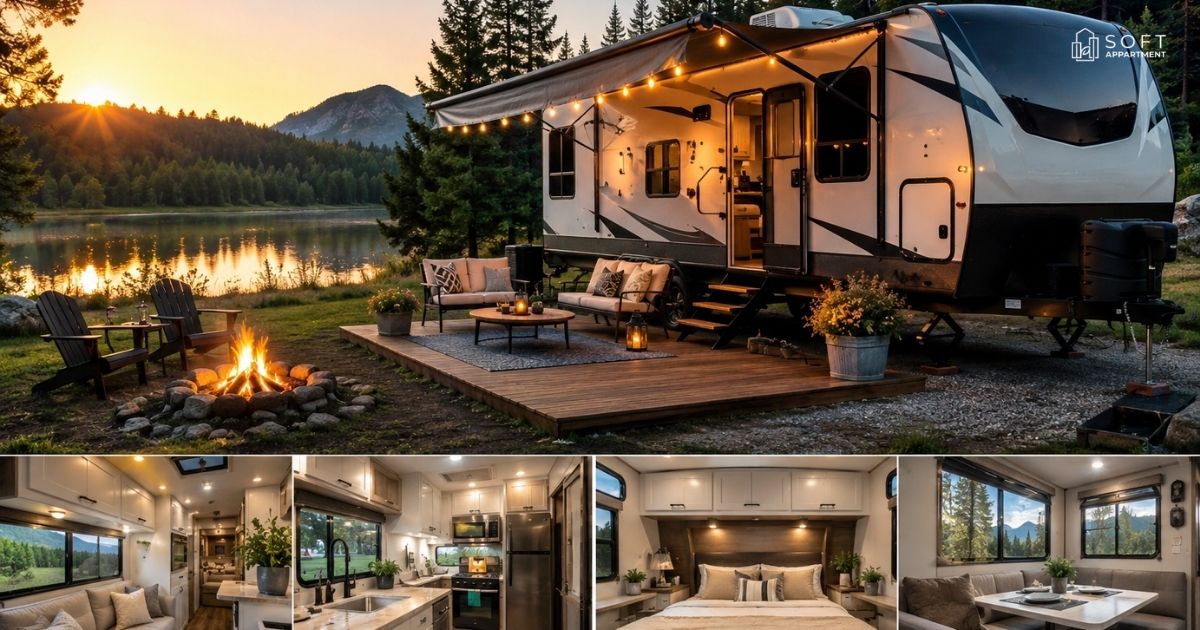
Finding the right RV can feel like choosing a tiny home with wheels. The best campers to live in full time combine practical space, dependable utilities, and everyday comfort. They also need to match your budget and travel habits. For some people, RV living offers freedom that a fixed apartment simply can’t provide.
Before buying, though, look beyond a pretty floor plan. Think about where you’ll park, how you’ll handle water, and how you’ll stay warm. Your ideal camper should support your real routine, not just weekend adventures. This guide compares the main options and explains what full-time living actually requires.
What Are Campers to Live In?
A camper designed for extended living is more than a sleeping space. It needs useful cooking areas, bathroom facilities, storage, climate control, and dependable electrical systems. The RV Industry Association classifies travel trailers, fifth wheels, truck campers, and motorhomes as major RV categories.
However, there’s an important distinction. RVs are generally designed as temporary living quarters rather than permanent housing. Local laws can also determine whether you may use one as your primary residence. That’s why full-time RV living requires planning beyond the vehicle itself.
Understanding Full-Time Campers and Residential RVs
The best campers for full-time living usually have stronger insulation, larger tanks, better storage, and more durable interiors. A weekend camper might work beautifully for three nights. Living inside it for twelve months is a different ball game.
Why More People Are Choosing Campers Instead of Apartments
For many Americans, camper living vs apartment living comes down to flexibility. An apartment gives you a fixed address and predictable amenities. An RV can give you mobility, outdoor access, and the ability to change your surroundings without moving furniture.
Still, freedom comes with responsibilities. You must consider campsite fees, fuel, repairs, insurance, maintenance, and parking rules.The IRS lists a 2026 business mileage rate of 76 cents per mile for July through December, showing how vehicle use can become a meaningful expense.
Camper Living vs. Traditional Apartment Renting
Imagine working remotely from Arizona during winter and Montana during summer. That flexibility sounds appealing. Yet your monthly budget must cover more than a loan payment. Camper living works best when mobility, simplicity, and careful spending fit naturally into your lifestyle. If you’d rather earn while you travel, workamping jobs with housing are worth looking into, since they can offset a big share of your monthly costs.
10 Best Campers to Live In Full Time
The best campers to live in full time aren’t identical because every household has different needs. A couple may prefer a fifth wheel with a large kitchen. A solo worker may value a compact van instead. Families usually need more sleeping areas and storage.
The table below gives you a practical starting point. Model availability and pricing can change, so verify current specifications before purchasing.
| Camper | Type | Best For | Main Advantage |
| Keystone Montana | Fifth wheel | Couples and families | Spacious residential layout |
| Grand Design Solitude | Fifth wheel | Long stays | Large living areas |
| Brinkley Model Z | Fifth wheel | Luxury seekers | Modern interiors |
| Alliance RV Avenue | Fifth wheel | Full-time owners | Comfortable floor plans |
| Northwood Arctic Fox | Travel trailer | Four-season use | Strong weather focus |
| Airstream Classic | Travel trailer | Couples | Premium compact living |
| Oliver Legacy Elite II | Travel trailer | Two people | Durable construction |
| Newmar Dutch Star | Class A | Luxury travelers | Integrated living |
| Leisure Travel Vans Unity | Class B | Couples and solo workers | Easy mobility |
| Airstream Flying Cloud | Travel trailer | Flexible travelers | Efficient layouts |
Comparing the Best Full-Time RV Types and Models
These choices represent different approaches to RV living. Fifth wheels maximize interior space. Travel trailers balance cost and flexibility. Motorhomes combine transportation with living space. Camper vans prioritize mobility. Your choice should follow your daily routine rather than a flashy specification sheet. For a look at how a modern small-space floor plan works in practice, see our breakdown of the Grand Design Imagine 2670MK.
Fifth Wheels for Spacious Full-Time Living
Fifth-wheel campers are popular with people who want an RV that feels closer to a small apartment. Their raised front section creates useful floor space. Many models also offer residential kitchens, large bedrooms, spacious bathrooms, and multiple seating zones.
The trade-off is towing. You need a suitable pickup truck and a compatible hitch. RVIA notes that fifth wheels require pickup towing and can become too large for inexperienced drivers. Always match the trailer’s ratings with your truck.
Why Fifth Wheels Feel More Like Traditional Homes
For a couple spending most of the year inside, a fifth wheel can provide excellent separation between living and sleeping areas. That distinction matters. You can cook dinner while your partner works or relax without turning the bedroom into a workspace.
Travel Trailers for Affordable Camper Living
Travel trailers offer one of the broadest selections in the RV market. They range from compact units to large coaches with residential amenities. You can also unhitch the trailer and use your tow vehicle separately around town.
That flexibility makes affordable camper living possible for some buyers. However, don’t choose a trailer based only on its sticker price. Check towing limits, cargo capacity, insulation, tank sizes, repair history, and long-term comfort before signing anything.
Choosing a Travel Trailer for Long-Term Comfort
A good long-term trailer should feel functional on an ordinary Tuesday. Look for a usable kitchen, a real dining area, sensible storage, and a bed you won’t dread using. Those details matter more after several months than decorative finishes do.
Camper Vans for Flexible and Mobile Living
Camper van living suits people who want maximum mobility with fewer moving parts. A van can navigate city streets more easily than a large fifth wheel. It can also fit into many parking spaces and smaller campsites.
The compromise is interior space. You may sacrifice a large bathroom or expansive kitchen. Still, a well-designed van can provide a bed, cooking area, work zone, refrigerator, and electrical system without feeling chaotic.
When a Camper Van Makes More Sense Than a Larger RV
A van can make sense when you travel often and spend more time outside than inside. It’s especially useful for solo travelers and couples. If you need a large office, full kitchen, or separate bedroom, however, a bigger RV may serve you better.
Essential Features to Look for in a Full-Time Camper
Start with insulation and climate control because temperature affects comfort, energy use, and condensation. Next, examine off-grid power, tank capacity, plumbing, and ventilation. A camper that works in mild weather may struggle during freezing nights or intense summer heat.
Then inspect the details you use every day. Look for solar panels and batteries, a useful fresh water tank, dependable wastewater tanks, and ample storage. These systems form the backbone of practical full-time living.
The Features That Make an RV Comfortable Year-Round
Don’t overlook kitchen functionality, comfortable sleeping space, and bathroom facilities. Remote workers should also prioritize a reliable remote work setup and strong internet connectivity. Finally, check weight and towing capacity, cargo carrying capacity, and weatherization and maintenance needs.
How to Make a Camper Feel Like a Real Home
A camper becomes home through routine rather than square footage. Use vertical storage, keep counters clear, and choose furniture that serves more than one purpose.Warm lighting and familiar textiles can also make a compact interior feel surprisingly inviting. For hands-on inspiration, check our guide to cozy ways to transform a small RV bedroom.
Storage deserves special attention. When everything has a designated place, the space feels larger. A cluttered RV can feel cramped within minutes. Good organization turns limited square footage into usable living space.
Turning a Compact RV Into a Comfortable Living Space
Think of your camper like a small apartment with strict boundaries. Every item should earn its space. Foldable furniture, under-bed storage, wall organizers, and compact appliances can create breathing room without sacrificing daily convenience.
Where Can You Live in a Camper Full Time?
Your RV home base might be a private campground, seasonal RV park, or another permitted location. Some travelers also use public lands for shorter stays. The Bureau of Land Management manages designated areas where longer RV stays may be available under specific rules.
However, don’t assume every driveway or piece of land allows RV residence. Local zoning, HOA rules, campground policies, and utility requirements can vary. Check the regulations before settling in. Your legal parking arrangement matters as much as your camper.
RV Parks, Private Property, Public Lands, and Long-Term Stays
RV parks and campgrounds often provide hookups, laundry facilities, dump stations, and community amenities. Public-land options can offer a more rustic experience. Long-term camper living becomes much easier when you understand the rules, costs, and services at each location.
Is Living in a Camper Cheaper Than Renting an Apartment?
The answer depends on how you use your RV. A paid-off camper parked at an inexpensive long-term site may reduce housing costs. A financed luxury motorhome that moves constantly can become expensive very quickly.
Remember the hidden expenses. Fuel, tires, insurance, campground fees, maintenance, repairs, registration, internet, propane, and vehicle costs all matter. RVIA also emphasizes that RVs are recreational vehicles rather than conventional housing.
Comparing the Real Monthly Cost of Camper and Apartment Living
Consider two households with similar budgets. One rents an apartment and pays fixed housing costs. Another owns an RV but travels frequently. The second household may save on rent while spending more on transportation. The cheapest option depends heavily on location and travel frequency.
| Expense | Apartment | Camper |
| Housing payment | Rent | Loan or ownership cost |
| Utilities | Often separate | Often included or separate |
| Parking | Usually included | May cost extra |
| Maintenance | Landlord handles most | Owner pays |
| Internet | Usually simple | Can require multiple options |
| Mobility | Low | High |
| Fuel | Normal commuting | Can become significant |
How to Choose the Right Camper for Your Lifestyle?
Start with your daily life rather than the brochure. A solo remote worker may need a compact office and reliable internet. A family may need bunk space and larger tanks. A couple staying in one location may prefer a spacious fifth wheel.
Climate also matters. If you plan to spend winters in cold states, prioritize insulation and heating. If you move frequently, weight and maneuverability become more important. Your ideal camper should solve your real problems instead of creating new ones.
Match Your Camper to Your Budget, Space, and Daily Routine
Think about how you sleep, work, cook, travel, and relax. Then choose the RV that supports those habits. The right full-time RV lifestyle should feel manageable on ordinary days. Comfort isn’t luxury alone. It’s having systems that work when you need them.
Final Thoughts on Choosing a Full-Time Camper
The right camper isn’t necessarily the biggest or most expensive one. It’s the model that fits your budget, routine, travel plans, and comfort expectations. Before buying, spend time inside several layouts. Imagine cooking breakfast, working eight hours, showering, and relaxing there.
For some people, campers to live in provide a refreshing alternative to conventional housing. For others, an apartment remains simpler and more predictable. Either way, thoughtful planning makes the decision clearer. Compare the vehicle, the campsite, and the lifestyle together. That’s where the real value lies.
FAQs About Campers to Live In
What is the best camper to live in full time?
The best choice depends on your lifestyle. Fifth wheels offer generous space, travel trailers provide flexibility, and camper vans prioritize mobility. For many buyers, the best camper balances comfort, towing needs, storage, climate control, and budget.
Can you live permanently in a camper?
You may be able to live in an RV for extended periods, but permanent occupancy rules vary by location. RVIA describes RVs as temporary living quarters rather than permanent residential housing. Check state, county, city, zoning, and campground regulations before settling anywhere.
Is it cheaper to live in a camper than an apartment?
Sometimes, but not automatically. Your total cost includes the RV, financing, insurance, fuel, campground fees, maintenance, utilities, and repairs. Someone who stays in one affordable location may spend less than a renter. Frequent travel can quickly change that calculation.
What type of camper has the most living space?
Large fifth wheels and Class A motorhomes generally provide some of the most spacious RV interiors. Fifth wheels can create a residential feel without carrying an engine. Class A motorhomes combine large interiors with integrated driving space.
Can you work remotely from a camper?
Yes. Many RVs can support remote work when you plan for reliable power and connectivity. A dedicated desk, cellular service, backup power, and suitable internet connectivity can make working much easier. Your location also matters when cell coverage is limited.





![Documents Needed to Rent an Apartment: 11 Must-Have Papers [2026]](https://softappartment.com/wp-content/uploads/2026/10/documents-needed-to-rent-an-apartment-11-must-have-papers-768x403.jpg)
