






![Documents Needed to Rent an Apartment: 11 Must-Have Papers [2026]](https://softappartment.com/wp-content/uploads/2026/10/documents-needed-to-rent-an-apartment-11-must-have-papers-150x150.jpg)



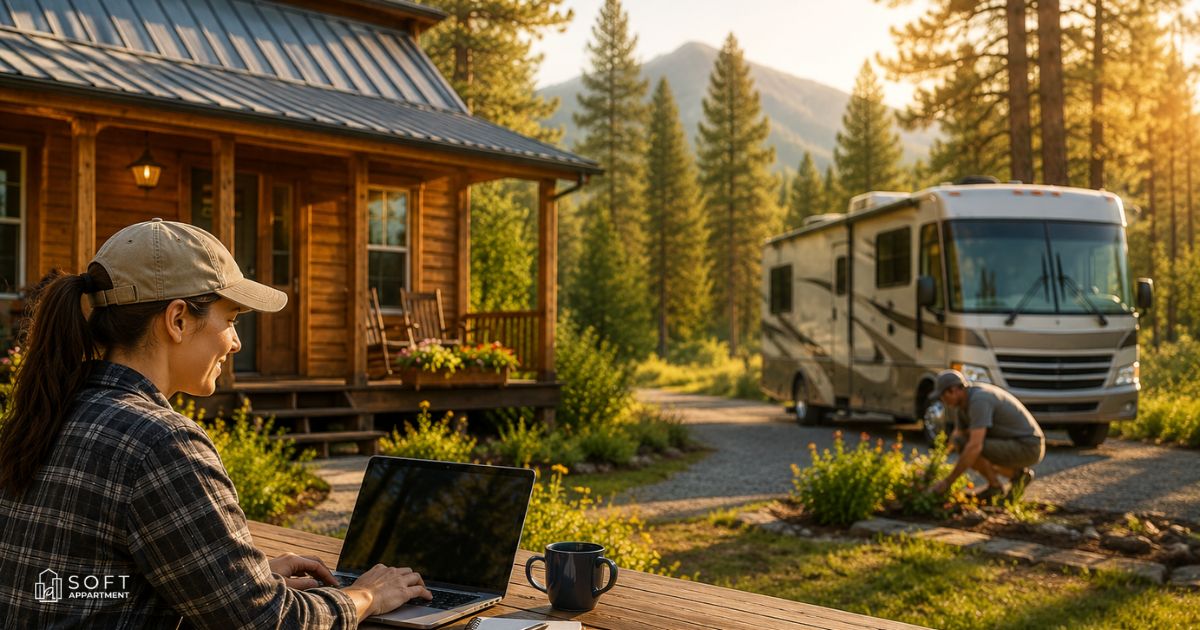
Finding work that includes a place to stay can change your entire travel budget. workamping jobs with housing let you earn money while reducing one of the biggest costs: accommodation. For many Americans, this lifestyle combines seasonal work, road travel, and practical living in one arrangement. Workamping can involve paid jobs, volunteer roles, RV sites, housing, or combinations of these benefits.
Whether you’re a workamper, seasonal worker, or RV traveler, the housing details matter. A free campsite sounds great until you discover that electricity costs extra. Likewise, a private cabin may offer comfort but come with stricter employment terms. This guide explains the main choices, employer arrangements, and questions worth asking before you accept a position.Once you’ve settled into an RV site, our RV Bedroom Ideas guide can help you make that space feel like home for the season.
What Are Workamping Jobs With Housing?
Workamping means working while living in an RV or traveling lifestyle. Although many people associate it with campgrounds, opportunities also appear at resorts, ranches, parks, farms, lodges, and tourist businesses. Some employers provide employee housing, while others offer an RV site, wages, utilities, or a combination.
For example, seasonal jobs with housing can suit someone who wants to spend a summer near a national park. A workamper might receive a campsite plus hourly pay. Another worker may receive a cabin or room instead. The arrangement depends on the employer, role, location, season, and agreement. Workamper News, the membership organization that coined and trademarked the term “Workamper” back in 1987, is a good starting point for browsing current listings and understanding how these arrangements typically work.
Workamping Jobs With Housing for Different Workers
The biggest advantage is flexibility. A solo seasonal worker may prefer a private room, while a traveling couple might want an RV site. Some employers also recruit families or crews. Therefore, don’t assume workamping follows one rigid formula. Modern opportunities cover many lifestyles and employment arrangements.
How Does On-Site Housing Work for Workampers?
Housing can form part of your compensation package rather than simply being a perk. Some employers offer on-site employee housing at no charge. Others provide discounted accommodation, while some deduct housing costs from wages. Current listings show arrangements ranging from discounted RV sites to shared housing opportunities.
Before accepting, ask exactly what’s included. Check rent, deposits, utilities, internet, parking, furnishings, pets, guests, and maintenance. A listing that says housing provided by employer can mean several different things. Get the details in writing before you travel across the country for a new position.
Understanding On-Site Accommodation Terms
The phrase on-site accommodation can describe an RV pad, cabin, apartment, dormitory, or staff room. Some positions require workers to live where they work. Others place housing nearby. Always confirm the distance, occupancy rules, lease period, and whether utilities included actually means every utility.
9 Best Workamping Housing Options to Consider
The right housing depends on your vehicle, budget, assignment length, and preferred privacy level. workamping jobs with RV sites work especially well for people who already own an RV. However, workers without recreational vehicles still have several practical choices, including cabins, apartments, and staff housing.
Think of housing like a toolbox. You don’t need every tool. You need the one that fits your situation. A short summer assignment may favor flexible accommodation. A six-month contract may justify a private apartment or manufactured unit.
1. RV Sites With Full Hookups
A full hookup RV site usually connects your RV to water, electricity, and sewer. That’s convenient because you can maintain your normal routine without searching for separate lodging. Many workcamping arrangements center around campsites, although site fees, utility limits, and rules vary by employer.
2. Cabins and Small Cottages
Cabins offer a strong middle ground between camping and conventional housing. A small cottage can provide a bedroom, bathroom, kitchen, and more privacy than shared housing. For workers without an RV, this can make remote seasonal employment much easier. Always verify furnishings and heating arrangements first.
3. Shared Employee Housing
Shared housing can make temporary employment affordable while creating a built-in social environment. Workers may share kitchens, bathrooms, lounges, or bedrooms. This arrangement suits short assignments and large seasonal teams. However, ask about roommate matching, quiet hours, cleaning duties, storage, and personal space before committing.
4. Apartments and Private Rentals
Apartments provide more independence for longer assignments. Employers may arrange nearby rentals or offer housing allowances instead. A short-term rental can work well when a traditional lease feels excessive.Before signing, compare deposits, utility costs, furnishings, commute time, and penalties for leaving early. If you land an apartment-based assignment, our First Apartment Checklist covers what to prepare before move-in.
5. Mobile and Manufactured Homes
A manufactured home can provide substantially more space than a staff room. These units may include multiple bedrooms, kitchens, bathrooms, and laundry areas. They’re especially useful for couples or families staying for several months. Check ownership, maintenance, utility responsibility, and lease conditions before moving in.
6. Tiny Homes
A tiny home offers compact living without sacrificing every modern convenience. Many include kitchens, bathrooms, sleeping areas, and efficient storage. They’re attractive for minimalist workers who don’t need much space. Still, limited storage can become frustrating during long assignments, especially when traveling with outdoor gear see our Apartment Storage Ideas guide for ways to make the most of a compact footprint.
7. Prefabricated Cabins
Prefabricated cabins can provide practical housing where conventional buildings aren’t readily available. Employers can place these units near resorts, parks, farms, or remote worksites. Their value comes from speed and practicality. Before accepting one, check insulation, heating, plumbing, internet access, and emergency arrangements.
8. Hotels and Extended-Stay Housing
An extended-stay hotel can solve a housing problem when an employer needs workers quickly. These properties often provide furnished rooms, kitchens, Wi-Fi, and laundry access. They’re particularly useful for short assignments. However, workers should compare total costs because hotel accommodation can become expensive over several months.
9. Temporary Workforce Housing
temporary worker housing is designed for people who need accommodation during a defined employment period. It can include modular units, dormitories, cabins, or group facilities. Crew housing often works well for large teams. Privacy may be lower, but transportation and shared amenities can make the arrangement practical.
Workamping Employers Offering On-Site Housing
Campgrounds and RV resorts remain important sources of workamping positions. However, employers also include resorts, ranches, parks, lodges, farms, and tourism businesses. Current job platforms show listings across numerous states with housing or RV-site benefits.
When searching, look beyond the phrase “workamping.” Try terms such as campground jobs with housing, RV resort jobs with housing, seasonal resort employment, and jobs with employee accommodation. This broader search can uncover positions that don’t use the word workamping in their advertisements.
On-Site Housing in Montana
Montana can appeal to workers who enjoy outdoor recreation and seasonal tourism. Search for opportunities at campgrounds, lodges, ranches, and recreation properties. Housing might mean an RV site or cabin rather than an apartment. Always verify the exact arrangement because rural accommodation can differ significantly between employers.
On-Site Housing in Texas
Texas offers a broad mix of RV resorts, campgrounds, ranches, hospitality businesses, and recreational properties. Because the state covers such a large area, commuting conditions can vary sharply. A nearby housing option may be far more valuable than a slightly higher wage that requires expensive daily transportation.
On-Site Housing in Utah
Utah’s outdoor destinations create opportunities around campgrounds, resorts, lodges, and recreation businesses. Workers should pay attention to seasonal dates and housing availability. If you’re comparing RV parks with worker housing, confirm whether the site includes hookups, whether guests are allowed, and whether housing continues throughout your entire contract.
Temporary Worker Housing Options Beyond Workamping.
Not every temporary worker owns an RV or finds employer housing. Fortunately, temporary housing for workers can include hotels, corporate homes, apartments, RV parks, and workforce facilities. The best choice depends on how long you’ll stay and how much flexibility you need.
A worker staying two weeks shouldn’t approach housing like someone accepting a six-month contract. For short assignments, short-term worker accommodation may be simpler. Longer placements can justify an apartment, manufactured unit, or private rental with better cooking and storage facilities.
What Should Good Worker Housing Include?
Good housing should make your job easier rather than create another daily problem. Reliable electricity, safe sleeping space, clean bathrooms, cooking facilities, heating or cooling, internet, laundry, parking, and storage can dramatically improve everyday comfort. These basics become especially important in remote locations.Our Apartment Safety Checklist covers the same safety basics worth confirming wherever your housing ends up.
Location matters just as much. Housing near the workplace reduces commuting costs and wasted time. A beautiful cabin becomes less attractive when it’s 45 minutes from work. Before accepting employee lodging, ask about maintenance, emergency contacts, transportation, security, and the actual condition of the property.
How Housing Amenities Affect Worker Retention
Housing isn’t merely a perk. It can influence whether seasonal employees stay through the entire assignment. Employers that provide clean rooms, reliable internet, laundry, parking, and comfortable sleeping areas can make demanding seasonal work more manageable. Better accommodation can also strengthen recruitment in remote areas.
Consider a resort hiring dozens of summer employees. If workers must find expensive housing independently, some may reject the position. Providing workforce housing removes a major obstacle. In that sense, good housing works like a bridge between an employer and a difficult-to-fill seasonal position.
Alternative Housing Ideas for Workampers and Temporary Workers
Traditional housing isn’t always the only answer. alternative housing options can include tiny homes, mobile homes, prefabricated cabins, bus conversions, houseboats, and manufactured units. These choices can appeal to workers who value mobility, affordability, or unconventional living arrangements.
However, creativity shouldn’t replace due diligence. Check zoning, insurance, utilities, parking, transportation, and employer approval before choosing an unusual setup. A clever housing idea can become a headache if local rules prohibit it or the worksite doesn’t provide a suitable place to stay.
How to Choose the Right Workamping Housing
Start with the length of your assignment. Short stays favor flexible accommodation, while longer contracts can justify more private housing. Next, consider your RV, household size, budget, commute, pets, storage needs, and privacy expectations. Then compare the entire compensation package rather than looking at wages alone.
| Housing option | Best for | Main advantage | Main concern |
| RV site | RV owners | Familiar living setup | Site and utility rules |
| Cabin | Couples or solo workers | Privacy | Availability |
| Shared housing | Seasonal crews | Lower cost | Less privacy |
| Apartment | Longer assignments | Independence | Lease terms |
| Tiny home | Minimalists | Efficient space | Limited storage |
| Extended-stay hotel | Short assignments | Flexibility | Higher cost |
| Workforce housing | Large crews | Practical group lodging | Shared facilities |
Comparing Housing Value Before Accepting
Suppose one employer offers $18 per hour with housing while another offers $21 without it. The second job isn’t automatically better. Calculate rent, utilities, transportation, deposits, and moving expenses. A lower wage with substantial on-site accommodation may leave more money in your pocket.
Questions to Ask Before Accepting a Workamping Job With Housing
Before signing anything, clarify who pays for housing and utilities. Ask whether the accommodation is private or shared. Confirm pets, guests, parking, internet, laundry, furniture, deposits, and maintenance. Also ask what happens to your housing if the job ends earlier than expected.
Get important terms in writing. Current listings show that housing arrangements can include minimum work requirements, housing agreements, and deductions from pay. A verbal promise can become fuzzy after you arrive. A written agreement gives both sides a clearer reference point.
Housing Questions Every Workamper Should Confirm
Ask about the exact address, move-in date, housing cost, utility limits, roommates, transportation, and contract length. If you’re bringing an RV, confirm site dimensions and hookups. If you’re bringing a pet, verify the policy before accepting. Small details can make or break an otherwise excellent seasonal job.
Final Thoughts on Workamping Jobs With Housing
The best workamping jobs with housing combine reasonable pay with accommodation that genuinely fits your lifestyle. For an RV owner, a full-hookup site may be ideal. Someone without an RV might prefer a cabin, apartment, or shared employee unit. There isn’t one universal answer.
Before you hit the road, look beyond the job title. Compare the housing value, work schedule, location, utilities, rules, and total expenses. Current listings demonstrate that workamping arrangements can vary widely, which makes careful comparison especially important.
Frequently Asked Questions About Workamping Jobs With Housing
Do workamping jobs usually include free housing?
Not always. Some provide free or discounted housing, while others offer an RV site, utilities, wages, or a combination.
Can I find workamping jobs with an RV site?
Yes. Many campground and RV-related positions provide a site or discounted campsite as part of the employment arrangement.
Do workamping employers provide housing for couples?
Some do. Always confirm occupancy rules because housing policies differ between employers and properties.
What types of employers hire workampers?
Campgrounds, RV parks, resorts, ranches, parks, farms, lodges, tourist attractions, and other businesses hire workampers.
What should I check before accepting housing?
Confirm rent, utilities, privacy, location, rules, deposits, amenities, pets, transportation, and what happens when employment ends.




![Documents Needed to Rent an Apartment: 11 Must-Have Papers [2026]](https://softappartment.com/wp-content/uploads/2026/10/documents-needed-to-rent-an-apartment-11-must-have-papers-768x403.jpg)

