






![Documents Needed to Rent an Apartment: 11 Must-Have Papers [2026]](https://softappartment.com/wp-content/uploads/2026/10/documents-needed-to-rent-an-apartment-11-must-have-papers-150x150.jpg)



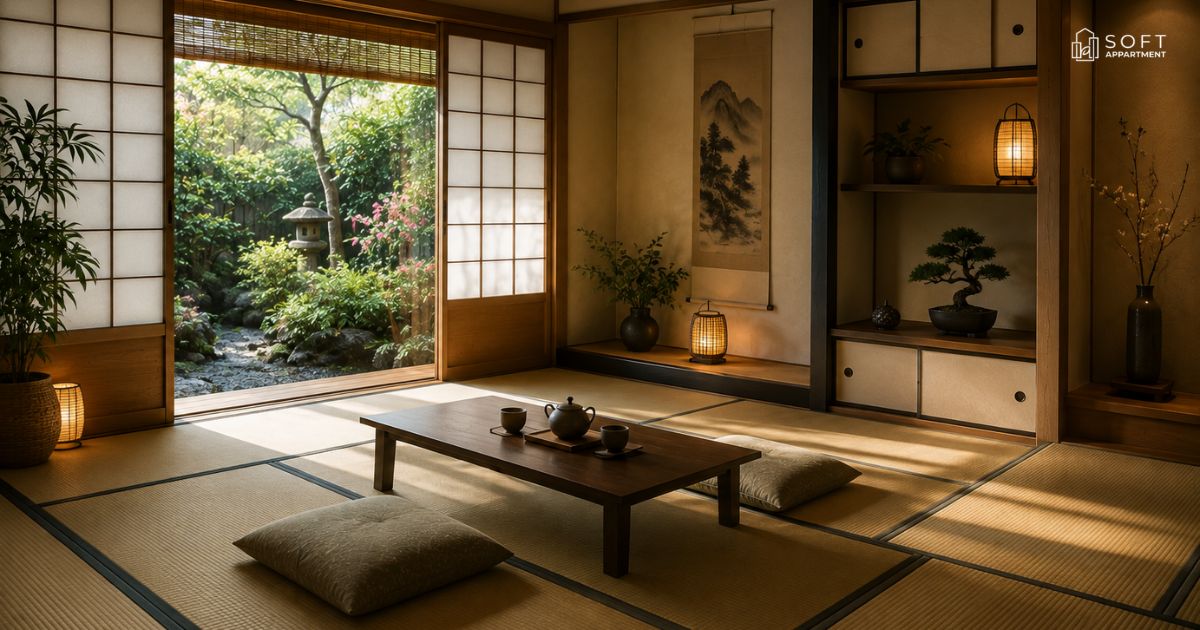
A Tatami Room brings a quiet sense of balance into your home. With natural textures, low furniture, and open space, this traditional setting feels both simple and inviting. You don’t need a historic Japanese house to enjoy its peaceful character. A few thoughtful details can transform an ordinary room into a relaxing retreat. Tatami mats create the foundation, while Japanese floor seating keeps the space comfortable and uncluttered.
Soft lighting and natural wood can add warmth without overwhelming the room. Whether you’re designing a bedroom, meditation corner, or guest space, Japanese interior design offers practical inspiration. In this guide, you’ll discover beautiful ideas for creating a calm, functional, and welcoming Japanese-style room.
What Is a Japanese Tatami Room?
A Japanese tatami room is a traditional living space built around woven floor mats called tatami. In Japan, this room is often called Washitsu, meaning a Japanese-style room. People may sit, eat, relax, or sleep directly on the floor. The space stays intentionally uncluttered.
A traditional Japanese room usually combines natural materials, low furniture, sliding partitions, and carefully planned empty space. The room can change purpose throughout the day. A dining area can become a sleeping space after the futon is folded away.
Traditional Features That Define a Tatami Room
The defining features include tatami mats, floor-level living, natural wood, simple decoration, and flexible furniture. Traditional rooms may also include Japanese floor seating, sliding doors, recessed displays, and hidden storage. These features create comfort without making the room visually busy.
The History and Cultural Meaning of Tatami Rooms
Tatami has deep roots in Japanese domestic life. Over centuries, these mats became closely connected with hospitality, etiquette, tea culture, and traditional architecture. A Japanese-style room wasn’t simply decorated with tatami. Its proportions, furniture, movement, and daily use developed around the flooring itself.Government of Japan: Traditional Wisdom and Technology.
The design also reflects an appreciation for simplicity. Traditional Japanese interiors often leave generous areas open. This idea connects with ma, or meaningful space between objects. Japan’s government describes traditional homes as spaces where sliding partitions can change how rooms open and connect.
How Tatami Became a Symbol of Japanese Living
Tatami became more than flooring because everyday activities developed around it. People could sit on cushions, sleep on futons, and entertain guests in one room. Even today, Japanese interior design often draws from this flexible tradition while adapting it to contemporary lifestyles.
Understanding Tatami Mats, Sizes, and Materials
Traditional tatami mats generally have a rectangular shape with an approximate two-to-one proportion. Web Japan notes that a common size is around 180 by 90 centimeters, although regional sizes vary. Most traditional mats contain a core surrounded by woven soft rush.Web Japan: The Evolution of Tatami.
Tatami dimensions matter because Japanese rooms have traditionally been measured by the number of mats they contain. A six-mat room, for example, gives a quick sense of approximate floor area. American homeowners should measure their actual room first because imported mats may follow different dimensions.
| Tatami room size | Approximate floor area |
| 2 mats | About 36 sq. ft. |
| 4.5 mats | About 81 sq. ft. |
| 6 mats | About 108 sq. ft. |
| 8 mats | About 144 sq. ft. |
How Tatami Mats Are Made and Sized
Traditional mats use woven rush on the surface with a supportive core underneath. Modern versions may use synthetic rush or alternative core materials. Their thickness, edging, texture, and dimensions can differ. Therefore, check the manufacturer’s measurements before planning your Japanese room design.
How to Create a Balanced Tatami Room Layout
A thoughtful tatami room layout starts with movement rather than decoration. First, consider where people will enter, sit, sleep, and store belongings. Keep major pathways clear. Then position furniture around the room’s natural proportions instead of forcing Western-sized furniture onto a low floor.
Traditional arrangements also value visual balance. Tatami seams can influence how the room feels, while furniture placement can either emphasize or hide them. For a modern American home, don’t treat traditional rules as rigid requirements. Use them as design guidance instead.
Auspicious Tatami Patterns for Harmony and Balance
Some traditional Japanese layouts avoid certain seam arrangements because they were considered unlucky. One well-known principle concerns avoiding four mats meeting in a cross-like pattern. For a contemporary room, the main goal should be balanced spacing, easy movement, and a pleasing visual rhythm.
Essential Furniture for a Japanese Tatami Room
Less furniture usually works better. Traditional Japanese furniture tends to stay close to the floor, which keeps sightlines open. A low table, floor cushions, and a folded futon can provide most of what you need. This approach also makes small rooms feel more spacious.
Choose pieces that serve more than one purpose. A low table can support meals, reading, or tea. Cushions can move around the room as needed. A futon can disappear into storage during the day. If you’re choosing a futon for your room, our Futon Mattress Sizes guide can help you compare common mattress dimensions.
Low Tables, Floor Cushions, Futons, and Storage
A low table paired with Japanese floor seating creates an authentic foundation without overcrowding the room. Futons provide another practical option because they can be folded away after sleeping. Cushions, baskets, and compact cabinets add comfort while preserving valuable floor space.
Fusuma, Shoji, and Oshiire: Traditional Room Features
Traditional rooms use architecture as part of the furniture. fusuma sliding doors can divide adjoining spaces while still allowing rooms to open into one larger area. shoji screens use translucent material to soften daylight and provide a gentle sense of privacy.The Government of Japan also highlights the flexible use of sliding partitions in traditional homes.JapanGov: Traditional Japanese Homes.
Storage also stays discreet. An oshiire closet traditionally holds folded futons, pillows, blankets, and other bedding. This hidden approach prevents everyday belongings from dominating the room. It also explains why a tatami space can change from bedroom to living area so easily.
How Sliding Doors and Built-In Storage Shape the Space
shoji screens filter light while fusuma sliding doors create flexible boundaries. An oshiire closet hides bedding and seasonal items. Together, these features show how Japanese interiors combine beauty with practical storage instead of treating decoration and function as separate ideas.
10 Beautiful Japanese Tatami Room Ideas for Modern Homes
A modern home doesn’t need to look like a historical Japanese house. Instead, borrow the principles that make traditional rooms work so well. A Japanese minimalist room can use contemporary furniture while retaining low proportions, natural textures, open space, and visual calm.
The following ideas can suit an American bedroom, apartment, guest room, studio, or quiet reading area. Start small. Even one authentic element can change the atmosphere when the surrounding space remains simple.
| Idea | Modern application |
| 1. Natural wood | Add a low wooden table or bench |
| 2. Soft lighting | Use warm lamps instead of harsh overhead light |
| 3. Floor seating | Replace bulky chairs with cushions |
| 4. Simple artwork | Display one seasonal or nature-inspired piece |
| 5. Hidden storage | Keep bedding and clutter out of sight |
| 6. Indoor greenery | Add one restrained plant |
| 7. Neutral colors | Use beige, cream, brown, and muted green |
| 8. Low sleeping area | Pair a futon with a clean floor arrangement |
| 9. Shoji-inspired panels | Filter daylight without blocking it completely |
| 10. Open space | Leave intentional areas empty |
Simple Ways to Blend Traditional and Contemporary Design
The easiest approach is to mix old principles with modern comfort. Keep Japanese interior design cues such as natural wood, low furniture, and restrained decoration. Then add modern lighting, storage, textiles, or seating that fits your American home.
How to Design Your Own Japanese Tatami Room
Start by deciding how you want the room to function. A bedroom needs sleeping space, while a meditation room needs more open floor area. Measure the room carefully before purchasing mats. Our Apartment Storage Ideas guide covers practical ways to use empty walls, hidden areas, and multipurpose furniture without making a room feel crowded.
Next, select your largest pieces first. Add the low table, futon, or storage unit before choosing accessories. Finish with lighting and one or two meaningful decorations. This approach prevents clutter and keeps your Japanese home design intentional.
A Step-by-Step Guide to Creating a Calm Retreat
Measure the room, choose suitable tatami, plan circulation, select low furniture, add concealed storage, control natural light, and finish with restrained decoration. Think of the room like a quiet landscape. Every object should have a reason to be there.
Tatami Room Maintenance, Care, and Longevity
Natural tatami mats need thoughtful care because moisture can encourage mold and unpleasant odors. Regular gentle cleaning helps remove dust without damaging the woven surface. Good airflow matters too. Avoid leaving damp items or wet fabrics directly on the mat for long periods.
Sunlight also deserves attention. Excessive exposure can change the color of natural rush over time. Follow the care instructions supplied with your specific mats, especially when using synthetic products. Traditional Japanese homes often relied on ventilation and movable partitions to help manage heat and airflow.
How to Keep Tatami Mats Clean and Fresh
Vacuum gently in the direction of the woven fibers. Wipe small spills quickly with a dry or lightly damp cloth, then allow the area to dry completely. Keep the room ventilated. Never soak the mats, because trapped moisture can shorten their useful life.
Why Japanese Tatami Rooms Feel So Peaceful
A Japanese tatami room feels peaceful because it removes visual noise. Low furniture lowers the room’s visual center. Natural textures add warmth. Open floor space creates breathing room. Soft daylight reduces harsh contrast. Nothing needs to shout for attention.
This philosophy also reflects a broader Japanese approach to home design. The Government of Japan describes traditional interiors as using materials such as wood, paper, and tatami with a strong appreciation for empty space. The result feels less like decoration and more like a deliberate pause.
The Connection Between Minimalism, Nature, and Relaxation
The calm comes from several small choices working together. Natural materials, gentle light, restrained furniture, and open space create visual quiet. A Japanese minimalist room doesn’t have to feel cold. With warm wood and soft textures, it can feel welcoming, grounded, and deeply comfortable.
Final Thoughts
A Japanese tatami room offers more than an attractive decorating style. It presents a different way to think about space. Instead of asking what else you can add, you start asking what truly deserves a place there.
For an American home, that lesson can be surprisingly useful. You can use tatami, low furniture, hidden storage, natural materials, and softer lighting without copying every traditional detail. The best room is one that respects the culture while fitting your daily life.
FAQs About Tatami Rooms
What is a Tatami Room?
A Tatami Room is a traditional Japanese space featuring woven tatami flooring, low furniture, and an uncluttered layout.
Can I create a Tatami Room in an American home?
Yes. You can adapt tatami flooring, low furniture, natural wood, and simple décor to suit modern American homes.
Are Tatami Mats comfortable for sleeping?
Yes. Tatami provides a firm, supportive surface that pairs well with a traditional futon or modern floor mattress.
How do you clean Tatami Mats?
Vacuum gently along the woven fibers and clean spills quickly. Keep the room dry and well ventilated to prevent moisture damage.
What furniture goes in a Tatami Room?
Common choices include low tables, floor cushions, futons, compact storage, and other simple furniture designed for floor-level living.




![Documents Needed to Rent an Apartment: 11 Must-Have Papers [2026]](https://softappartment.com/wp-content/uploads/2026/10/documents-needed-to-rent-an-apartment-11-must-have-papers-768x403.jpg)

