







![Documents Needed to Rent an Apartment: 11 Must-Have Papers [2026]](https://softappartment.com/wp-content/uploads/2026/10/documents-needed-to-rent-an-apartment-11-must-have-papers-150x150.jpg)


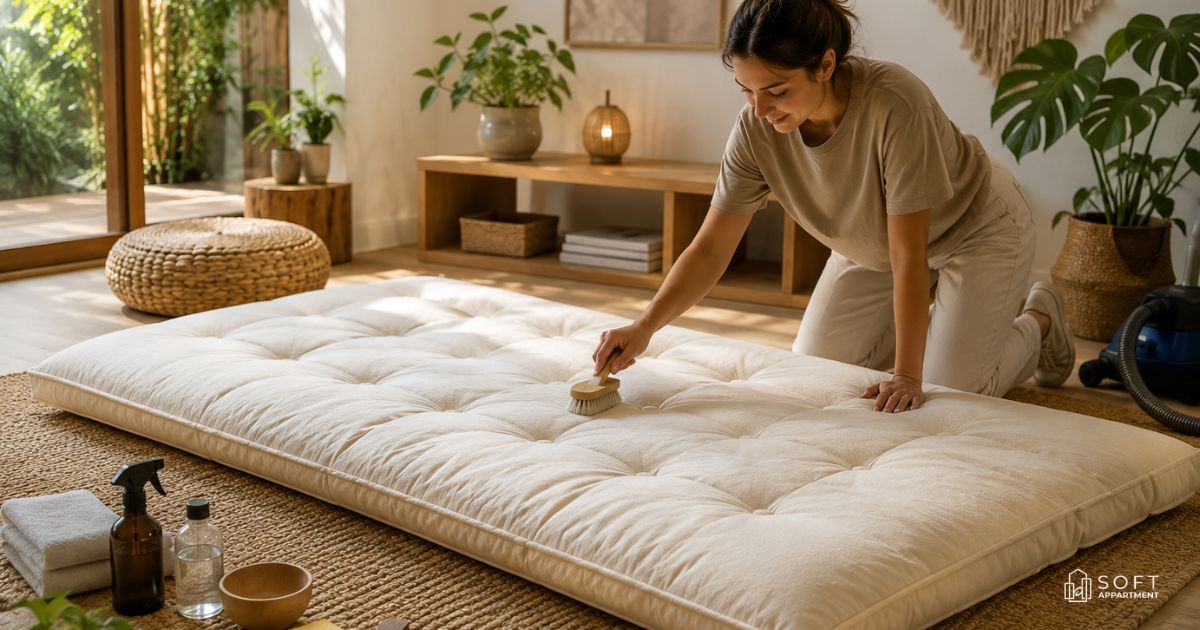
Keeping your sleeping space fresh starts with knowing how to Clean a Futon Mattress properly. Over time, a futon mattress can collect dust, body oils, pet hair, and stubborn odors. Thankfully, you don’t need fancy equipment or expensive services to restore its freshness. With a vacuum, gentle cleaning products, and a little patience, you can tackle everyday grime and troublesome stains at home. If you’re still choosing the right mattress before you get to care and cleaning, our futon mattress sizes guide covers dimensions, thickness, and materials in detail.
The trick is avoiding excessive moisture, which can seep deep into the mattress and create bigger problems. Whether your futon handles nightly sleep, weekend guests, or afternoon lounging, regular futon mattress cleaning keeps it cleaner and more comfortable while helping extend its useful life.
What You Need to Clean a Futon Mattress
Essential Cleaning Supplies
For basic futon cleaning, gather a vacuum cleaner, baking soda, microfiber cloths, a soft brush, mild detergent, and clean water. Keep a spray bottle nearby for controlled spot treatment. You don’t need to flood the fabric to make it clean. A light touch works better for most mattresses.
| Supply | Main Purpose |
| Vacuum cleaner | Removes dust, crumbs, and hair |
| Baking soda | Helps absorb moisture and odors |
| Microfiber cloth | Blots stains and spills |
| Mild detergent | Helps with gentle spot cleaning |
| Soft brush | Loosens stubborn surface debris |
| Spray bottle | Controls small amounts of liquid |
| Clean towels | Absorb moisture after treatment |
Prepare Your Futon Before Cleaning
Remove Bedding and Check the Care Label
Before you clean futon mattress surfaces, strip away sheets, blankets, pillows, and removable covers. Wash those separately according to their labels. Next, inspect the mattress care tag carefully. Some covers can be washed, while others shouldn’t be removed. The label should guide every wet-cleaning decision.
Quick tip: Test any cleaning solution on a hidden area first. This simple step can prevent discoloration or fabric damage.
Vacuum the Futon Mattress Thoroughly
Remove Dust, Hair, and Pet Dander
Start futon mattress cleaning with thorough vacuuming. Use an upholstery attachment and move slowly across the surface, seams, corners, edges, and folds. Pay extra attention to areas where pet hair and crumbs collect. If possible, vacuum both sides because the underside can trap debris and moisture too.
This step may look basic, yet it does much of the heavy lifting. Removing dry debris first also prevents you from turning dirt into muddy residue during later spot cleaning. Don’t rush this stage. A careful vacuum pass gives every following cleaning step a cleaner surface to work with.
Deodorize Your Futon With Baking Soda
Remove Musty and Unpleasant Smells
For futon mattress deodorizing, sprinkle a thin layer of baking soda across the dry surface. Let it sit for several hours, then vacuum it thoroughly. Baking soda can absorb moisture and help neutralize surface odor. Open windows or improve airflow while it sits for better ventilation.
If you’re cleaning futon mattress with baking soda, remember that it isn’t a substitute for stain treatment. Persistent musty smell may point to trapped moisture rather than ordinary odor. In that case, focus on ventilation and complete drying. A lingering damp smell deserves more attention than another layer of powder.
Remove Stains From a Futon Mattress
Treat Sweat, Blood, Urine, and Food Stains
Learning how to remove stains from a futon starts with identifying the mess. Blot fresh spills quickly instead of rubbing them deeper into the fabric. For blood, use cold water because heat can make protein-based stains harder to remove. For urine or other bodily fluids, use a suitable cleaner sparingly and follow the label.
For older futon mattress stains, patience matters. Apply a small amount of cleaner to a cloth rather than saturating the mattress. Dab the affected area, then blot with a clean damp cloth. Always test first. Foam can absorb liquid rapidly, which makes excessive moisture particularly troublesome.
Deep Clean Different Types of Futon Mattresses
Clean Cotton, Foam, and Hybrid Futons
Cleaning different types of futon mattresses requires a little judgment. A cotton futon may have different care needs from a foam or hybrid mattress. Natural-fiber futons often benefit from ventilation, while foam constructions generally require extra caution with moisture. Always follow the specific manufacturer’s instructions before using steam or liquid cleaners.
For futon mattress deep cleaning, avoid assuming that one method fits every construction. Some manufacturers recommend vacuuming and spot cleaning, while others permit deeper methods. Apartment Therapy’s mattress cleaning guide covers a similar vacuum, baking soda, and spot-treatment routine for standard mattresses, which carries over well to hybrid and foam futons too.
Dry Your Futon Mattress Properly
Air-Dry the Futon and Avoid Excess Moisture
Proper futon mattress drying is just as important as removing dirt. After spot cleaning, press clean towels against the damp area to absorb excess moisture. Then provide strong airflow with open windows or a fan. Don’t cover the mattress until it feels completely dry to the touch.
Moisture trapped inside a mattress can create a breeding ground for unpleasant smells and mold. Some futon-care guidance specifically emphasizes ventilation because moisture can accumulate underneath natural-fiber mattresses. Avoid placing a damp futon directly onto a poorly ventilated surface.
Keep Your Futon Mattress Fresh
Vacuum, Flip, Rotate, and Protect Your Futon
Good futon mattress maintenance prevents heavy cleaning sessions later. Vacuum regularly and deal with new spots quickly. If your mattress is designed to be flipped, turn it according to the manufacturer’s guidance. Rotate it when appropriate to distribute wear more evenly.
A washable mattress cover adds another useful layer of protection. It catches sweat, crumbs, skin flakes, and accidental spills before they reach the mattress. Regular bedding care also helps. Think of it like brushing your teeth: small habits are much easier than fixing a major problem later. This kind of upkeep matters even more in a tight footprint our RV bedroom ideas guide covers keeping a compact sleeping area fresh and organized.
Know When to Deep Clean Your Futon
Recognize Odors, Stains, and Other Warning Signs
Your futon may need deeper attention when visible stains return, odors linger, or the surface feels unusually grimy. Pet accidents, repeated spills, and prolonged dampness deserve prompt treatment. If you notice a persistent musty smell, investigate the source instead of simply masking it with fragrance.
The right cleaning frequency depends on usage. A guest futon may need less frequent attention than one used every night. Regular vacuuming can handle everyday debris, while spot cleaning addresses accidents. Deeper cleaning should depend on the mattress material and manufacturer instructions rather than an arbitrary schedule.
Avoid Common Futon Cleaning Mistakes
Prevent Over-Wetting, Harsh Chemicals, and Mold
The biggest mistake in futon cleaning is using too much liquid. Mattresses aren’t designed to be drenched during ordinary home cleaning. Excess moisture can penetrate deeper layers and become difficult to remove. Avoid harsh chemicals unless the care instructions specifically allow them.
Another common error is scrubbing aggressively. Hard rubbing can spread a stain and work it deeper into the fibers. Instead, blot gently and repeat when necessary. Never put bedding back over a damp mattress. Complete futon mattress drying should always come before normal use.
Final Verdict: How to Clean a Futon Mattress Safely
Your Simple Futon Cleaning Routine
The safest approach to how to clean a futon mattress is straightforward: remove bedding, check the label, vacuum thoroughly, deodorize, spot-clean carefully, and dry completely. Different materials may require different techniques. When in doubt, follow the manufacturer’s instructions rather than experimenting with strong products.
A clean futon doesn’t need to smell heavily perfumed or look brand new. It should feel dry, comfortable, and free from obvious debris or untreated messes. With consistent futon mattress care, you can keep your sleeping surface fresher while reducing the need for aggressive cleaning later.
FAQs About Cleaning a Futon Mattress
Can I wash a futon mattress in the washing machine?
Usually, you shouldn’t put the entire mattress in a household washer. Check the manufacturer’s instructions because only certain removable covers may be machine washable.
How do I remove a musty smell from a futon mattress?
Vacuum first, then use baking soda on a dry surface and improve airflow. Persistent odors may indicate trapped moisture that needs further investigation.
Can I use baking soda to clean a futon mattress?
Yes. Baking soda can help absorb moisture and neutralize surface odors. Let it sit for several hours, then vacuum it away thoroughly.
How do I remove stains from a futon mattress?
Blot fresh messes quickly and avoid rubbing. Use a small amount of suitable cleaner after checking the care label and testing an inconspicuous area first.
How often should I clean my futon mattress?
Vacuum regularly and treat stains whenever they appear. Deeper cleaning depends on how often you use the futon, its material, and the manufacturer’s care instructions.