





![Documents Needed to Rent an Apartment: 11 Must-Have Papers [2026]](https://softappartment.com/wp-content/uploads/2026/10/documents-needed-to-rent-an-apartment-11-must-have-papers-150x150.jpg)



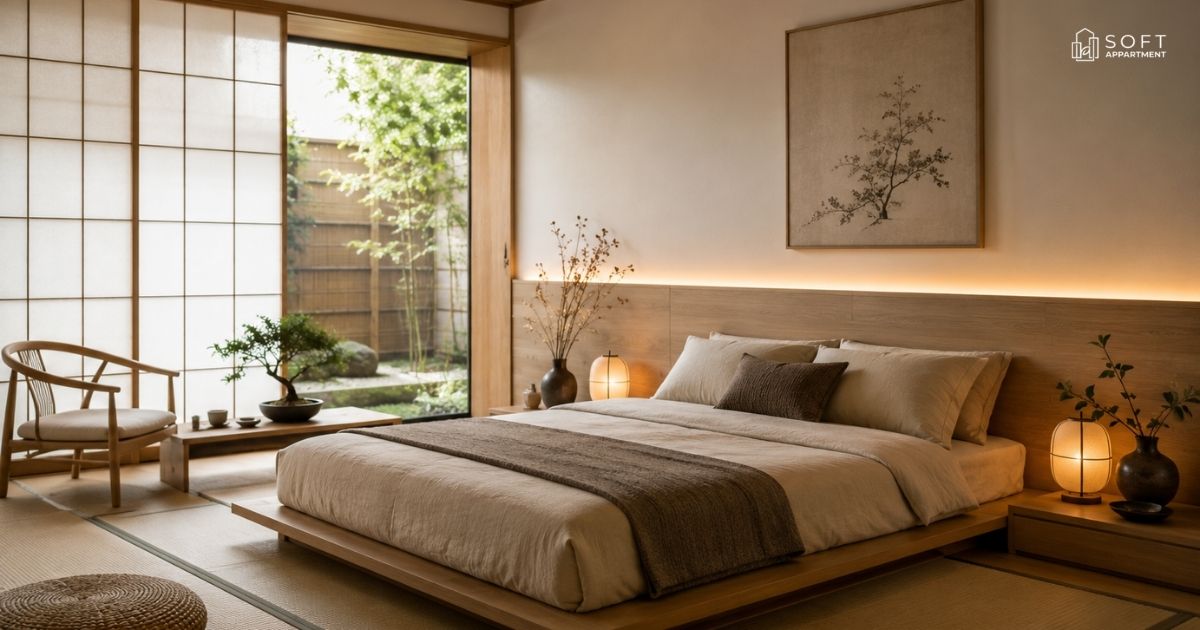
A peaceful bedroom doesn’t need piles of furniture or elaborate decoration. The best Japanese bedroom ideas focus on balance, comfort, natural textures, and useful design. You can borrow these principles for an American home, apartment, or small guest room. The result feels calm rather than cold.
Japanese interiors also make clever use of empty space. Every piece has a purpose. Soft light, warm wood, simple bedding, and restrained decoration create an inviting retreat. You don’t need to copy a traditional room exactly. Instead, choose the elements that fit your lifestyle.
What Is a Japanese Bedroom?
A Japanese bedroom centers on simplicity, harmony, and purposeful living. Traditional rooms often use natural textures, low furniture, and open floor space. Modern Japanese bedroom design adapts these ideas for contemporary homes while preserving their quiet character.
The goal isn’t an empty room. It’s a minimalist Japanese bedroom where each object earns its place. Soft textures and thoughtful proportions prevent minimalism from feeling sterile. In fact, fewer distractions can make your sleeping area feel considerably more restful.
Japanese Bedroom vs. Japandi Style
A Japandi bedroom combines Japanese restraint with Scandinavian warmth. Japanese interiors emphasize harmony and simplicity, while Scandinavian rooms often add cozy textiles and practical comfort. Together, they create a balanced style that works especially well in modern American bedrooms.
Essential Elements of a Traditional Japanese Bedroom
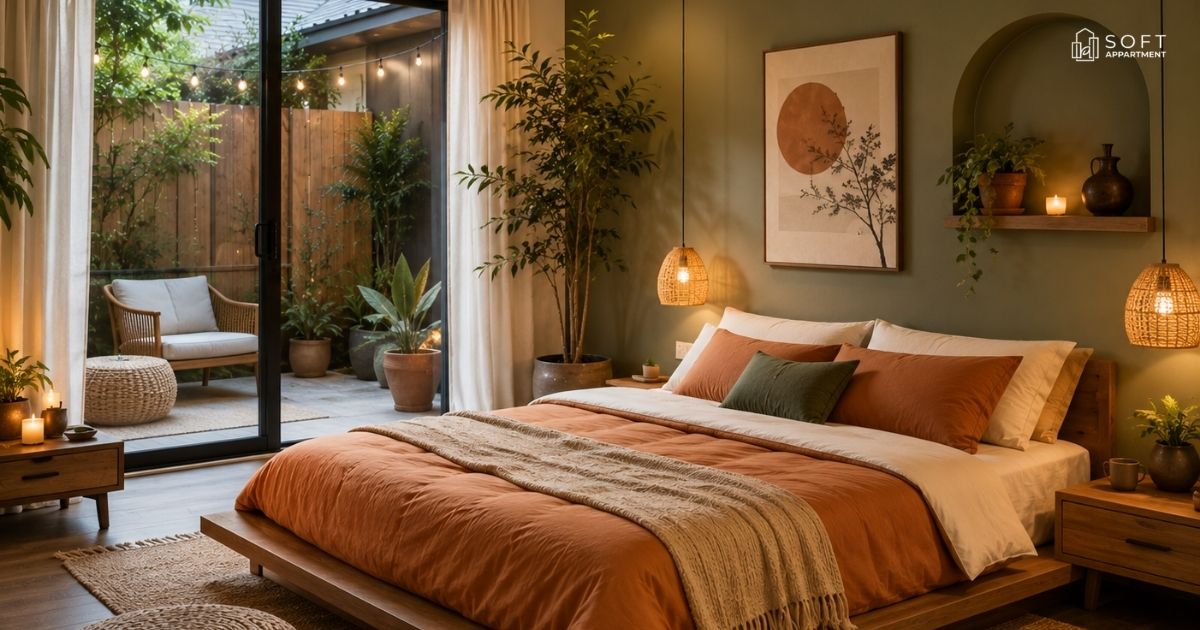
A traditional Japanese bedroom often feels remarkably open because furniture stays close to the floor. Tatami mats provide a distinctive natural surface, while simple furnishings preserve valuable walking space.These choices also create a strong connection between the room and traditional Japanese living.
You can recreate the feeling without rebuilding your bedroom. Choose a low platform, natural flooring, and lightweight furnishings. Keep pathways clear. Then add one or two authentic-inspired details instead of turning the room into a themed display.
Tatami Mats, Low Furniture, and Noren Curtains
Noren curtains can divide areas while adding gentle visual texture. Meanwhile, low bedroom furniture keeps sightlines open and gives the room a grounded appearance. If genuine tatami isn’t practical, woven grass-style rugs can provide a similar tactile impression.
Choose a Calm and Natural Color Palette
Color quietly controls the mood of your bedroom. A neutral color palette built around cream, beige, warm gray, brown, and muted green creates visual softness. These shades also pair beautifully with wood and natural textiles.
Avoid filling the room with competing accent colors. Instead, use one restrained darker shade for depth. Warm off-white walls with brown furniture and muted green textiles can feel sophisticated without becoming visually busy.
Earthy Neutrals and Nature-Inspired Tones
Nature-inspired decor works particularly well with earthy colors. Think of dried grasses, soft green plants, stone-colored ceramics, and warm brown wood. These subtle references to nature can make your bedroom feel connected to the outdoors without overwhelming its simple character.
Create a Minimalist Japanese Bedroom Layout
A successful Japanese bedroom design begins with the floor plan. Position your bed where movement feels natural. Leave enough open area around major furniture so the room can breathe. Clear sightlines also make compact bedrooms appear less crowded.The same layout logic applies to any tight footprint our tour of the Grand Design Imagine 2670MK shows how a small-space bedroom can stay open and functional.
Think of empty space as part of the decoration. A crowded corner can disrupt an otherwise peaceful room. Remove unnecessary pieces first. Then choose furniture according to function, scale, and proportion rather than filling every available spot.
How to Arrange the Bed, Furniture, and Open Space
A low bed can anchor the room without visually dominating it. Keep nightstands compact and maintain comfortable walking paths. If you work in the bedroom, separate the desk from your sleeping zone whenever possible to create clearer visual boundaries.
Choose Traditional Japanese Bedding
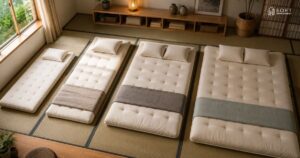
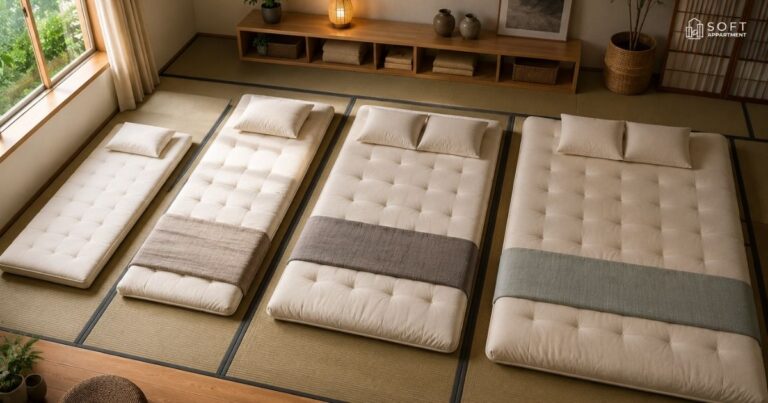
Traditional Japanese bedding differs from the thick mattress setups common in many American homes. Floor-based bedding can include a Japanese futon, sleeping mattress, quilt, and cushions. The arrangement remains compact and can free floor space during the daytime.
Comfort should still guide your choice. If floor sleeping doesn’t suit you, use a low platform bed with breathable bedding. This approach captures the visual spirit without forcing you to abandon familiar sleeping habits.
Shikibuton, Kakebuton, Zabuton, and Zaisu
A shikibuton serves as a floor mattress, while a shikifuton is another commonly used term. A kakebuton or kakefuton provides warmth. Meanwhile, zabuton cushions support sitting, and zaisu refers to low chairs without conventional legs.
Add Natural Materials and Japanese-Inspired Decor
Material choice can transform an ordinary bedroom into a serene retreat. Use natural materials such as wood, cotton, bamboo, linen, stone, and woven fibers. Their subtle imperfections add character without demanding attention.
For Japanese bedroom decor, restraint matters more than quantity. One ceramic vase can have greater impact than ten decorative objects. Pair natural wood furniture with tactile fabrics and simple artwork for a warm, understated finish.
Wood, Bamboo, Linen, Plants, and Simple Artwork
Bamboo adds organic texture, while linen bedding creates a relaxed surface with natural variation. Add a small plant or simple landscape artwork if desired. Keep decorative pieces intentional, because Japanese-inspired rooms depend on visual breathing space.
Use Smart Storage Without Losing the Minimalist Look
Storage becomes essential when you want a clutter-free bedroom. Open piles quickly undermine a calm aesthetic. Instead, use drawers, baskets, wardrobes, and concealed compartments to keep everyday belongings organized without making them disappear completely from your routine.
Good minimalist storage should make tidying easier. Choose furniture with multiple functions when space is tight. Under-bed drawers, closed wardrobes, and woven baskets can handle clothing, bedding, and accessories while preserving a clean visual field.
Wardrobes, Baskets, Shelves, and Hidden Storage
Keep frequently used items within easy reach. Store seasonal clothing elsewhere when possible. Closed cabinets work well for visual calm, while a few open shelves can display meaningful objects. The trick is maintaining breathing room instead of filling every shelf.
Create a Peaceful Japandi Bedroom for Better Comfort
A Japandi bedroom works because warmth balances restraint. Scandinavian influences introduce plush textiles, cozy seating, soft lighting, and practical comfort. Japanese principles then keep those additions controlled. The room feels welcoming without becoming cluttered.
Choose tactile layers rather than excessive decoration. A wool-style rug, cotton throw, wooden stool, and warm lamp can soften a sparse room. This combination creates a calming bedroom that feels comfortable during both busy mornings and quiet evenings.
Combine Japanese Simplicity With Scandinavian Warmth
Think of Japandi as a conversation between two design traditions. Japanese simplicity establishes the framework. Scandinavian warmth supplies comfort. Keep the palette muted, furniture purposeful, and textures tactile. That balance prevents the room from feeling either stark or overly rustic.
10 Tips for Maintaining a Clutter-Free Japanese Bedroom
Minimalism works best when you maintain it consistently. Start decluttering by removing objects you rarely use. Then give everything remaining a logical home. This simple habit reduces visual noise and makes daily cleaning considerably easier.
Your bedroom should support rest rather than storage overflow. Rotate seasonal clothing, limit visible accessories, and reset surfaces before bedtime. Small habits matter because a peaceful room can quickly become crowded when unused possessions accumulate.
Simple Organization Habits That Keep Your Space Serene
Use a simple rule: if an item has no useful purpose or meaningful value, reconsider keeping it. Keep your nightstand especially clear. A lamp, book, and small personal object may be enough. This approach protects the peaceful character of your room.
How to Create Your Japanese Bedroom Step by Step
Start with the room itself rather than shopping for accessories. Remove unnecessary furniture and identify the pieces you genuinely need. Next, establish your color palette. After that, introduce natural textures, suitable lighting, bedding, and carefully selected decorative details.
This sequence prevents impulse purchases from creating another clutter problem. It also makes your makeover easier to manage financially. You can complete the transformation gradually, replacing pieces only when they improve comfort, function, or visual harmony.
From a Clean Slate to a Finished Retreat
Begin with decluttering, then arrange your main furniture. Add a low bed or platform next. Introduce wood and textiles before choosing accessories. Finally, adjust lighting and remove anything that feels excessive. Step back often. The empty spaces matter too.
Japanese Bedroom Ideas for Small Spaces
Small rooms can benefit enormously from Japanese bedroom ideas because the style naturally values open space. Choose slim furniture, elevated storage, and multifunctional pieces. Avoid bulky headboards and oversized cabinets that consume visual and physical space. If your own small bedroom needs a full refresh, our RV bedroom ideas guide covers many of the same space-saving tricks in an even tighter footprint.
Mirrors can increase perceived depth, while pale walls reflect more light. A low-profile bed can also make the ceiling appear taller. In apartments, concealed storage becomes particularly useful because every square foot needs to work harder.
Make a Small Bedroom Feel Larger and More Relaxing
Choose furniture that matches your room’s scale. Keep pathways unobstructed and avoid unnecessary floor decorations. A compact wardrobe, wall shelf, and under-bed storage can replace several bulky pieces. Even a tiny bedroom can feel spacious when the layout remains deliberate.
Conclusion
The most effective Japanese bedroom ideas focus on intention rather than decoration. Natural textures, quiet colors, low furniture, thoughtful storage, and open space can transform an ordinary bedroom into a restful retreat.
You don’t need perfection to achieve the look. Start small and remove visual noise first. Then introduce pieces that genuinely improve comfort and function. When every element has a reason to exist, your bedroom naturally becomes calmer, warmer, and easier to enjoy.
Frequently Asked Questions About Japanese Bedrooms
What makes a bedroom Japanese style?
A Japanese-style bedroom emphasizes simplicity, natural materials, low furniture, restrained colors, open space, and functionality. The overall atmosphere should feel balanced and intentional rather than heavily decorated.
What colors are best for a Japanese bedroom?
Warm white, beige, taupe, soft brown, muted green, and charcoal work beautifully. These earthy shades create a calm foundation and pair naturally with wood, linen, bamboo, and other organic textures.
What bedding is traditionally used in Japan?
Traditional Japanese bedding includes shikibuton and kakefuton. A shikibuton provides the sleeping surface, while a kakefuton provides warmth. Many modern homes also combine Japanese-inspired bedding with Western mattresses.
What is the difference between Japanese and Japandi bedrooms?
Japanese design emphasizes traditional simplicity and harmony with nature. Japandi blends those principles with Scandinavian warmth, comfort, practical furniture, and soft textiles. The result feels minimalist while remaining cozy.
How can I make my bedroom look Japanese on a budget?
Start with decluttering before buying anything. Then use neutral bedding, warm lighting, simple wooden accents, woven baskets, and a few nature-inspired pieces. These changes can create a Japanese-inspired atmosphere without requiring expensive renovations.