





![Documents Needed to Rent an Apartment: 11 Must-Have Papers [2026]](https://softappartment.com/wp-content/uploads/2026/10/documents-needed-to-rent-an-apartment-11-must-have-papers-150x150.jpg)



If you’re shopping for a futon, knowing the right size can save you from an awkward fit. Futon mattresses come in several standard sizes, but their dimensions can vary slightly by manufacturer and frame style. Understanding the typical futon mattress dimensions makes it easier to choose bedding, frames, and replacement mattresses that fit properly. Most futons use sizes similar to traditional beds, including twin, full, and queen options. However, their thickness and folded measurements can differ considerably.
Whether you’re furnishing a small apartment, guest room, or multipurpose living space, checking the mattress measurements first helps prevent surprises. In this guide, you’ll learn the standard futon sizes, dimensions, thicknesses, and practical tips for choosing the right one.
Standard Futon Mattress Sizes and Dimensions Explained
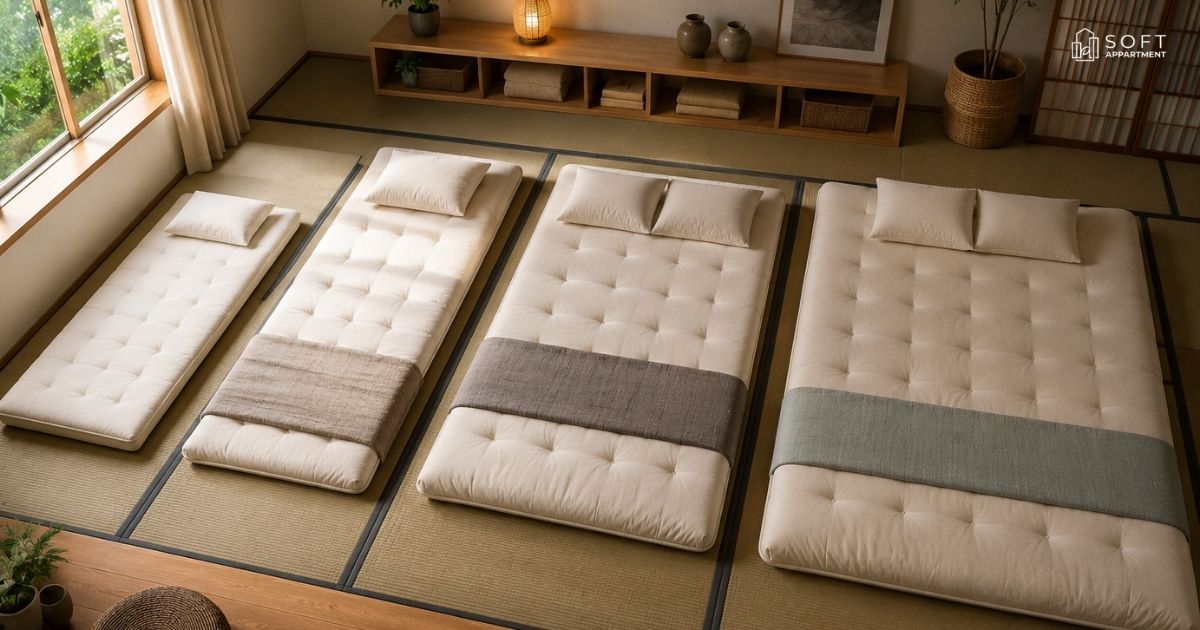
Futon mattresses come in six common sizes across the US market. These sizes mirror standard bed dimensions, which makes shopping simpler. A twin size futon measures 39 inches wide by 75 inches long. It suits kids’ rooms, small offices, or single sleepers who don’t need much space. Twin XL adds eight extra inches of length for taller users.
Full size futon mattresses measure 54 inches wide by 75 inches long. This size works well for daily seating and occasional guests. Queen size futon mattresses measure 60 inches by 80 inches, giving you a proper sleeping surface for two adults. King size futons stretch to 75 inches wide, ideal for families or spacious primary bedrooms. Here’s a quick breakdown of futon mattress dimensions for reference.
| Size | Width x Length | Best For |
| Twin | 39″ x 75″ | Kids, single sleepers, small rooms |
| Twin XL | 39″ x 83″ | Taller individuals, dorm rooms |
| Full | 54″ x 75″ | Daily seating, occasional guests |
| Full XL | 54″ x 83″ | Single sleepers wanting more legroom |
| Queen | 60″ x 80″ | Couples, primary sleeping |
| King | 75″ x 80″ | Families, large bedrooms |
Full vs. Queen Futon: Which One Fits Your Space Better?
This comparison trips up most shoppers. A futon acts as a sofa first and a bed second. That changes how size affects daily comfort. A full size futon mimics the proportions of a standard couch. The seat depth sits around 20 to 22 inches, and the backrest hits your shoulder blades. It blends into a living room without looking bulky.
A queen size futon, however, creates a deeper seat and a taller backrest once folded. That extra six inches of width doesn’t disappear. It goes into the cushion depth and the backrest height instead. Shorter people often struggle to sit back comfortably on a Queen without their feet dangling. Tall adults and couples, though, benefit from the larger sleeping area every single night. Check the table below for a side-by-side look.
| Feature | Full Futon | Queen Futon |
| Sofa Feel | Standard couch depth | Deep lounge seat |
| Backrest Height | Shoulder level | Head level or taller |
| Sleeping Area | 54″ x 75″ | 60″ x 80″ |
| Best For | Guests, small rooms | Nightly sleeping, couples |
How to Choose the Right Futon Thickness for Your Needs
Mattress thickness shapes comfort more than most buyers expect. A thin futon might look sleek, but it won’t support your spine through a full night’s sleep. A thick one offers plush comfort but can resist folding. Getting this balance right depends entirely on how you plan to use the futon day to day.
If your futon mostly serves as daytime seating, a six to eight-inch mattress works well. It folds easily and keeps a clean, sofa-like profile. For everyday sleeping, though, aim for nine inches or thicker. At that depth, the mattress starts feeling like a real bed rather than a folding cushion. Thicker builds usually include innerspring coils or dense foam layers, which boost comfortable sleep and prevent that sunken, frame-slat feeling underneath you.
Key Factors to Consider Before Buying a Futon Mattress
Before you commit to a size, think through how the futon fits into your daily routine. Portability matters if you plan to move it often or store it away between uses. Lighter, thinner mattresses handle this better than bulky, dense ones. Room size and floor space also play a huge role. A Queen might look great in the showroom but overwhelm a compact bedroom or studio apartment the same space-planning logic we cover in our Grand Design Imagine 2670MK small-space layout guide.
Multi-use function matters too. If the futon needs to work as both a couch and a nightly bed, balance is key. Too thick, and folding becomes a chore. Too thin, and sleep quality drops. Sleeping needs finish the list. Singles or occasional guests do fine on a Full, but couples or anyone hosting overnight guests regularly should lean toward Queen or larger. Budget also shifts with size, since larger mattresses and frames typically cost more upfront and require sturdier hardware.
Matching Your Mattress to the Right Futon Frame
Your futon frame and mattress need to work as a team. Mismatched pairs cause folding problems and premature wear. Frames generally fall into two main folding styles: bi-fold and tri-fold frame designs. A bi-fold frame folds once down the middle, like a hot dog bun. It handles thicker mattresses well and suits nightly sleepers. A tri-fold frame folds twice, tucking flat against the wall, which makes it perfect for tight rooms but limits you to thinner, more flexible mattresses.
A wall-hugger frame solves a different problem entirely. Standard frames need clearance behind them to convert from sofa to bed. Wall-huggers use a sliding mechanism, so you can open the bed from the front without dragging the frame away from the wall. This matters most for Queen setups, since a heavy 80-inch frame is tough to pull solo. Some buyers also choose handcrafted options, including Amish furniture frames, for their durability and solid-wood construction that outlasts typical mass-produced pieces.
How to Measure Your Futon Frame Correctly
Getting the measurements right prevents a world of frustration later. Skipping this step is one of the most common reasons futons don’t fit properly once assembled. You’ll need a tape measure and about ten minutes. Start by measuring the frame’s interior width, where the mattress will actually rest, not the outer edge of the wood or metal.
Next, measure the length in both the flat bed position and the folded sofa position. Frames often shift slightly between these two states, and a mattress that fits one position may not fit the other cleanly. Then check the thickness clearance, especially if your frame has armrests or side rails that could compress a thicker mattress. Finally, measure the space behind and in front of the frame to confirm your folding mechanism has enough room to operate without hitting a wall or coffee table.
| Step | What to Measure | Why It Matters |
| 1 | Interior width | Prevents gaps or overhang |
| 2 | Length (flat position) | Confirms bed-mode fit |
| 3 | Length (folded position) | Confirms sofa-mode fit |
| 4 | Thickness clearance | Avoids compression against rails |
| 5 | Surrounding floor space | Ensures smooth sofa bed conversion |
Futon Materials Explained: Cotton, Wool, Foam, and Latex
Material choice changes everything about how a futon feels and how long it lasts. Traditional futons use dense cotton and wool filling, sometimes called a shikibuton in its thinner, rollable form. These natural-fiber mattresses start soft and firm up over time as the fibers compress. They’re breathable and durable, though they do need regular flipping to avoid permanent body impressions.
Modern hybrids blend cotton with foam or springs for a different feel entirely. Memory foam / innerspring futon builds offer more bounce and pressure relief, which suits side sleepers or anyone prioritizing plush comfort over old-school firmness. Latex sits at the premium end, offering excellent support with a naturally cooler sleep surface. If you’re pairing your mattress with a tatami mat, note that this Japanese flooring option adds gentle cushioning and improves airflow underneath thinner futons, which helps prevent moisture buildup over time.
Bedding, Accessories, and Care Tips for Your Futon
Finding the right sheets for a futon takes a little extra thought. Standard bed sheets technically fit, since futon sizes match traditional bed dimensions. The catch is thickness. Most futons run six to ten inches thick, while modern fitted sheets / deep pocket sheets are designed for much thicker mattresses. That mismatch causes loose, bunching fabric overnight unless you use sheet straps or switch to zippered covers instead.
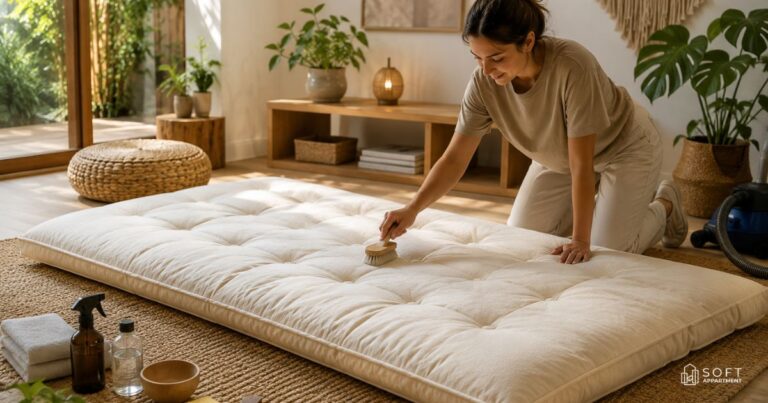
A futon cover / mattress protector extends the life of your mattress significantly, especially for guest room bedding that sees occasional but unpredictable use. Rotate and flip cotton-based futons every few months to keep wear even across the surface. Air natural-fiber mattresses in sunlight occasionally, since this helps reduce moisture and odor buildup. With proper care, most quality futons last five to seven years under light use, or three to five years as a primary bed. A snug RV bedroom setup faces many of the same space and bedding constraints, if you want more ideas for making a compact sleeping area feel comfortable.
Common Mistakes to Avoid When Choosing a Futon Size
The biggest mistake buyers make is sizing up for guests who rarely show up. Many people choose Queen because they imagine hosting overnight visitors often, then end up with an oversized piece dominating their multi-purpose living space every single day. If guests only stay a few times a year, a Full size handles that job just fine without sacrificing daily comfort.
Folding mistakes come next. Buyers underestimate how heavy a Queen mattress becomes once combined with dense filling, often forty to eighty pounds total. Without a wall-hugger frame, converting it solo turns into a real chore. Logistics mistakes round out the list too. Narrow stairwells, tight hallways, and immovable coffee tables can turn delivery day into a headache if you haven’t checked clearance beforehand. One more overlooked issue involves mismatched mattress-to-frame length, which leaves bare slats exposed at the edge and creates an uncomfortable, uneven sleeping surface.
Frequently Asked Questions About Futon Mattress Sizes
What are the standard futon mattress sizes?
The most common sizes include Twin, Twin XL, Full, Full XL, Queen, and King. Full and Queen remain the most popular choices among US buyers, since they balance seating comfort with practical sleeping space for one or two people.
Is a Full or Queen futon better for everyday sleeping?
Queen works better for nightly use, especially for couples or anyone over six feet tall. Full size futons suit occasional sleeping and daily seating but feel cramped for two adults sharing the space regularly.
Will standard bed sheets fit a futon mattress?
Yes, standard sheets match futon dimensions by size. However, because futons are thinner than typical mattresses, deep pocket sheets often fit loosely. A snug futon cover usually solves this problem better than standard sheets alone.
How thick should a futon mattress be for daily use?
Nine inches or thicker suits everyday sleeping best. Anything under eight inches works fine for occasional seating and guest use but may feel too firm or thin for nightly comfort over time.
Can I put a Full mattress on a Queen frame?
No, this creates a poor fit. A Queen frame measures 80 inches long, while a Full mattress only covers 75 inches, leaving five inches of exposed frame material at one end.
Do I need a special frame for a Queen size futon?
A wall-hugger frame is highly recommended for Queen sizes. Since Queen mattresses are heavier and bulkier, this frame style allows easier conversion without pulling the entire base away from the wall.
How long does a futon mattress typically last?
Most quality futons last five to seven years with occasional use. Everyday sleeping shortens that lifespan to roughly three to five years, depending on the materials and how often you rotate the mattress.