






![Documents Needed to Rent an Apartment: 11 Must-Have Papers [2026]](https://softappartment.com/wp-content/uploads/2026/10/documents-needed-to-rent-an-apartment-11-must-have-papers-150x150.jpg)



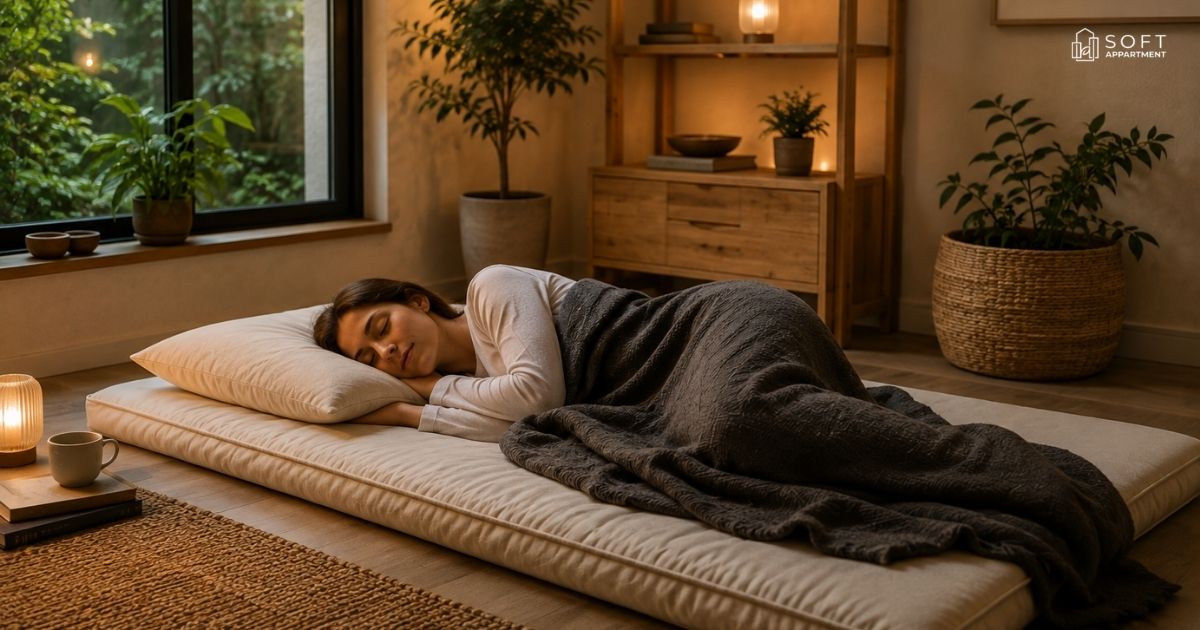
If your back pain gets worse at night, changing your sleeping surface can seem like an easy fix. You may have heard that floor sleeping keeps your body straighter or supports the spine better. However, the answer isn’t quite that simple.
Current evidence generally favors medium-firm sleeping surfaces over very hard ones for many adults with nonspecific low-back pain. A 2026 review of 47 studies found that medium-firm mattresses generally offered better pressure distribution, sleep quality, and morning comfort than very firm or very soft surfaces.
That doesn’t mean the floor is automatically bad. Your sleeping position, body shape, existing condition, and personal comfort all matter. Here’s what you should know before moving your bed to the floor.
Is Sleeping on the Floor Good for Your Back?
The short answer is: sometimes, but not for everyone. Sleeping on the floor for back pain may feel soothing because the surface doesn’t sag beneath your body. Yet a bare floor can also create uncomfortable pressure points, especially around your hips and shoulders.
Your body needs support without feeling crushed against a rigid surface. For that reason, a thin floor mattress or supportive sleeping pad may make more sense than sleeping directly on hardwood or tile.
Does Sleeping on the Floor Help Back Pain?
A firm surface can make some people feel more stable during sleep. Still, research doesn’t show that a hard floor specifically treats back pain. One controlled trial found that medium-firm mattresses performed better than firm mattresses for chronic nonspecific low-back pain.
Sleeping on the Floor With Back Pain
If you’re sleeping on the floor with back pain, pay attention to what happens the next morning. Less stiffness, comfortable movement, and uninterrupted sleep are encouraging signs. Increased soreness, numbness, or lingering muscle pain suggests your setup needs adjustment.
Benefits of Sleeping on the Floor
The potential sleeping on the floor benefits usually come from the overall setup rather than the floor itself. A stable surface may prevent excessive sinking while encouraging you to notice how your body rests. It can also create a cooler sleeping environment, which some people prefer.
However, these advantages aren’t universal. A surface that’s too hard may work against your body instead of helping it. Think of your sleeping surface like a shoe: the “firmest” option isn’t automatically the best fit.
Sleeping on the Floor May Provide Relief From Back Pain
Some people report that sleeping on the floor for lower back pain feels more supportive. The reduced sinking may feel useful when a soft bed leaves your hips lower than your shoulders. Still, individual response matters more than the floor itself.
Sleeping on the Floor May Help Improve Posture
A stable sleeping surface may encourage better sleeping posture when your pillows and body position are properly arranged. Good spinal alignment means your head, shoulders, hips, and pelvis aren’t forced into an awkward angle throughout the night.
A Cooler Sleeping Surface May Improve Comfort
Heat can make sleep feel restless, especially during warm American summers. A floor often feels cooler than a thick mattress because it doesn’t trap as much body heat. Better temperature control may support sleep quality, although it doesn’t directly treat back problems.
Drawbacks of Sleeping on the Floor
The biggest sleeping on the floor risks involve inadequate cushioning, cold temperatures, allergens, and difficulty getting up. A bare surface gives your body little room to distribute weight comfortably. That can turn a promising experiment into an unpleasant morning surprise.
There’s also an important distinction between firm and brutally hard. Research supports medium-firm surfaces more consistently than extremely firm ones.
Sleeping on the Floor May Increase Pain in Sensitive Areas
Your shoulders, hips, knees, and tailbone can absorb substantial pressure against a hard surface. If those areas already have joint pain, a thin pad can provide valuable cushioning. Don’t ignore discomfort simply because the surface feels “good for your back.”
Cold, Dust, and Allergens Can Affect Comfort
Floor-level sleeping puts you closer to dust, pet dander, and colder air. People with allergies may notice more irritation if the area isn’t cleaned regularly. Keep bedding washable and the surrounding sleeping surface clean to reduce unnecessary exposure.
Getting Up From the Floor May Be Difficult
Floor sleeping isn’t ideal if standing up requires considerable effort. Limited mobility, painful knees, or certain injuries can make the transition risky. A supportive setup should improve your nighttime routine rather than turning every morning into a wrestling match.
Is Sleeping on the Floor Good for Sciatica?
Sleeping on the floor for sciatica isn’t a proven treatment. Sciatica usually involves irritation or compression of nerve roots that can produce pain, tingling, numbness, or weakness traveling through the leg. A harder surface doesn’t automatically remove that pressure.
Instead, focus on a comfortable sleeping position that doesn’t intensify symptoms. If floor sleeping increases leg pain or numbness, stop experimenting and consider professional advice.
Why Does Sleeping on the Floor Help Sciatica for Some People?
Some people may feel better because a stable surface changes how their hips and pelvis settle during sleep. However, that doesn’t mean the floor is treating the underlying nerve problem. Sciatica has several possible causes, so the right approach depends on the individual.
When Should You Seek Help for Sciatica?
Seek prompt medical care if sciatica becomes severe, worsens, or causes significant weakness or numbness. Emergency attention is particularly important when new bowel or bladder control problems occur.
Does Sleeping on the Floor Decompress the Spine?
You may see claims that floor sleeping “decompresses” your spine. That’s an attractive idea, but feeling stretched or supported isn’t the same as medically proven spinal decompression. There isn’t strong evidence that lying on a hard floor physically lengthens or decompresses spinal structures.
Good back support can reduce uncomfortable strain, yet that doesn’t mean the vertebrae are being mechanically separated. Keep this distinction in mind when evaluating dramatic floor-sleeping claims.
Can a Hard Surface Realign Your Spine?
A hard surface can’t automatically correct your spinal alignment. Your sleeping position, pillow height, body proportions, and surface firmness all influence how comfortably your body rests. Alignment is about keeping your body in a neutral, comfortable position rather than making everything perfectly straight.
Floor Sleeping vs. Medium-Firm Mattress Support
A medium-firm mattress may offer a better balance between cushioning and support. Research has repeatedly found advantages over very firm surfaces for many people with chronic nonspecific low-back pain.
What Is the Best Position to Sleep on the Floor?
There isn’t one universal best position to sleep on the floor. Your preferred position should keep your neck, hips, and back comfortable without creating obvious strain. For many people, back or side sleeping works better than lying face-down.
Mayo Clinic recommends placing a pillow beneath the knees for back sleepers. Side sleepers can place a pillow between their legs to help align the spine, pelvis, and hips.
Back Sleeping With Knee Support
If you sleep on your back, place a pillow under your knees. This can reduce strain while helping maintain the natural curve of your lower back. A small rolled towel beneath the waist may provide additional support when needed.
Side Sleeping With a Pillow Between Your Knees
Side sleeping can work well when your hips and knees stay comfortably aligned. Place a pillow between your knees so the upper leg doesn’t rotate your pelvis forward. This simple adjustment can improve body support without adding much equipment.
Why Stomach Sleeping May Increase Back Strain
Stomach sleeping can place your neck and lower back in awkward positions. The position may also increase strain because your head must turn to one side. If you can’t change positions, a small pillow beneath your hips may reduce some strain.
How to Sleep on the Floor Properly
Learning how to sleep on the floor safely starts with the setup, not the floor itself. Choose a clean, dry area and add enough cushioning to prevent painful contact. Your goal is stable support with reasonable pressure relief.
A practical floor sleeping setup might include a thin mat, futon-style pad, or other supportive layer. You can adjust thickness based on your sleeping position and body shape instead of forcing yourself onto bare flooring. If you’re setting this up in a tight studio or small bedroom, Apartment Therapy’s small bedroom layout guide has useful ideas for keeping the space functional around a floor-level sleeping area.
Clear and Clean a Proper Sleeping Space
Before creating your bed, clean the floor thoroughly and remove sharp objects. Hardwood, laminate, carpet, and tile each feel different beneath the body. Choose an area with enough room to change position without hitting furniture during the night.
Create a Comfortable Floor Sleeping Setup
Start with a supportive pad rather than assuming bare flooring is superior. A floor mattress can provide cushioning while preserving the stable feeling many people seek. If your shoulders or hips hurt, add targeted padding rather than simply enduring the discomfort.
Support Your Preferred Sleeping Position
Your pillow should match your sleeping style and body proportions. Back sleepers often need knee support, while side sleepers usually benefit from a pillow between their legs. The aim is comfortable spinal alignment, not rigid positioning.
Take a Nap First to Test It
A short daytime test can reveal problems before you commit to an entire night. Notice your hips, shoulders, neck, and back pain during and after the nap. If discomfort appears quickly, adjust the surface before trying longer periods.
Try It for Several Nights if You Feel Comfortable
If the test feels good, try the setup for several nights and track your morning symptoms. Pay attention to stiffness, soreness, sleep interruptions, and overall sleep quality. Stop if your symptoms consistently become worse rather than better.
Is It Healthy to Sleep on the Floor Every Day?
Daily floor sleeping isn’t automatically healthy or unhealthy. The better question is whether your setup consistently supports restful sleep without worsening symptoms. If you wake refreshed with manageable discomfort, the arrangement may suit you. If you’re increasingly sore, rethink it.
Your sleeping surface is only one part of back health. Regular movement, appropriate exercise, healthy body weight, and good daytime habits also matter. Mayo Clinic notes that exercise can help ease and prevent recurring back discomfort. If your current setup doesn’t leave much room to move around, our Grand Design Imagine 2670MK breakdown shows how to keep a small footprint from feeling cramped.
Signs That Floor Sleeping Is Working for You
A useful sign is simple: your body feels better rather than worse after sleeping. You should wake without unusual stiffness, escalating muscle pain, or new numbness. Comfortable movement throughout the morning matters more than proving that floor sleeping works.
Signs You Should Stop or Change Your Setup
Persistent soreness is your body’s feedback, not a challenge to overcome. If sleeping on the floor for back pain repeatedly increases discomfort, add cushioning or return to another surface. A good sleeping arrangement should support recovery instead of creating another problem.
Who Should Avoid Sleeping on the Floor?
Floor sleeping may not suit everyone. People with substantial mobility problems, painful joints, recent injuries, or difficulty rising from the ground should be especially cautious. Getting safely into and out of bed matters just as much as the sleeping surface itself.
Pregnancy also changes comfort and positioning needs. If you’re pregnant or managing a significant medical condition, discuss unusual sleeping arrangements with your healthcare professional before making major changes.
Sleeping on the Floor While Pregnant
Pregnancy can alter balance, pressure distribution, and comfortable sleeping position. Side sleeping is commonly recommended during later pregnancy, while getting down to and up from the floor may become increasingly awkward. Prioritize safety and comfort rather than following a floor-sleeping trend.
Sleeping on the Floor With a Baby
Never place a baby on an improvised adult floor bed and assume it is automatically safe. Infants need a firm, flat, separate sleep surface designed for infant sleep. Adult bedding, cushions, and mattresses can create serious hazards.For more on setting up a compact sleeping area the right way, see our RV bedroom ideas guide.
When Back Pain Needs Medical Attention
Contact a healthcare professional when back pain persists, becomes severe, or spreads down the legs. New weakness, numbness, fever, unexplained weight loss, or pain after significant injury also warrants medical evaluation. Bowel or bladder changes require immediate attention.
Final Verdict: Is Sleeping on the Floor Good or Bad for Your Back?
Ultimately, sleeping on the floor for back pain isn’t inherently good or bad. Some people enjoy the stable feel, while others develop painful pressure points. Current evidence favors medium-firm support for many adults with nonspecific low-back pain rather than extremely hard surfaces.
If you want to experiment, start gradually. Use a supportive pad, choose an appropriate pillow, and monitor your morning symptoms. Most importantly, don’t mistake discomfort for progress. Your best setup is the one that supports comfortable sleep and healthy movement.
Quick Takeaway: Should You Try Floor Sleeping?
If you’re curious, test it rather than making a permanent switch overnight. A clean floor, supportive pad, suitable pillow, and proper position can make the experiment more comfortable. If your sleep quality or symptoms worsen, there’s no prize for sticking with it.
What Does the Evidence Suggest?
The strongest takeaway is surprisingly simple: firm surface doesn’t automatically mean better support. A 2026 review of 47 studies found medium-firm surfaces generally produced better outcomes for pressure distribution, morning stiffness, sleep quality, and low-back pain than very firm or very soft surfaces.
FAQs About Sleeping on the Floor for Back Pain
1. Is sleeping on the floor good for back pain?
It may feel comfortable for some people, but research generally favors medium-firm support over very hard surfaces for back pain.
2. What is the best position to sleep on the floor?
Back sleeping with a pillow under your knees or side sleeping with a pillow between your knees can support better alignment.
3. Can sleeping on the floor help sciatica?
It may feel comfortable for some people, but floor sleeping doesn’t treat the underlying cause of sciatica.
4. Is sleeping on the floor every day healthy?
It can be fine if you’re comfortable and sleep well, but persistent stiffness or pain means you should change your setup.
5. Should you sleep directly on a hard floor?
Not necessarily. A thin, supportive mat or floor mattress can provide better cushioning while maintaining a stable sleeping surface.



![Documents Needed to Rent an Apartment: 11 Must-Have Papers [2026]](https://softappartment.com/wp-content/uploads/2026/10/documents-needed-to-rent-an-apartment-11-must-have-papers-768x403.jpg)

