









Picture this. It’s 10 p.m. on move-in night. You’re tired and sweaty. You need a shower. Then you spot the problem: there’s no toilet paper anywhere. Every renter has lived this moment. A smart move in the list for new apartment life stops it cold. This guide covers 25 must-haves, room by room. It also gives you a printable table and a one-week plan.
Moving into a new apartment is exciting. It’s also a lot of work. Most people focus on boxes and forget the small stuff. That’s where the stress hides. Use this apartment moving checklist from top to bottom. You’ll save money and time. You’ll also protect your cash and your sanity.
What Is a Move In List for a New Apartment (and Why You Need One)
A move-in list is a step-by-step plan for your first days in a rental. It covers paperwork, inspections, supplies, and unpacking orders. Think of it as a new apartment checklist you can tick off one task at a time. It keeps your brain free for the fun parts, like picking where the couch goes.
The list also protects your wallet. Your security deposit is often one month’s rent or more. Landlords can deduct for damage they think you caused. A good list reminds you to take photos on day one. It also stops you from buying a second plunger because you couldn’t find the first. Renters who want to know their legal rights can start with the HUD tenant rights resources. As the old saying goes, failing to plan is planning to fail.
Key Takeaways
Keep four ideas in mind. Inspect the unit before you unpack a single box. Pack a first night essentials box and carry it yourself. Set up high-use rooms first, like the bed, bathroom, and kitchen. Finally, photograph everything. These four habits solve most move-in headaches, and they take very little time. Your future self will thank you.
Pre-Move Planning: What to Do Before You Get the Keys
Great moves start weeks before the truck shows up. Grab your move-in checklist about a month out. Then work through it in order. Every good move in list for new apartment planning begins with paperwork. Read your lease. Book your helpers. Schedule your services. A few calls now save you hours of chaos later.
Start with the big dates. Ask when you get the keys. Ask what time you can enter. Then set your moving day around that window. Most U.S. buildings only allow moves during set hours. Many ban Sunday moves. A quick email to your property manager clears this up in minutes. If you’re still deciding what to buy, check our first apartment kitchen essentials guide before you shop.
Inspect the Apartment Before Move-In
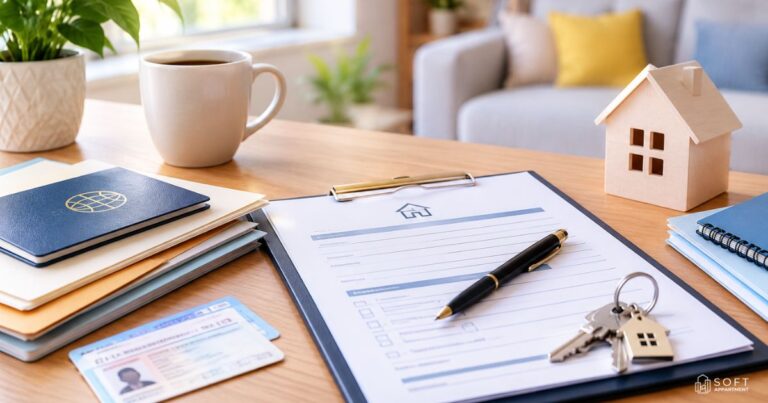
Do an apartment move-in inspection before you carry anything inside. Walk each room with your landlord or manager. Test every outlet, faucet, light switch, and lock. Run the stove and the dishwasher. Look for stains, cracks, and scuffs. Then fill out the condition report (also called a move-in inspection form). Write down every flaw, even tiny ones, and keep a signed copy.
Review Your Lease and Coordinate With the Building
Your lease agreement has rules that surprise people. Check the limits on pets, noise, parking, and wall hangings. Look for painting rules too. Next, ask about the elevator reservation. Many mid-size and large buildings require one. Some also want a deposit for the freight elevator. Ask where the truck can park, and for how long.
Set Up Utilities, Internet, and Renters Insurance
Your utilities setup should happen at least a week early. Call the electric, gas, and water companies. Ask for service to start on your move-in date. Book your internet installation too, since technician slots fill up fast. Then check your lease for renters insurance. Many landlords require it. The Insurance Information Institute explains how policies work in plain English. You may also need a certificate of insurance to hand over before you get your keys.
Decide What Goes With You and What Doesn’t
Moving costs money, so don’t haul junk. Try a simple three-pile rule: keep, donate, or trash. Sell big items you won’t use, like a bulky desk. Duplicate pots and old towels are easy to let go. A smaller load means fewer moving boxes and a cheaper moving company bill. It also gives you a fresh start.
Measure Furniture and Book Moving Help
Skip this step and you may end up with a sofa stuck in a stairwell. Take furniture measurements for your largest pieces. Then measure the doors, hallways, stairs, and elevator. Compare the numbers. Book your moving company or your friends early. Weekends and month-end dates sell out quickly. Pizza and cold drinks help if friends are your crew.
Apartment Move-In Day Checklist: Step-by-Step Priorities
Moving day moves fast. A short move-in day checklist keeps you calm. Arrive early. Do the inspection first. Then protect the space. Finally, bring in your stuff in an organized way. Follow this order and you’ll avoid most problems. Keep your phone charged. Keep your keys in a safe pocket.
These moving day tips work in any city. Wear closed shoes. Drink water. Eat a real meal. Keep important papers, like your lease and ID, in a bag that stays with you. Never put them on the truck. Label every box by room. Your helpers will move twice as fast when they know where things go.
Document the Apartment Before You Unpack
Take photos and videos of every wall, floor, and appliance. Open cabinets. Show the inside of the oven. Zoom in on any damage. Your phone adds a date stamp automatically. Email the files to your landlord the same day. This simple habit is the best security deposit insurance you can buy. It takes about fifteen minutes.
Protect Floors, Walls, and Common Areas
Rentals have rules about damage. Use door wedges so doors stay open. Lay floor runners or cardboard along your path. Wrap sharp furniture corners in blankets. Corner guards also help. One scraped hallway can cost you a chunk of your deposit. A few minutes of padding is cheap by comparison.
Move In Without Blocking Hallways or Elevators
Be a good neighbor. Don’t park boxes in the hall. Stage them inside your unit instead. Work in zones, such as the bedroom first and then living room. If you reserved the elevator, stick to your time slot. Say hello to neighbors you meet. A friendly start pays off when you need a package held or a spare key.
Room-by-Room Move In List for a New Apartment
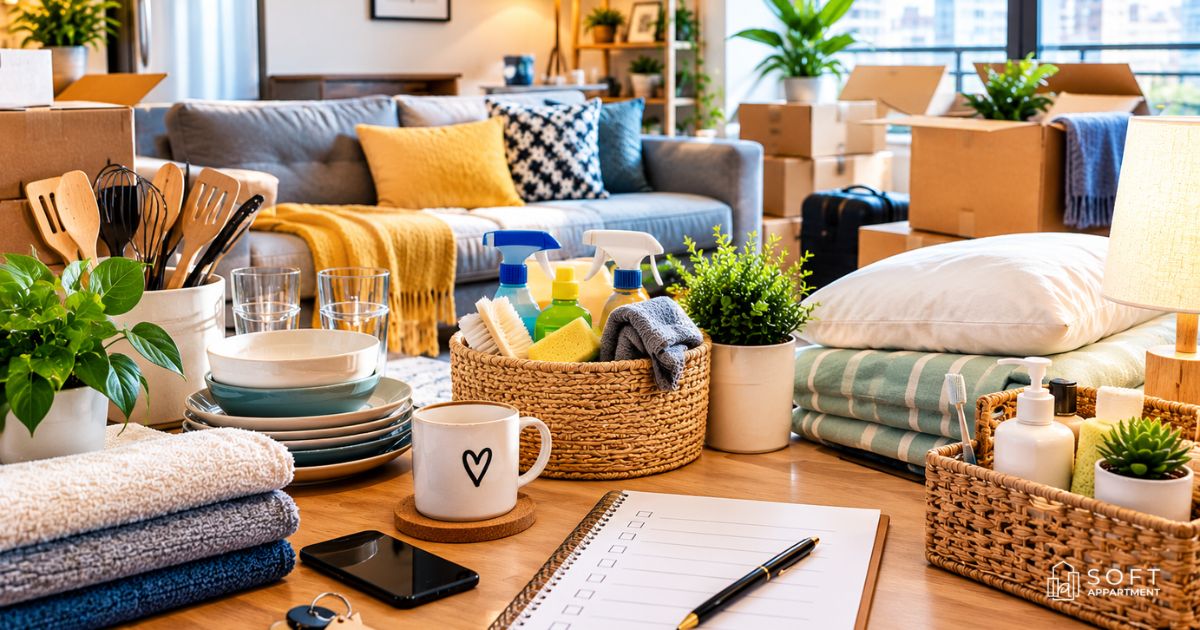
Now for the heart of this guide. This section is your apartment essentials list. It works as a first apartment checklist for newcomers. It also helps seasoned renters who just want to double-check. Here, one move in list for a new apartment shopping trip covers items 1 to 20. Print the table and bring it along.
Prices vary by city, so use the budget table as a rough guide. Pick up the Day 1 items first. Buy the Week 1 items as paychecks and time allow. Thrift stores, neighborhood groups, and big-box stores all work well. You don’t need everything at once. You just need the right things first.
| # | Item | Room | Priority | Done |
| 1 | Pots and pans | Kitchen | Week 1 | ☐ |
| 2 | Dishes and utensils | Kitchen | Day 1 | ☐ |
| 3 | Dish soap and sponge | Kitchen | Day 1 | ☐ |
| 4 | Trash bags | Kitchen | Day 1 | ☐ |
| 5 | Coffee maker or kettle | Kitchen | Week 1 | ☐ |
| 6 | Seating | Living room | Week 1 | ☐ |
| 7 | Lamp | Living room | Day 1 | ☐ |
| 8 | Power strip | Living room | Day 1 | ☐ |
| 9 | TV or media setup | Living room | Week 1 | ☐ |
| 10 | Mattress and sheets | Bedroom | Day 1 | ☐ |
| 11 | Pillows | Bedroom | Day 1 | ☐ |
| 12 | Blackout curtains | Bedroom | Week 1 | ☐ |
| 13 | Hangers | Bedroom | Week 1 | ☐ |
| 14 | Toilet paper | Bathroom | Day 1 | ☐ |
| 15 | Shower curtain and hooks | Bathroom | Day 1 | ☐ |
| 16 | Towels | Bathroom | Day 1 | ☐ |
| 17 | Plunger and toilet brush | Bathroom | Day 1 | ☐ |
| 18 | Doormat | Entryway | Week 1 | ☐ |
| 19 | Basic tool kit | Utility | Day 1 | ☐ |
| 20 | Flashlight | Utility | Day 1 | ☐ |
Kitchen Essentials Checklist
Your kitchen essentials are items 1 to 5. Start with plates, bowls, forks, and a sharp knife. Add one good pot and one pan. Buy dish soap and a sponge so you can clean up right away. Grab trash bags too. A coffee maker or kettle makes mornings easier. You can cook plenty with just these basics. For a deeper shopping list, read our first apartment kitchen essentials guide.
Living Room Essentials Checklist
Items 6 to 9 make the main room feel like home. You need somewhere to sit, even if it’s a cheap futon. A lamp is a lifesaver when overhead lights are harsh. A power strip with surge protection keeps your gear safe. Set up your TV or speaker last. Comfort comes first, then fun. Need layout ideas? See our living room essentials page.
Bedroom Essentials Checklist
Sleep matters on a moving week. Items 10 to 13 cover it. Make the bed before anything else. Fitted sheets, a blanket, and two pillows are enough. Blackout curtains block streetlights and help you rest. Hangers keep clothes wrinkle-free. A tidy bed at night feels like a small victory. For storage and styling inspiration, browse our bedroom and closet styling ideas.
Bathroom Essentials Checklist
The bathroom list is short but vital. Items 14 to 17 are toilet paper, a shower curtain with hooks, towels, and a plunger with a brush. Many apartments have no curtain at all. Pack soap, a toothbrush, and a bath mat too. Trust us, you’ll want a plunger within the first month.
Entryway and Utility Areas Checklist
Items 18 to 20 live near the door. A doormat keeps grit out. A small tool kit handles shelves, furniture, and loose screws. Include a screwdriver, hammer, tape measure, and an adjustable wrench. A flashlight helps during power cuts and dark closets. These cost little and save big headaches.
| Budget Level | Estimated Cost for Items 1 to 20 | What You Get |
| Low | $250 to $400 | Thrift or secondhand basics |
| Mid | $600 to $1,000 | New, mid-range essentials |
| Splurge | $1,500 and up | Higher quality and a few extras |
Cleaning and Safety Essentials for Your New Apartment
Even a “clean” unit needs a wipe-down. Stock your cleaning supplies before you unpack. Item 21 is an all-purpose cleaner with disinfectant. Add paper towels, a mop, and rubber gloves. Wipe cabinets, drawers, and the fridge first. Check corners and baseboards for bugs. If you see signs of pests, tell your landlord in writing right away. Our cleaning essentials guide lists every product worth buying.
Safety items are 22 to 25. Test the smoke detector and keep spare batteries on hand. The National Fire Protection Association advises testing alarms monthly. Add a carbon monoxide detector, and read the safety tips from the U.S. Consumer Product Safety Commission. Pick up a basic first-aid kit and a small fire extinguisher too. Learn more at the U.S. Fire Administration. Check whether your lease lets you change the locks. If not, ask the manager to re-key them.
| # | Item | Why It Matters |
| 21 | All-purpose cleaner and disinfectant | Gets rid of germs left by past tenants |
| 22 | Smoke detector test and spare batteries | Early fire warning |
| 23 | Carbon monoxide detector | Catches an invisible gas |
| 24 | First-aid kit | Handles cuts and burns fast |
| 25 | Fire extinguisher | Stops small kitchen fires |
First-Night Survival Kit: What to Pack in Your Essentials Box
Your first night essentials box is the most important box you’ll pack. It holds everything you need for the first 24 hours. Think phone charger, toiletries, medicine, and a change of clothes. Add bedding, snacks, bottled water, and toilet paper. Toss in a few tools, scissors, and a roll of tape. The American Red Cross also shares tips on stocking a first-aid kit. Keep important papers in your box as well.
Make this box easy to find. Write “OPEN FIRST” on every side in thick black marker. Then carry it in your own car, not on the truck. This packing checklist item sounds small. It isn’t. If the movers run late, you still have a bed, a toothbrush, and dinner. You’ll feel calm while others scramble.
How to Prioritize Unpacking (A Simple 3-Step System)
Staring at fifty boxes feels awful. Don’t panic. Use a clear system instead. This is where a good move in list for new apartment planning shines. Pick one room, finish it, and then move on. These unpacking tips keep you from living out of cardboard for weeks. Small wins build energy. Energy gets the job done.
Case study (an example): Maria, a nurse, moved into a one-bedroom in Austin. She skipped the plan and opened random boxes. Two weeks later she still couldn’t find her work shoes. On her next move she used the three steps below. She was fully settled in five days. The plan made all the difference.
Step 1: High-Use Rooms First
Begin with the bed, bathroom, and kitchen. You use these every day. Make the bed. Hang the shower curtain. Stock the bathroom with towels and soap. Then unpack your kitchen essentials. After that, you can eat, sleep, and shower in peace. Everything else can wait a little longer.
Step 2: Storage Before Décor
Set up closets, shelves, and drawers before you hang art or place plants. Storage gives your belongings a home. Décor can wait. If you decorate too soon, you’ll just move things around again. Break down empty moving boxes as you go. Your floor space grows, and your mood improves. For smart closet setups, see our bedroom and closet styling category.
Step 3: Pace the Rest
Don’t rush the last boxes. Use the timeline below. Spread the work across a week. Take breaks. Order takeout. A calm pace beats a burnout sprint every time. By Day 7 you’ll have a livable home. When you reach the living area, our living room essentials guide helps you finish the space.
| Timeframe | Focus |
| Day 1 | Bed, bathroom, first-night box, utilities check |
| Days 2 to 3 | Kitchen and living room |
| Days 4 to 5 | Closets, storage, and office space |
| Days 6 to 7 | Décor, art, and final touches |
After Moving In: Boxes, Waste, and Final Setup
The last stage is the cleanup. It’s easy to ignore, but don’t. Empty boxes pile up fast and annoy neighbors. Make a plan for them within the first week. A tidy finish also helps if your landlord does a follow-up check. Treat it as the final step on your new apartment checklist.
Then handle the paperwork. File your change of address with the USPS Moving Guide online. Update your bank, employer, insurance, and driver’s license too. Forward your subscriptions. Send your new address to friends and family. A day of admin work now prevents lost mail and missed bills later.
Deal With Boxes and Moving-Day Waste
Flatten every box and recycle it. Check your building’s rules for bulk trash and recycling days. The EPA recycling guide explains how to recycle cardboard properly. Many complexes have a dumpster for cardboard. Don’t leave piles in the hall. You can also sell or give away leftover moving boxes on local community groups. Someone else is probably packing right now.
Update Your Address and Finish Setting Up
Make your home feel official. Update your address with your bank and your employer. Change your driver’s license within your state’s deadline. Add your new place to your delivery apps. Confirm your utilities setup and internet installation are working. Finally, save your lease and inspection photos in one folder. You’ll need them again at the move-out.
Common Apartment Move-In Mistakes to Avoid
The biggest mistake is skipping the inspection photos. Without proof, you can’t fight an unfair deduction from your security deposit. Another common error is forgetting the elevator reservation. You’ll end up hauling couches up four flights. Also avoid packing the essentials box on the truck. Keep it with you.
A few more slips happen all the time. People ignore lease agreement rules on painting or wall hangings. They also unpack the décor first and lose a week. Some skip renters insurance until something breaks. Remember your condition report and keep a copy. Learn from others and use these moving day tips to dodge every pitfall.
Final Thoughts
You now have a full move in the list for new apartment success. It covers 25 must-haves, a three-step unpacking system, and a clear plan for the first week. Start with the inspection. Pack your first-night box. Then work room by room. Take it one task at a time.
Print the table and stick it on your fridge. Share it with your roommates or family. A good plan makes moving into a new apartment feel exciting instead of stressful. Soon you’ll be relaxing on your own couch. You’ve got this. Happy moving!
Frequently Asked Questions (FAQs) About Moving Into a New Apartment
What should I do first when moving into a new apartment?
Do your apartment move-in inspection first. Walk through with your landlord. Test outlets, faucets, and locks. Take photos of any damage. Fill out the condition report and keep a signed copy. This protects your deposit before a single box comes inside.
How long should unpacking take?
Most people need about one week to unpack the basics. Finish the bed, bathroom, and kitchen in two days. Spend the next few days on closets and living areas. Décor can take longer. A steady pace beats rushing and burning out.
What should be on a first apartment checklist?
A strong first apartment checklist covers kitchen basics, bedding, towels, toilet paper, and cleaning supplies. Add safety items like a smoke detector, first-aid kit, and flashlight. Include a tool kit. Use any move in the list for a new apartment printable to stay organized.
Do I need renters insurance before move-in day?
Many landlords require renters insurance before they hand over the keys. Check your lease. You may need to show a certificate of insurance. Policies often cost around $15 to $30 a month. It’s cheap protection for your belongings and liability.
Should I change the locks in a rental?
First, read your lease. Some landlords forbid changing locks yourself. Ask the property manager to re-key the locks instead. Many will do it for free or a small fee. This gives you peace of mind about who holds old keys.