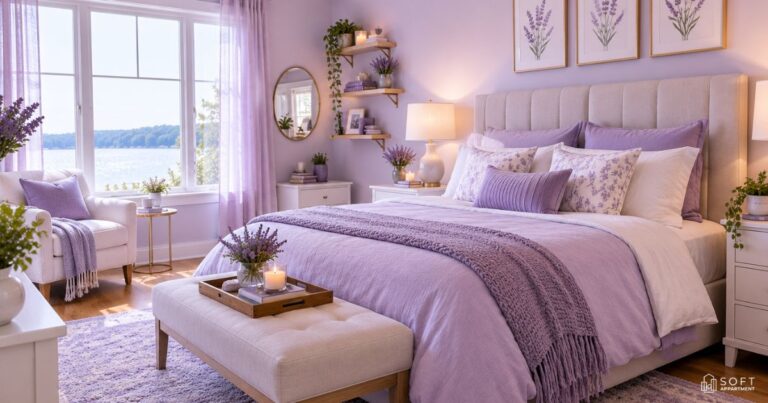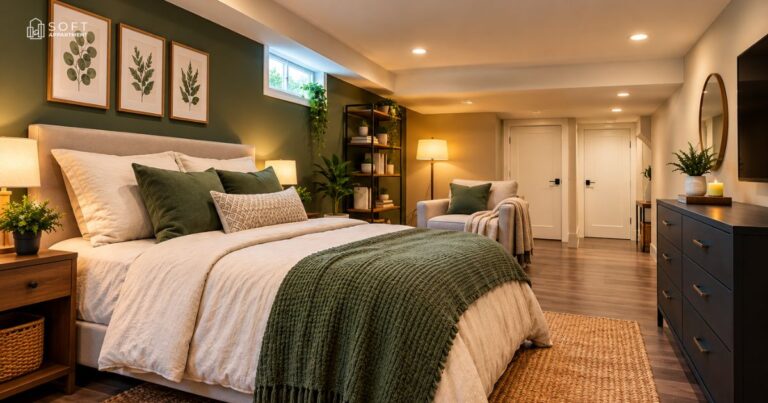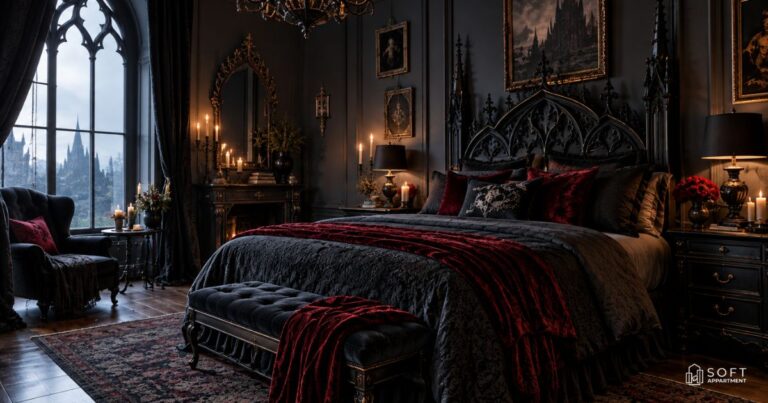











Purple scares a lot of people. They picture a teenager’s dorm or a dark cave. That fear is fair in many cases. Still, the right shade changes everything. These purple bedroom ideas show how soft and bold tones can feel grown-up, calm, and fresh. A smart purple color palette helps.
Purple has changed a lot lately. Muted tones like gray-lavender and mauve now work like a quiet neutral palette. Below, you’ll find twelve shades, smart pairings, and testing tips. Whether you rent or own, you’ll find a version that fits your space and your budget.
Is Purple a Good Color for a Bedroom?
Yes, it can be a great choice. Purple sits between calm blue and fiery red. That means the shade sets the mood. Soft, gray-toned purples bring a calming atmosphere. Rich, saturated purples feel dramatic and energetic. Pick the tone first and the feeling follows.
Purple earned a “controversial” label for a reason. Bright grape shades overwhelm a room fast. Luckily, the fix is simple enough. Soften the color with gray and then balance it with a neutral palette. Add white trim and wood furniture. Suddenly the room feels polished instead of loud.
Is Purple Calming for Sleep?
Lighter and cooler purples tend to relax people. Blue-leaning lavender feels quiet and soft. The Sleep Foundation notes that little research links color and sleep directly. A calming shade may still help through mood. Choose a light purple bedroom tone and keep the room ambiance gentle with warm lamps.
Does Purple Make a Bedroom Look Smaller?
Dark shades absorb light so the walls seem closer. A dark purple bedroom can feel snug and cozy. Pale purples bounce light and open the space. Ceiling height and window size matter too. Tall ceilings and strong natural light handle deep color far better than tiny rooms do.
12 Best Purple Bedroom Paint Colors and Shades
Here are twelve purple bedroom ideas grouped by feel: soft, muted, bold, and moody. Each one suits a different room, lighting, and personality. Browse the purple bedroom paint colors below and notice the paint undertone. It shapes everything else. Start with the one that matches how you want to wake up.
Every shade below lists its mood, its undertone, and one pairing tip. Think of a paint undertone as a hidden whisper. It’s quiet at first. Then natural light hits the wall and it speaks up. Match undertone to your light and you’ll avoid surprises.
1. Soft Lavender, Light and Airy
Soft lavender suits small rooms and north-facing windows. Its blue-leaning undertone feels clean and quiet. Use it on all four lavender bedroom walls for a cloud-like effect. Pair it with white linen and pale oak. The result feels cozy and relaxing without any fuss.
2. Gray-Lavender, Calm and Modern
Gray-lavender works as a near-neutral. It calms people who fear color. A touch of gray mutes the purple and adds a modern edge. This shade makes a graceful purple and gray bedroom base. Pair it with warm white trim and soft black accents for a balanced color scheme.
3. Dusty Mauve, Warm and Romantic
Dusty mauve brings warmth and romance. Its pink-brown undertone glows under lamplight. A mauve bedroom feels soft at night and sophisticated by day. Pair it with cream bedding and antique brass. Skip cold bulbs because they turn the color flat and gray.
4. Periwinkle, the Blue-Purple Bridge
The right periwinkle paint color bridges blue and purple. It feels cool and fresh with a coastal crossover. Choose it for sunny east-facing rooms. Love the blue side? Browse these blue bedroom ideas for more cool-toned inspiration. Pair it with crisp white and sandy rope accents.
5. Wisteria, Soft and Vintage
Wisteria is soft with a vintage soul. Its slight pink undertone suits cottage and traditional rooms. Picture an old garden gate draped in blooms. A lilac bedroom in this shade feels gentle and nostalgic. Pair it with floral prints and painted white furniture.
6. Heather, the Cozy Tone
Heather borrows its look from wool and tweed. It’s a muted purple with gray and brown undertones. That makes it cozy and grounded. Pair it with linen, knit throws, and oak. It makes a purple bedroom decor scheme feel like a favorite sweater.
7. Smoky Plum Accent Wall
A smoky plum purple accent wall adds depth without full commitment. The undertone leans cool and slightly gray. Paint the wall behind your bed and keep the rest pale. A plum bedroom feels grounded this way. Pair it with ivory bedding and soft brass lamps.
8. Eggplant for a Dark and Moody Room
Eggplant suits guest rooms and large spaces with strong light. Its deep red-brown undertone looks rich at dusk. Eggplant bedroom walls feel moody and luxurious. Fans of dramatic decor will also enjoy these whimsigoth bedroom ideas. Add pale bedding, metallic accents, and layered lamps for glow.
9. Violet with Charcoal Trim
Bold violet with charcoal trim feels graphic and edgy. The violet leans slightly blue while charcoal adds weight. Together they frame windows and doors like a sketch. The look also suits a gamer’s den, so check these gaming bedroom ideas. Save it for rooms with good natural light.
10. Plum and Blush Two-Tone Walls
Plum and blush walls create a soft contrast. Paint the lower half plum and the upper half blush. The warm pink undertone softens the deep purple. The pairing feels feminine without being sweet. Add cream curtains and a woven rug to finish the purple bedroom color schemes.
11. Lavender and Sage Garden Palette
Lavender and sage make a garden palette. Both colors carry gray undertones so they blend easily. Paint walls lavender and add sage bedding or plants. For more nature-inspired looks, see these forest bedroom ideas. This purple color palette feels fresh and restful.
12. Brownish Purple, Earthy and Rustic
Brownish purple feels earthy and rustic. Its warm undertone resembles dried figs and aged wine. Pair it with leather, raw wood, and wool. This shade also hides scuffs well. Consider it for cabins, farmhouses, or any space that needs a grounded room ambiance.
Purple Bedroom Color Combinations That Work
Purple loves a grounding partner. Plain gray, white, and beige steady the color. Complementary colors like yellow make it pop. Analogous colors like blue and pink make it flow. Choose one partner and let it lead. Too many guests crowd the party.
Try the 60-30-10 rule. Use 60 percent main color on walls and large pieces. Give 30 percent to a secondary shade in bedding and curtains. Save 10 percent for accents like pillows and art. This formula keeps any purple bedroom color schemes tidy and balanced.
| Pairing | Mood | Best Accent | Works Best With |
| Purple and gray | Modern, calm | Chrome or silver | Lavender, gray-lavender |
| Purple and gold | Rich, glamorous | Brass or champagne | Plum, eggplant |
| Purple and green | Fresh, botanical | Houseplants | Lavender, heather |
| Purple and yellow | Playful, bright | Pillows and art | Lilac, plum |
| Purple and white | Crisp, airy | Linen bedding | Soft lavender, wisteria |
Purple and Gray
Gray tones down purple and adds a modern feel. Cool gray suits lavender while warm greige suits mauve. A purple and gray bedroom works well in city apartments. Add white bedding for brightness. Silver or chrome accents keep the look crisp and clean.
Purple and Gold
Gold lifts purple into luxury. Think brass lamps, champagne frames, and golden bedside pulls. Deep purple glows next to metal. Lighter lilac looks sweeter with soft gold. Keep metals warm and limited so the room feels rich rather than flashy. Jewel tones shine here.
Purple and Green
Green brings a botanical feel. Sage and olive suit muted purples. Emerald suits deeper shades. Picture a lavender field beside a hedgerow. Add houseplants for living color. The pairing feels fresh and restful. Strong natural light shows it off best by day.
Purple and Yellow
Yellow and purple are true opposites on the color wheel. That makes these complementary colors vibrant partners. Use yellow in small doses like pillows, art, or a single lamp. Soft butter yellow suits lilac while mustard suits plum. A little goes a long way.
Purple and White
White keeps purple crisp and bright. It works best with lighter shades. A light purple bedroom with white trim feels like a spring morning. Choose a warm white for mauve and a cool white for lavender. Bright linen bedding completes the airy look.
Purple Accent Wall Ideas (Paint Just One Wall or Half)
Many of the best purple bedroom ideas start with a single wall. Choose the wall behind your bed. It anchors the room and draws the eye. A purple accent wall doubles as a feature wall that suits renters and first-timers. It’s a small project with a big payoff.
Half walls work too. Paint the lower two-thirds deep plum and leave the top white. A plum bedroom with a white upper wall feels taller. Or split the wall at chair-rail height. Press painter’s tape firmly and seal the edge with a thin coat of base color.
Mini example: Picture a renter with a small, dim bedroom. She paints only the wall behind her bed in smoky plum. Then she adds lilac bedding and a white lamp. The room looks bigger, brighter, and far more expensive than her budget suggests.
Purple Bedroom Decor Ideas Beyond Paint
You can love purple without opening a paint can. Purple bedroom decor lets renters commit with zero risk. Pillows, art, and lamps swap out easily. Start with a few small touches first. If you smile every morning, add more. If you don’t, you’ve lost nothing at all.
Layer shades from your purple color palette, pale to deep, for a designer finish. Try lilac sheets, a mauve throw, and plum pillows. Repeat each tone at least twice around the room. That repetition makes the look feel intentional. It’s a classic interior design trick that works at any budget.
Purple Bedding and Textiles
Bedding makes the fastest change. These purple bedding ideas mix velvet, linen, and cotton in varied tones. Lavender sheets with a plum duvet look rich. Add texture so the color doesn’t feel flat. A chunky knit throw adds a cozy and relaxing finish.
Purple Wallpaper
Wallpaper adds pattern and depth. Soft florals feel romantic while textured grasscloth feels earthy. Peel-and-stick versions suit renters because they come off cleanly. Cover just the wall behind the bed for a feature wall effect. Pair it with a neutral palette so the pattern doesn’t overwhelm.
Purple Upholstery and Velvet Headboards
A velvet headboard anchors the room like a crown. Amethyst and other jewel tones look luxe. Velvet catches light and shifts color through the day. Pair it with white walls to let the headboard shine. It’s a bold move that feels moody and luxurious.
Purple Curtains and Rugs
Curtains and rugs add color at the edges of the room. Sheer lilac curtains soften natural light. A plum rug grounds the bed. Choose patterns in soft gray and cream. They tie the colors together. Keep everything in one color scheme for a calm look.
Purple Trim and Furniture
Paint trim or furniture for a subtle punch. A plum dresser looks bold against pale walls. Lavender nightstands add playful charm. Sand lightly and prime first. Two thin coats beat one thick coat. The result looks custom and lifts the room ambiance on a small budget.
Purple Bedroom Ideas for Different Styles
One purple can look wildly different from room to room. Furniture, texture, and lighting change everything. A velvet sofa makes plum feel royal. A linen chair makes the same plum feel casual. Good purple bedroom design starts with your existing taste.
Match the purple to what you already own. Don’t buy new furniture to fit a paint chip. Walk around your room and note the warm and cool tones in wood, metals, and fabrics. Then pick a shade that flatters them. The four looks below show how.
Luxurious and Moody
Deep plum walls, velvet bedding, and brass lamps build a hotel suite feel. The look is moody and luxurious. A dark purple bedroom thrives on layered lighting. Candles and dimmers help. Add a dark rug so the whole room feels wrapped in color.
Modern and Minimal
Gray-lavender walls, clean lines, and matte black accents create calm. Keep surfaces clear and shapes simple. One bold art piece is enough. This look suits small city bedrooms. It keeps the purple and gray bedroom feel fresh and uncluttered, with a neutral palette base.
Vintage and Romantic
Wisteria, mauve, and antique wood belong together. Add lace, brass, and a framed botanical print. A mauve bedroom like this feels like a quiet afternoon at grandma’s house. Soft lamps help seal the mood. Stick with warm whites so nothing looks harsh.
Youthful and Playful (Kids and Teen Rooms)
Kids and teens love bright violets. Pair it with bold patterns and fun accents. Keep furniture neutral. For a polished, school-spirit twist, browse these preppy bedroom ideas. A playful lilac bedroom grows up easily, since accessories do all the heavy lifting.
Purple Paint Colors Compared: Undertone, LRV and Best Use
Undertone is the hidden color beneath the purple. It can be warm, cool, or neutral. A cool paint undertone leans blue. A warm one leans red or brown. Light reflectance value (LRV) works like a mirror score. Higher numbers bounce more light.
Find the LRV on the back of a paint chip or on the brand’s website. Scores run from 0 for pure black to 100 for pure white. This LRV guide from PaintDB explains the scale in detail. Use the table below as a quick guide.
| Shade | Undertone | Typical LRV Range | Best Room Light | Best Use |
| Soft lavender | Cool, blue | 60–75 | North-facing or dim | Small rooms |
| Gray-lavender | Cool gray | 40–60 | Any light | Modern, near-neutral walls |
| Dusty mauve | Warm pink-brown | 30–50 | East or west, lamplight | Romantic rooms |
| Periwinkle | Cool blue | 40–60 | Sunny east or south | Coastal looks |
| Wisteria | Soft pink-cool | 45–65 | Bright rooms | Cottage styles |
| Heather | Gray-brown | 30–50 | Moderate light | Cozy rooms |
| Smoky plum | Cool gray | 10–25 | Bright, well-lit rooms | Accent walls |
| Eggplant | Warm red-brown | 3–12 | Large, bright rooms | Guest rooms |
| Violet with charcoal trim | Blue-violet | 15–30 (violet) | Strong natural light | Graphic, edgy rooms |
| Plum and blush | Warm pink | 8–20 (plum) | Medium to bright | Two-tone walls |
| Lavender and sage | Gray | 45–65 | Any light | Restful palettes |
| Brownish purple | Warm brown | 10–25 | Medium light | Rustic rooms |
Ranges are typical for each shade family. Always confirm the exact LRV on the manufacturer’s chip.
How to Test Purple Paint Before You Commit
Purple shifts more than almost any other color. So testing matters. Buy paint swatches or sample pots. Paint large squares at least two feet wide. Check them in the morning, at noon, and at night. Look in natural light and under lamps before choosing.
Room direction shifts the warm and cool tones you see. North-facing rooms pull purple cooler and grayer. South-facing rooms warm it up. The eastern light is soft in the morning. West light glows gold at sunset. Warm bulbs flatter mauve while cool bulbs sharpen lavender.
| Step | What to Do | Why It Helps |
| Sample on two walls | Paint one square near the window and one in a corner | Shows how shadows change the color |
| View beside bedding | Hold your sheets next to the sample | Checks that fabrics and paint agree |
| Check three times a day | Look at morning, noon, and night | Reveals how light shifts the shade |
| Wait 24 hours | Decide only after a full day | Avoids snap decisions |
Final Thoughts: Choosing Your Perfect Purple Bedroom
The best purple bedroom ideas follow one order. Choose the undertone first and then pick the shade. Check the lighting last, since it can change everything. Do that and you’ll avoid most regrets. Whether you want moody and luxurious or cozy and relaxing, the right purple exists for you.
Frequently Asked Questions
Still deciding? These quick answers cover the questions that come up most often. Each one builds on the tips above. Skim them before you buy your first sample pot. You’ll walk into the paint aisle feeling much more confident.
What Is the Best Purple for a Bedroom?
Among purple bedroom paint colors, soft gray-lavender is the safest pick. It reads as a neutral with a hint of color. It works in most light and pairs with nearly every bedding color. If you want more drama, try mauve or smoky plum on one wall.
What Colors Go with Purple Bedroom Walls?
Gray, white, sage, gold, and blush all suit a purple color scheme. Gray keeps things modern. Sage adds a garden feel. Gold brings luxury while blush adds softness. For purple bedroom walls in deeper shades, add cream and brass so the room stays bright.
Should I Paint All Four Walls Purple or Just One?
It depends on room size and light. Small rooms with big windows handle four lavender bedroom walls nicely. Darker shades work better on one wall. A purple accent wall gives drama without closing in the space. When unsure, start with one wall.
What Is the Most Relaxing Shade of Purple?
Muted lavender and heather feel the most relaxing. Their gray undertones soften the purple and invite rest. A light purple bedroom in these tones supports a calming atmosphere. Pair them with white linen and warm lamps. Skip neon or electric violet near the bed.
What Color Furniture Goes with a Purple Bedroom?
White, natural wood, black, and brass pair beautifully with purple. Light oak keeps pale shades airy. Walnut adds richness to plum. Black frames add contrast to lavender. Brass handles and lamps warm up cool purples. Keep finishes consistent for a polished interior design.