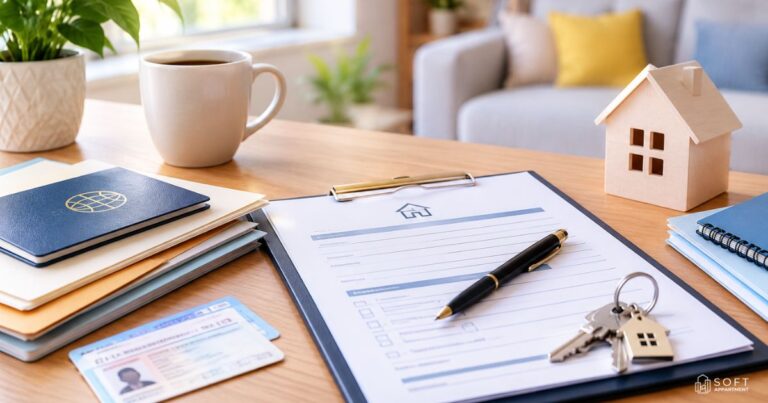







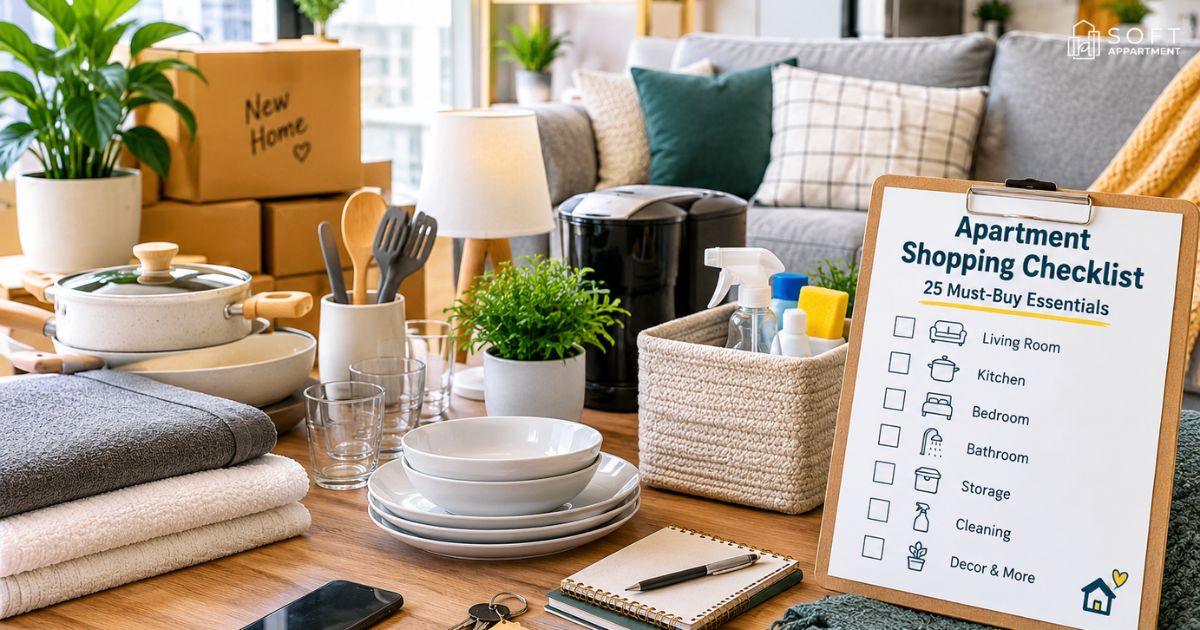
Picture this. You unlock the door and step inside. Your footsteps echo off the bare walls. Your phone holds fifty open tabs and zero answers. This apartment shopping checklist clears the confusion. It covers 25 must-buy items, smart ways to save, and a realistic price tag. Think of it as your first apartment checklist and move-in checklist rolled into one friendly guide.
Apartment Shopping Checklist: What to Buy Before You Move In
Start with night one. You need a place to sleep, shower, eat, and stay safe. That’s the whole job. Every item in this apartment shopping list serves one of those four needs. Everything else can wait a few weeks. Buying less at first protects your wallet. It also keeps the place from feeling cluttered. Smart renters treat moving into a new apartment like packing for a long trip.
Before you click “buy,” grab a tape measure. Check doorways, hallways, stairwells, and elevators. A sofa that won’t fit is a costly lesson. Next, ask your landlord what comes with the unit. Some places include blinds, appliances, or a shower rod. The table below groups these new apartment must-haves by room. Shop in that order and you’ll stay on track.
| Room | Item Numbers | What You’re Covering |
| Kitchen | 1 to 6 | Cooking, eating, food storage |
| Bedroom | 7 to 10 | Sleep and clothing storage |
| Bathroom | 11 to 14 | Hygiene and basic plumbing needs |
| Living room | 15 to 17 | Seating, light, and power |
| Cleaning | 18 to 21 | Day-one cleanup and upkeep |
| Safety | 22 to 25 | Alarms, first aid, emergencies |
Apartment Shopping Tips to Save Money on Your First Apartment
Money vanishes fast when you furnish a home from scratch. Set a hard spending cap before you shop. Then split that number across rooms. These apartment shopping tips will stretch every dollar. Use cash-back apps and store coupons. Compare unit prices on bulk items. Ask relatives for spare pans or lamps. Learning how to save money on apartment essentials starts with a limit you won’t cross.
Renters have a few extra tricks. Browse Facebook Marketplace and Craigslist near college towns in May and August. Students dump good furniture cheaply when leases end. Track every purchase in a simple spreadsheet. A clear apartment budget keeps you honest. Also save your receipts. Many stores accept returns within 30 to 90 days, so check each policy first.
“Buy what you need to live today. Buy what you want once you know how you live.” This simple rule saves most first-time renters hundreds of dollars.
Buy Second-Hand for Big Apartment Shopping Wins
Used furniture is the easiest win. Solid wood dressers and dining sets often sell for a fraction of retail. Test every drawer and wiggle every leg before you pay. Skip used mattresses entirely because of bed bug risk. Wipe everything down before it enters your home. Good apartment furniture from thrift stores can look brand new after a deep clean. For more ideas on keeping a bedroom tidy, browse our bedroom and closet styling guides.
Time Your Apartment Shopping Around Major US Sales
Timing matters more than most people think. Presidents’ Day, Memorial Day, Labor Day, and Black Friday bring big mattress and furniture deals. Kitchen goods often drop in price around January and during back-to-school season. Sign up for store emails to grab first-order coupons. A little patience can trim your total noticeably.
Skip the Cheap-Out Traps
Some items cost more when you buy the cheapest option. Mattresses top that list because poor sleep hurts your whole day. Smoke detectors and surge protectors belong there too. A flimsy knife can slip and cause injury. Save money on décor and side tables instead. Spend a bit more where safety and comfort are involved.
Kitchen Essentials for Apartment Shopping
Here’s the takeout trap. You skip buying a pan. Then you order delivery for three weeks straight. Your bank account notices. A small, smart kitchen pays for itself fast. Start with kitchen essentials that handle breakfast, lunch, and dinner. You don’t need a 20-piece set. Two pans, one pot, and a good knife cover most meals. Want the full breakdown? Read our guide to first apartment kitchen essentials.
Focus your money on tools you’ll touch daily. A decent knife and nonstick pan are worth the extra cost. Cheap plates and mugs work fine. Plan your cookware and dishes around how many people live there. Four place settings suit most solo renters. That leaves room for a guest or two. Here are items 1 through 6.
| # | Item | Why You Need It | Typical Price |
| 1 | Cookware set (pot, skillet, nonstick pan) | Handles most home meals | $40 to $120 |
| 2 | Dish set (plates, bowls, mugs) | Daily eating and drinking | $25 to $70 |
| 3 | Flatware and utensils (spatula, ladle, can opener) | Cooking and serving | $20 to $50 |
| 4 | Chef’s knife and cutting board | Safe, fast prep | $25 to $60 |
| 5 | Food storage containers | Leftovers and meal prep | $15 to $30 |
| 6 | Coffee maker or electric kettle | Morning routine | $20 to $60 |
Small-Space Kitchen Hacks Most Checklists Skip
Tiny kitchens need clever fixes. Choose nesting pots and stackable bowls. Add an over-the-sink drying rack to free up counter space. Stick removable hooks inside cabinet doors for measuring cups. A tension rod under the sink creates a hanging spot for spray bottles. These small tricks make a cramped galley feel twice as big.
Bedroom Essentials: Your Apartment Shopping List
A good night’s sleep is your first real move-in win. So start here. Strong bedroom essentials make a new place feel like home within hours. You’ll wake up rested and ready to unpack. Don’t scatter your budget across décor yet. Put real money into the mattress and smart bedding and linens. Those two choices shape every morning you’ll have.
Mattress shopping has two paths. Buying online often costs less and includes a sleep trial of around 100 nights. Shopping in store lets you test comfort right away. Read the return policy either way. Some brands charge fees for pickup. Buy two sheet sets so one is always clean. Add a mattress protector to guard your investment. Need storage and styling ideas? Check our bedroom and closet styling category.
| # | Item | Why You Need It | Typical Price |
| 7 | Mattress and mattress protector | Sleep quality and warranty protection | $250 to $900 |
| 8 | Two sheet sets | One on the bed and one in the wash | $30 to $90 |
| 9 | Pillows and comforter | Comfort and warmth | $40 to $120 |
| 10 | Hangers and small storage bins | Keeps clothes organized | $15 to $40 |
Renter-Friendly Bedroom Upgrades
Your lease probably bans big holes in the walls. Don’t worry. Blackout curtains on a tension rod block street light without drilling. Adhesive hooks hold robes and bags. Under-bed bins hide off-season clothes. A small rug warms cold floors. These upgrades pass move-out inspections because they leave no marks behind.
Bathroom Essentials to Add to Your Apartment Shopping Checklist
Here’s a classic mistake. You shower on day one and realize you own no towel. Don’t be that person. Pack your bathroom essentials in a clearly marked box. Keep it with you instead of on the moving truck. Nothing feels worse than dripping dry in a strange, empty room. A few small items prevent that exact problem.
Check what your landlord provides first. Many units include a curtain rod but not the curtain. Pick a liner that resists mold. Buy two sets of shower curtain and towels so laundry day never leaves you stuck. Stock up on toilet paper too. It’s the one item you’ll regret forgetting at midnight.
| # | Item | Why You Need It | Typical Price |
| 11 | Bath towels and washcloths | Daily drying | $25 to $60 |
| 12 | Shower curtain, liner, and rings | Keeps water in the tub | $15 to $35 |
| 13 | Bath mat | Prevents slips | $10 to $25 |
| 14 | Toilet paper, plunger, and toilet brush | Basic sanitation | $15 to $30 |
Bathroom Items People Forget
A few small items slip through the cracks. A bathroom trash can tops the list. A soap dispenser and toothbrush holder keep counters tidy. A shower caddy organizes shampoo bottles without drilling. Grab a hand towel and a small cup too. These cheap extras make your daily routine smoother from the very first morning.
Living Room Essentials for Apartment Shopping
Everyone jokes about the “floor couch” phase. It’s funny until your back disagrees. Furnish your main space in phases. Begin with one comfortable seat and good lighting. Pick living room furniture that fits your measurements and your lifestyle. A loveseat suits tight spaces. A full sofa works if you host often. Your apartment starter kit doesn’t need a coffee table yet. For layout inspiration, see our living room essentials guide.
Small spaces reward multi-use pieces. A storage ottoman doubles as a seat and a toy box. A rug defines the lounge area in an open floor plan. Light matters more than most people expect. Overhead fixtures can feel harsh. Pair a floor lamp with a table lamp for a warm glow. Add a surge protector so your electronics stay safe.
| # | Item | Why You Need It | Typical Price |
| 15 | Sofa or loveseat | Main seating | $250 to $900 |
| 16 | Floor lamp and table lamp | Warm, flexible lighting | $30 to $90 |
| 17 | Surge protector or power strip | Protects electronics | $10 to $30 |
Tech and Gadget Basics
Set up your Wi-Fi router early. Book the internet install a week before move-in because appointments fill quickly. Smart plugs let you control lamps from your phone. Ask your landlord about TV wall mounts before you drill anything. A simple stand avoids the issue entirely. Label your cables so setup stays painless.
Cleaning Supplies and Home Maintenance Essentials
Move-in day isn’t as clean as it looks. Dust hides in corners. Cabinets hold crumbs from past tenants. Wipe every surface before you unpack. Strong cleaning supplies make that job quick. A spray cleaner, sponges, and rubber gloves handle most messes. Keep them in a bucket so you can carry everything from room to room. Our cleaning essentials list shows exactly what to pack.
You’ll also want trash can and cleaning tools for weekly upkeep. A broom, dustpan, and mop cover hard floors. A vacuum handles carpets and rugs. Add a few simple fixers too. A basic toolkit solves small problems before they become repair requests. Handy renters save time and avoid awkward calls to the landlord.
| # | Item | Why You Need It | Typical Price |
| 18 | Trash cans and trash bags | Kitchen and bathroom waste | $20 to $50 |
| 19 | Broom, dustpan, and mop | Hard floor care | $20 to $45 |
| 20 | All-purpose cleaner, dish soap, and sponges | Everyday messes | $15 to $30 |
| 21 | Vacuum cleaner | Carpet and rug care | $60 to $200 |
Starter Home Toolkit
A small toolkit and basic tools set pays off quickly. Pack a screwdriver set, hammer, tape measure, adjustable wrench, and duct tape. A flashlight and a few spare batteries join the box. You’ll assemble furniture, hang frames, and tighten loose hinges. Store everything in one tote near the entry closet for quick access.
Safety Items and First-Aid Kit for Your New Apartment
Small things make a big difference here. Safety gear rarely feels exciting. Yet it matters most when something goes wrong. Check your lease to see what your landlord must provide. Smoke alarms usually come with the unit. Still, test each one yourself. The National Fire Protection Association shares fire safety guidance on alarm testing and replacement schedules.
Add your own smoke detector and safety items where gaps exist. Place alarms inside every bedroom and outside sleeping areas. A carbon monoxide alarm is smart if your unit has gas appliances. Keep a fire extinguisher near the kitchen. Learn first-aid basics from the American Red Cross. For product recalls, the Consumer Product Safety Commission is a handy resource.
| # | Item | Why You Need It | Typical Price |
| 22 | Smoke and carbon monoxide detectors | Early warning | $15 to $50 |
| 23 | First-aid kit | Minor injuries at home | $15 to $35 |
| 24 | Fire extinguisher | Small kitchen fires | $20 to $50 |
| 25 | Flashlight with spare batteries | Power outages | $10 to $25 |
What Belongs in a Basic First-Aid Kit
A solid first-aid kit covers everyday accidents. Include adhesive bandages in several sizes, gauze pads, medical tape, and antiseptic wipes. Add pain relievers, a digital thermometer, tweezers, and small scissors. A cold pack helps with sprains. Check expiration dates twice a year. Store the kit somewhere obvious so anyone can find it fast.
Apartment Shopping After Move-In: What Can Wait
You don’t need everything on day one. Honestly, nobody does. Overbuying is the most common rookie error. Live in the space for two to four weeks first. Notice where you drop your keys. Watch where the light falls. Then decide whether buy before or after moving makes sense for each item. Patient apartment shopping leads to smarter choices and fewer returns.
Consider a real example. Maya, a first-time renter in Austin, bought a huge sectional before moving in. It blocked her only window. She returned it and paid a restocking fee. Her second pick fit perfectly after two weeks of observation. Waiting would have saved her about $150. Use your home essentials list to separate urgent buys from nice extras. Smart household essentials shopping always starts with real daily habits.
Bedroom and Living Space Upgrades to Buy Later
Décor makes a place feel personal. It just doesn’t have to arrive immediately. Wall art, accent rugs, extra seating, and nightstands can wait. You’ll learn what style suits your space after living there a bit. Buy one piece at a time. Each addition then feels intentional instead of random. Our living room essentials guide can help you plan upgrades in the right order.
Kitchen Extras for Later Apartment Shopping
Gadgets tempt everyone. Air fryers, blenders, and fancy baking sheets look great online. Wait a month to see what you actually cook. A spice rack helps once you own more than five jars. Use that time to learn your habits. Then spend only on tools you’ll reach for every week.
Gadgets and Cleaning Upgrades Worth Waiting For
Robot vacuums, steamers, and desk organizers are nice upgrades. They’re not urgent. Basic brooms and sponges clean just fine for now. Decide after a month whether the upgrade solves a real annoyance. Sales happen constantly. Waiting lets you catch a lower price without any pressure.
Total Cost of Apartment Shopping: Budget Breakdown
Here’s the number most renters don’t expect. A bare-bones setup costs around $1,100. A mid-range setup lands near $2,500. A splurge setup can pass $6,000. Knowing the cost of apartment essentials before you shop prevents sticker shock. These figures are estimates based on typical US retail prices. Your final total will depend on brands and local sales.
Costs shift by city and by buying style. Big metro areas often charge more for furniture delivery. Second-hand shopping can cut totals sharply. Don’t forget extras outside the 25 items. Renter’s insurance usually runs a modest monthly fee, and the Insurance Information Institute explains how coverage works. Internet setup and utility deposits add one-time costs too. Treat these as core first-time renter essentials inside your apartment budget.
Budget, Mid-Range, and Splurge Cost Table
This table shows estimated spending by room across three tiers. Pick the column that matches your situation. Mix and match if you like. For example, splurge on the mattress and stay budget-friendly everywhere else.
| Room | Budget | Mid-Range | Splurge |
| Kitchen | $150 | $400 | $900 |
| Bedroom | $350 | $800 | $2,000 |
| Bathroom | $60 | $150 | $350 |
| Living room | $400 | $900 | $2,500 |
| Cleaning | $80 | $150 | $300 |
| Safety | $70 | $120 | $250 |
| Total | $1,110 | $2,520 | $6,300 |
Final Thoughts
Furnishing your first place feels huge at first. It gets easier once you break it into rooms and phases. Use this apartment shopping checklist as your map. Buy the day-one items first. Wait on the fun extras. Keep your budget visible. Soon your empty rooms will feel like home.
Frequently Asked Questions
What are the things you need for your first apartment?
Start with a mattress, bedding and linens, towels, a pan, plates, and a smoke alarm. These first-time renter essentials cover sleep, hygiene, food, and safety.
How much does it cost to furnish an apartment?
Expect about $1,100 for a bare-bones setup and $2,500 for mid-range. The cost of apartment essentials drops sharply if you buy second-hand.
Should I buy furniture before moving in?
Buy only day-one items first, like a mattress, a seat, and a lamp. Wait two to four weeks before deciding buy before or after moving for bigger pieces.
What is the cheapest way to furnish an apartment?
Mix second-hand finds, hand-me-downs, and holiday sales. These apartment shopping tips show how to save money on apartment essentials without sacrificing quality.
Do landlords provide smoke detectors?
Most do, but rules vary by state, so check your lease and test every alarm. Adding your own smoke detector and safety items is cheap and worth it.