








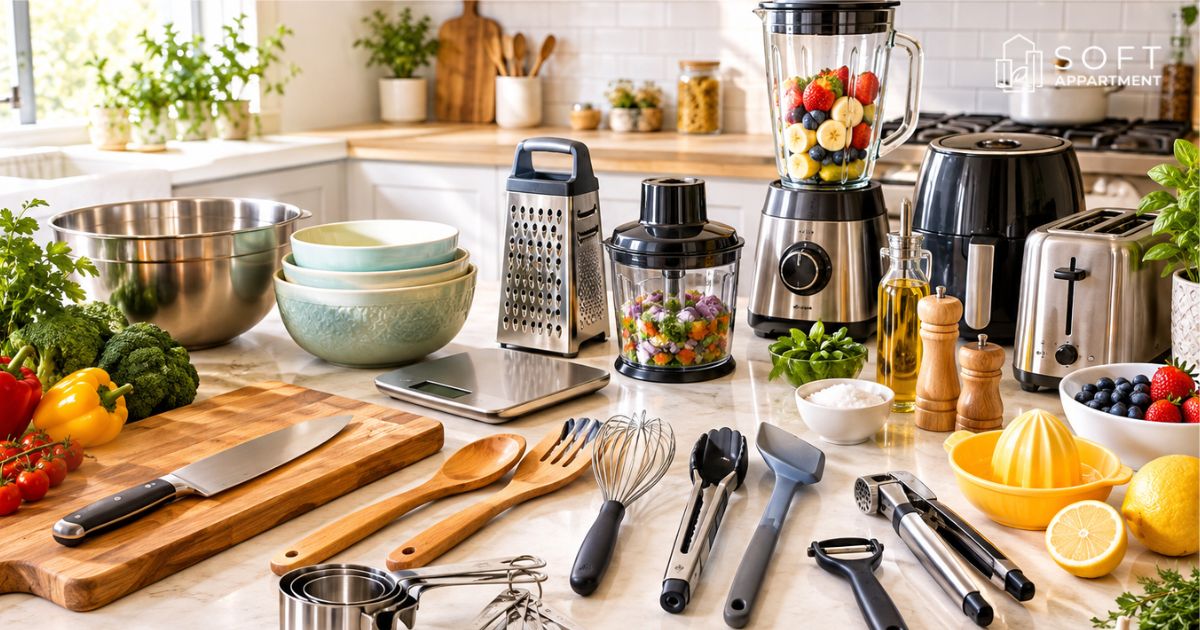
Picture this. Your pasta water boils over while you dig through a messy drawer for a ladle. We’ve all been there. These kitchen essentials fix that chaos. This guide covers 25 must-have kitchen tools plus storage and pantry basics. You’ll cook faster and clean up with less fuss.
Why Kitchen Essentials Make Cooking Faster & Easier
A sharp chef’s knife changes everything. You can dice an onion in one minute instead of struggling for three. Good kitchen tools also boost your cooking efficiency because they cut prep time. You spend less energy fighting the food and more time enjoying it.
Smart kitchen essentials lower stress and waste too. When tools sit within reach, meal prep feels smooth. You order less takeout and save real money. Try my 30-second rule. If a tool saves you 30 seconds every time you cook, it earns its drawer space.
Must-Have Prep Tools Every Kitchen Needs
Prep work takes up most of your cooking time. The right basics make it quicker and safer. Think of them as your starting lineup. Every first apartment kitchen needs these six items before anything fancy. They cost little and work hard every single day.
Good prep tools also help you stay organized. You wash less and move less. That means easy cleanup at the end of the night. Most of these items last for years. Buy them once and enjoy them for a long time.
Cutting Board and Measuring Cups & Spoons
A big cutting board is item one. Wood feels gentle on knives. Plastic goes in the dishwasher. Use separate boards for raw meat and veggies to avoid cross-contamination. Item two is a set of measuring cups and spoons. Stainless steel sets don’t crack or stain.
Mixing Bowls and Colander
Item three is a nesting set of mixing bowls. Stainless steel bowls are light and tough. They also stack neatly for space-saving storage. Item four is a colander. It drains pasta and rinses fruit much faster than a pot lid. Pick one with a stable base.
Vegetable Peeler and Box Grater
Item five is a vegetable peeler. A Y-shaped peeler works well for most hands. Swivel peelers suit curved produce. Item six is a box grater. It shreds cheese and zests lemons. It also grates ginger, so keep your ginger in the freezer for easy grating.
Best Cookware & Bakeware for Everyday Cooking
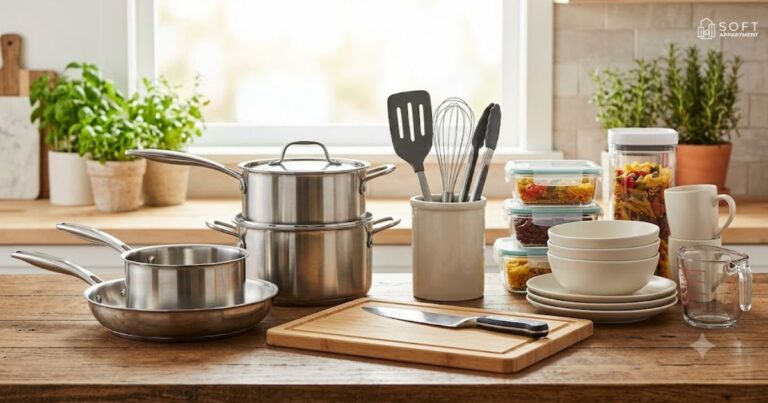
You don’t need a huge cookware set. Five well-chosen pieces handle nearly every recipe. Look for even heating and a sturdy handle. Check whether the pan works on induction stoves and in the oven. Many cheap pans fail these simple tests.
Quality matters more than quantity here. Durable cookware saves money over time. A pan that lasts 20 years beats five that warp in one. Always check the oven-safe temperature before you buy. Some nonstick coatings can’t take more than 400°F.
Stainless Steel Skillet and Cast Iron Skillet
Item seven is a 12-inch stainless steel skillet. It heats evenly and browns food well. Item eight is a cast iron skillet. It sears steak beautifully and holds heat for ages. Season it with a thin coat of oil. Never soak it overnight.
Saucepan and Stockpot
Item nine is a 2-quart saucepan. It handles sauces, oatmeal, and small batches of rice. Item ten is an 8-quart stockpot. It’s perfect for soup, chili, and big pasta nights. Choose a heavy bottom so food doesn’t scorch. Glass lids let you peek without losing heat.
Rimmed Baking Sheet
Item eleven is a rimmed baking sheet. This bakeware star roasts veggies and bakes cookies. It even holds a full sheet-pan dinner. Aluminum heats fast and resists rust. Nonstick versions clean quicker but scratch easily. Line the pan with parchment for even easier cleanup. For more quick wins, read our cleaning essentials list.
Essential Cooking Utensils & Tools
Your hands can’t do everything. Good kitchen utensils protect your pans and your fingers. They also give you better control while you cook. Look for heat-resistant materials and comfortable grips. Cheap plastic can melt or stain after a few uses.
Always match the tool to the task. Silicone spatulas protect nonstick coatings. Metal tongs grab hot items safely. A solid set of kitchen gadgets like these also makes you look like a pro. Plus you’ll feel more confident at the stove.
Spatula and Tongs
Item twelve is a silicone spatula. It flips, scrapes, and stirs without scratching pans. Choose one rated to at least 450°F. Item thirteen is a pair of locking tongs. They lift steaks, toss salads, and turn vegetables. Spring-loaded tongs with silicone tips work best.
Whisk and Ladle
Item fourteen is a balloon whisk. It whips eggs, blends dressings, and smooths lumpy sauces. Item fifteen is a deep ladle. It serves soup without drips. A long handle keeps your hand away from steam. Stainless steel versions will outlast plastic ones.
Oven Mitts and Instant-Read Thermometer
Item sixteen is a pair of oven mitts. Silicone-coated mitts resist heat and water. Item seventeen is an instant-read thermometer. It takes the guesswork out of cooking meat. The USDA safe temperature chart says poultry needs 165°F. Not sure where to place the probe? The USDA food thermometer guide explains it. The table below shows other safe targets.
| Food | Safe Internal Temperature |
| Chicken and turkey | 165°F |
| Ground beef and pork | 160°F |
| Beef, pork, and lamb steaks | 145°F plus 3-minute rest |
| Fish | 145°F |
| Leftovers | 165°F |
Kitchen Knives & Sharpening Essentials
A sharp knife is a safe knife. Dull blades slip and cause cuts. Good knives also make every cut cleaner and faster. You only need three knives to start. Spend a little extra here because these premium kitchen tools pay you back daily.
Sharpening matters as much as buying. Many cooks skip it and wonder why their knives feel bad. Learn two simple habits. Hone weekly and sharpen once or twice a year. Also store knives in a block or on a magnetic strip so the edges stay safe.
Chef’s Knife and Paring Knife
Item eighteen is an 8-inch chef’s knife. It slices, dices, and chops almost anything. Forged blades feel heavier and last longer. Stamped blades cost less and work well. Saveur tested dozens of knives in its best chef knife review, so skim it before you buy. Item nineteen is a paring knife. It peels, trims, and handles small jobs with ease.
Bread Knife and Honing Rod
Item twenty is a serrated bread knife. It cuts crusty loaves and tomatoes without crushing them. Item twenty-one is a honing rod. It straightens the blade edge between sharpenings. Honing doesn’t remove metal. Sharpening does. A basic knife sharpener handles that job twice a year.
Kitchen Appliances & Gadgets That Last
Small kitchen appliances can save you hours each week. But they take up space. Choose only the ones you’ll use often. Check the warranty before you buy. A five-year warranty usually signals better build quality and easier repairs.
Quality beats flashy features every time. A simple blender outlasts a gimmicky gadget. Think about kitchen upgrades that solve a real problem for you. If a tool collects dust in a cabinet, you wasted your money. Buy fewer things and use them more.
Immersion Blender
Item twenty-two is an immersion blender. You blend soup right in the pot. No hot liquid splashes into a countertop blender. It also whips smoothies and sauces in seconds. Cleanup takes about ten seconds under running water. It’s one of the best kitchen items for small spaces.
Digital Kitchen Scale
Item twenty-three is a digital kitchen scale. Baking is a science. Weighing flour gives far more accurate results than scooping it. It also means fewer dishes to wash. Look for a scale that switches between grams and ounces. A tare button is a must.
Kitchen Shears
Item twenty-four is a pair of kitchen shears. They snip herbs, cut up chicken, and slice pizza. They even open stubborn packaging. Pick shears that come apart for washing. Dishwasher-safe pairs are a bonus. You’ll reach for them more than you expect.
Stoneware Baking Dishes & Casserole Essentials
Stoneware is a baker’s best friend. It heats slowly and holds warmth for a long time. That makes casseroles, lasagna, and roasted veggies turn out evenly browned. A good dish also goes straight from oven to table. It looks great and keeps food hot.
Care matters here. Don’t move stoneware from the freezer to a hot oven. The sudden change can crack it. This is called thermal shock. Let it warm up first. Wash by hand when you can. Hosting a game night? Our living room essentials guide helps you set up the space too.
Stoneware Casserole Dish
Item twenty-five is a 9×13 inch casserole dish. This size is the American standard for most family recipes. Choose stoneware with sturdy handles for a safe grip. The USDA also lists casseroles at 165°F, so check the center with your thermometer. The table below compares three popular materials so you can pick the right bakeware.
| Material | Heat Retention | Cleaning | Best Use |
| Stoneware | Excellent | Hand wash best | Casseroles, bread, pizza |
| Glass | Good | Dishwasher safe | Lasagna, baked pasta |
| Ceramic | Very good | Easy to wipe | Serving and baking |
Clever Kitchen Organizers & Glass Food Storage
A messy kitchen slows you down. Good kitchen organization makes tools easy to find. It also keeps your counters clear. This matters most in small US apartments. Vertical space is your friend. Use it before you buy more cabinets.
Leftovers need a good home too. Smart storage cuts food waste and saves money. Together these supporting items aren’t part of the 25 core picks. But they make everything else work better. Think of them as the glue that holds your whole kitchen together.
Glass vs Plastic Food Storage Containers
Glass food storage doesn’t stain or hold odors. It’s microwave safe and oven safe in most cases. Plastic food storage containers weigh less and cost less. But they can warp and stain. Glass is the better long-term buy. Look for snap-tight lids to prevent leaks.
Space-Saving Organizers
Drawer dividers keep kitchen utensils from tangling. A lid rack ends the cabinet avalanche. A lazy Susan puts spices and oils within easy reach. These simple tools offer real space-saving storage on a budget. The same tricks work in other rooms, so browse our bedroom closet styling articles for more ideas.
Aluminum Foil & Parchment Paper
Aluminum foil covers dishes and wraps food for the grill. Parchment paper lines pans and stops sticking. They aren’t interchangeable. Foil can react with acidic foods like tomatoes. Parchment can’t go under a broiler. Keep both on hand for easy cleanup and better results.
Good Quality Pantry Staples to Always Keep
A stocked pantry saves dinner. Keep olive oil, vinegar, salt, and black pepper close. Add canned tomatoes, pasta, rice, and flour. These pantry staples turn into a hundred meals. Buy the best quality you can afford for oil and salt. You’ll taste the difference.
Pair your pantry with your tools for quick weeknight dinners. A skillet, some pasta, and canned tomatoes make sauce in 15 minutes. As an old proverb says, “Well begun is half done.” Good kitchen essentials and a full pantry make every recipe easier to start.
Pro tip: Freeze ginger with the roots on. Grate it straight from the freezer. The skin comes off easily and the ginger lasts for months.
Budget vs Premium Kitchen Items: How to Choose + FAQs
Not every tool deserves a big budget. Spend more where quality changes results. Save where it doesn’t. Budget-friendly kitchen items work well for simple jobs. Premium kitchen tools shine in daily heavy use. A professional product tester would tell you the same thing.
Here’s a quick example. Maya moved into her first apartment with $200. She bought a good knife and a skillet first. She chose cheap bowls and spatulas. Six months later she cooked four nights a week. Her smart split stretched her money further.
When to Spend More and When to Save
Splurge on your knife, skillet, and thermometer. These tools affect taste and safety. Save on spatulas, bowls, and peelers. Cheap versions do the job well. A simple minimalist kitchen needs fewer, better things. Buy the starter picks first. Add the rest as your cooking grows.
Minimalist Kitchen Checklist
Use this table to track all 25 picks. It shows when to buy each one.
| # | Item | Buy Now or Later | Budget or Premium |
| 1 | Cutting board | Now | Budget |
| 2 | Measuring cups and spoons | Now | Budget |
| 3 | Mixing bowls | Now | Budget |
| 4 | Colander | Later | Budget |
| 5 | Vegetable peeler | Now | Budget |
| 6 | Box grater | Later | Budget |
| 7 | Stainless steel skillet | Now | Premium |
| 8 | Cast iron skillet | Later | Budget |
| 9 | Saucepan | Now | Premium |
| 10 | Stockpot | Later | Budget |
| 11 | Baking sheet | Now | Budget |
| 12 | Silicone spatula | Now | Budget |
| 13 | Tongs | Now | Budget |
| 14 | Whisk | Later | Budget |
| 15 | Ladle | Later | Budget |
| 16 | Oven mitts | Now | Budget |
| 17 | Instant-read thermometer | Now | Premium |
| 18 | Chef’s knife | Now | Premium |
| 19 | Paring knife | Now | Budget |
| 20 | Bread knife | Later | Budget |
| 21 | Honing rod | Later | Budget |
| 22 | Immersion blender | Later | Premium |
| 23 | Digital kitchen scale | Later | Budget |
| 24 | Kitchen shears | Later | Budget |
| 25 | Stoneware casserole dish | Later | Premium |
FAQs
What are the most important kitchen essentials for a first apartment?
Start with a chef’s knife, cutting board, skillet, saucepan, and baking sheet. Add measuring cups, a spatula, and tongs. These cover most meals. Our full first apartment kitchen guide shows how to expand your setup slowly as your budget grows.
How many pots and pans do I really need?
Most home cooks need four to five pieces. A skillet, a saucepan, a stockpot, and a baking sheet cover nearly everything. A cast iron pan is a nice bonus. More pieces just add clutter.
Are expensive kitchen tools worth it?
Sometimes. Spend more on knives, skillets, and thermometers. They last longer and perform better. Cheaper options work fine for bowls, peelers, and spatulas. Judge each tool by how often you’ll use it.
What kitchen tools do professional chefs use at home?
Chefs love a sharp chef’s knife, a sturdy cutting board, and tongs. They also use a digital scale and an instant-read thermometer. Simple, reliable tools win over trendy gadgets every time.
What should I buy first when stocking a kitchen?
Buy a good knife and a skillet first. These two items handle most cooking tasks. Then add a cutting board and a baking sheet. After that, fill in gaps based on what you cook most.