









There’s nothing worse than pulling a carrot too early and finding a sad, skinny root staring back at you. You waited all season. You watered. You weeded. And now you’re not sure if today’s the day. Good news: harvesting carrots at the right time isn’t complicated once you know what to look for.
This guide walks you through the whole process. You’ll learn when to harvest carrots, which tools actually help, and how to store your freshly harvested carrots so they last for months. We’ll also cover the mistakes most gardeners make and how to avoid them. Grab your gloves. Let’s dig in.
When Are Carrots Ready to Harvest?
Most carrot varieties need somewhere between 60 and 80 days to reach full size. But the calendar only tells you part of the story. Your carrot growing season depends on your climate, your soil, and even how deep you planted your seeds. Gardeners in warmer states often get a longer window than those up north.
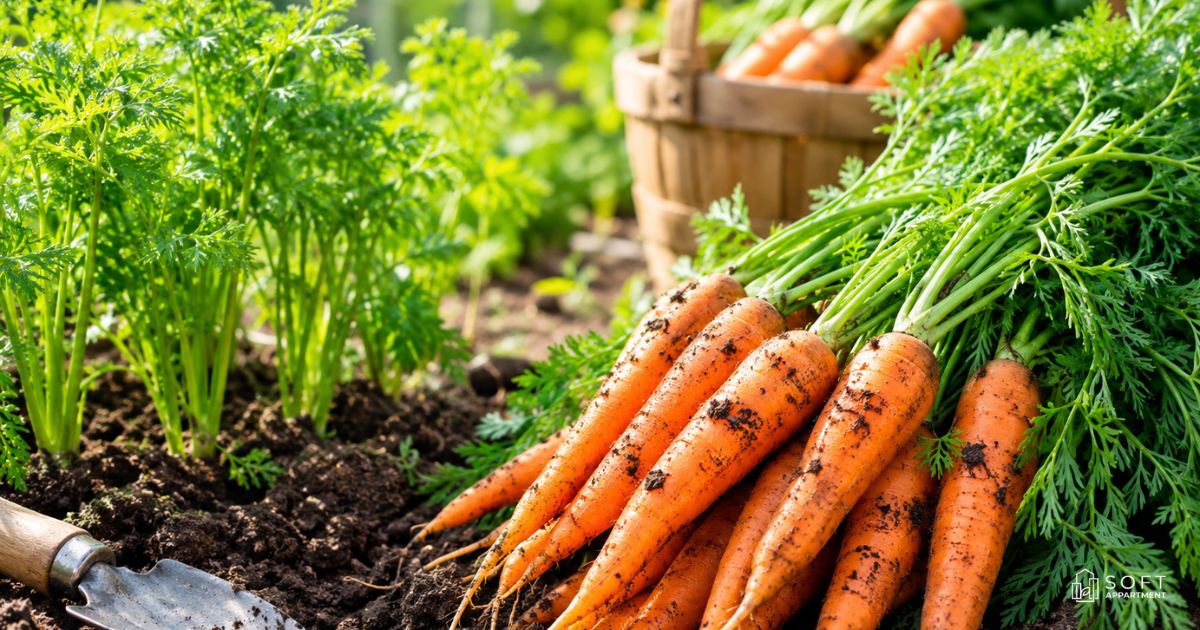
The best way to know carrots ready to harvest is to check the shoulders. That’s the top part of the carrot roots poking through the soil. If they look thick and colorful, your carrot harvest is close. Don’t just guess. Check the days-to-maturity on your seed packet and count forward from your planting carrots date. According to SDSU Extension, carrots are usually ready when the roots reach about three-quarters of an inch in diameter at the top, though you can pull them anytime they hit a usable size.
Signs Your Carrots Are Ready to Pull
Here’s a simple truth. Mature carrots usually have shoulders that measure about three-quarters of an inch across. Anything smaller might still need a few more weeks underground. The greens on top matter too. When the foliage looks strong and slightly droopy at the tips, that’s often a sign your carrot harvesting time has arrived.
If you’re still unsure, do a test pull. Reach into the row and pull one carrot out. Taste it. Sweet and crisp means you’re good to go. Bitter or woody means you should wait. This trick works better than any calendar, and it takes less than a minute.
Tools You Need to Harvest Carrots
You don’t need fancy equipment to harvest carrots properly. A garden fork is your best friend, especially in heavier soil. Slide it in a few inches away from the row and gently lift. This loosens the ground so the roots come out whole instead of snapping in half.
For lighter, sandy soil, your hands might be all you need. Grip near the base of the greens and pull with steady pressure. Keep a basket or bucket nearby to collect your harvest as you go. A small trowel also helps for stubborn spots where the ground has hardened. Simple tools, used the right way, beat expensive gear every time.
How to Harvest Carrots Without Damaging Them
Rushing is the enemy here. If you yank straight up without loosening the dirt first, you’ll snap the tip clean off. That broken piece often stays buried, and the rest of the carrot bruises on its way out. Take your time. Loosen the row with a fork before you even touch the greens, a method Texas A&M AgriLife Extension also recommends to prevent breakage during harvest.
Once the soil is loose, grip the carrot near the top and pull with a gentle wiggle. Think side to side, not just up. This technique protects the carrot roots from cracking, especially in carrot harvest conditions where the ground has gone a bit dry. A little patience here pays off later when you’re storing perfect, unbroken carrots.
| Soil Type | Best Tool | Technique |
| Sandy or loose | Hands | Wiggle and pull |
| Clay or compacted | Garden fork | Loosen first, then pull |
| Rocky | Trowel | Dig around before lifting |
Common Mistakes to Avoid When Harvesting Carrots
The biggest mistake gardeners make is timing. Pulling too early wastes potential size. Waiting too long past full size invites woody texture and splitting. Another common error is yanking carrots straight up from hard soil, which almost always ends in a snapped root and a frustrated afternoon.
People also forget to check after a hard freeze. A light frost actually sweetens carrots, but a deep freeze can damage the roots underground. Leaving cut or damaged carrots in your storage bin is another slip-up, since one bad carrot can speed up decay in the whole batch. Slow down, inspect each one, and your harvest will thank you.
How to Store Harvested Carrots for Maximum Freshness
Once you pull carrots from the ground, the clock starts ticking. Cut the leafy tops off right away, ideally within an hour. Those greens pull moisture straight out of the root, leaving you with limp, tired carrots by the next day. This one step makes a bigger difference than almost anything else in carrot storage.
Resist the urge to wash your homegrown carrots before storing them. A little dirt actually acts as a protective layer. Let them air dry for a bit, then move them to a cool, dark spot. Handled this way, storing harvested carrots properly can keep them fresh for weeks instead of days.
Storing Carrots in the Refrigerator vs. the Freezer
Your refrigerator works great for short-term storage. Wrap unwashed carrots in a damp paper towel and tuck them into the crisper drawer. Some gardeners swear by storing roots in a container of damp sand, which mimics the cool, moist conditions underground. Either method keeps freshness locked in for two to four weeks.
The freezer is your best option for the long haul. Blanch your carrots in boiling water for a couple of minutes, then plunge them into ice water to stop the cooking. Pat them dry and pack them into freezer bags. Done right, frozen carrots stay good for up to a year.
| Method | Prep Needed | Shelf Life |
| Refrigerator | Damp towel or sand | 2 to 4 weeks |
| Freezer | Blanch and pack | 10 to 12 months |
| Root cellar | Cool, dark, humid space | 4 to 6 months |
Can You Leave Carrots in the Ground Too Long?
Carrots are tougher than most vegetables. They handle cold weather well and can even overwinter in many parts of the country. A layer of mulch over the row protects the roots through frost and lets you dig up fresh carrots well into the colder months.
That said, there’s a limit. Leaving carrots too long invites splitting, especially after heavy rain follows a dry spell. The texture turns woody, and pests like carrot rust fly larvae can move in undetected. If your carrot harvest window has stretched past a few extra weeks, it’s worth checking the roots before the ground freezes solid.
Saving Carrot Seeds for Next Season
Here’s something a lot of new gardeners don’t realize. Carrots are biennial, meaning they need two full growing seasons to produce carrot seeds. In year one, you get the root. In year two, if left in the ground or replanted, the plant sends up a flower stalk loaded with seeds.
If you want to save seeds, choose your healthiest, most flavorful carrots and leave a few in the garden through winter. Watch out for cross-pollination, since carrots easily cross with wild Queen Anne’s Lace growing nearby. Keep some distance between your patch and any wild relatives if you want seeds that grow true next season.
FAQs About Harvesting Carrots
How long does it take for carrots to grow from seed to harvest?
Most carrot varieties take between 60 and 80 days. Cooler climates might stretch that timeline slightly, so always check your seed packet for specifics.
Can I leave carrots in the ground too long?
Yes, and it can lead to splitting or a woody texture. A little mulch helps protect them, but don’t push your luck past a few extra weeks once they hit full size.
Can I harvest carrots before they reach their full size?
Absolutely. These are often called baby carrots, and many gardeners actually prefer their tender texture and sweeter bite.
What are baby carrots, and how do they differ from mature carrots?
Baby carrots are simply pulled early, before reaching full maturity. They’re smaller, sweeter, and more tender than fully grown roots, though they lack the deeper flavor that comes with time in the soil.
What’s the best time of day to harvest carrots?
Morning works best. The soil holds moisture overnight, making it easier to loosen and pull without snapping the roots.