








Picture your bare concrete balcony. Now picture it green, fragrant, and buzzing with life. That change costs less than you think. With the right balcony garden ideas, even a tiny slab becomes your favorite spot in the whole apartment.
This guide gives you 15 stunning ideas with real costs. You’ll also learn about US lease rules, HOA limits, and hardiness zones. Grab a coffee. Let’s turn that empty corner into a small balcony garden you’ll love.
Why Create a Balcony Garden?
Why bother with plants on a balcony? Because they make daily life better. Greenery lowers stress and softens hot air. Fresh basil beats store-bought every time. Urban gardening gives city dwellers a slice of nature without needing a yard.
Your balcony can also become a real outdoor living space. Morning coffee tastes better among leaves. Neighbors notice too. Simple balcony garden ideas improve your view. Your balcony plants even attract bees and butterflies.
Know Your Balcony Restrictions Before You Start
Before you buy a single pot, read your lease. Many landlords and HOAs limit railing planters, hanging pots, and grills. Some cities also ban open flames on multifamily balconies. A quick email now saves a fine later.
Next, think about weight restrictions and water. Wet soil is heavy. Runoff drips onto neighbors below. Choose pots with drainage holes and saucers. Then track your light for three days to learn your sunlight requirements.
How Much Weight Can a Balcony Hold?
Residential balconies are often designed for around 60 pounds per square foot. That sounds like plenty. However, a 5-gallon pot of wet soil can weigh 30 to 40 pounds. Even a 20-inch container with moist soil and plants can reach about 100 pounds, according to the University of Maryland Extension container guide. Confirm the exact limit with your building manager. Place heavy pots near the wall.
Sun Exposure Guide: North, South, East, and West Balconies
In the US, south-facing balconies get the most sun. West-facing ones catch hot afternoon rays. East-facing spots enjoy gentle morning light. North-facing balconies stay shady. Match sun-loving plants to south and west. Give leafy greens the north side.
| Balcony Direction | Light Level | Best Plants |
|---|---|---|
| South | Full sun all day | Tomatoes, peppers, lavender |
| West | Hot afternoon sun | Rosemary, marigolds, succulents |
| East | Gentle morning sun | Lettuce, pansies, basil |
| North | Shade most of the day | Ferns, mint, spinach |
How to Maximize Space in a Small Balcony Garden
Small spaces demand smart moves. To maximize space, stop thinking floor and start thinking walls. Every rail, ceiling hook, and corner can hold something. Leave a clear walkway at least two feet wide so you can move freely.
A simple layout helps. Put tall plants in the back corners. Place medium pots in the middle. Keep low trays near the door. This layered look makes your small balcony garden feel deeper and lusher.
+--------------------------------+
| Tall plants | Trellis | Tall   |
| Medium pots   (planting zone)  |
|                                |
|   [ Walkway: 24 inches ]       |
| Low herbs | Bistro seat | Door |
+--------------------------------+
Vertical and Hanging Solutions
A vertical garden turns one square foot into ten. Use wall pockets, ladder shelves, or trellis panels. Hanging planters free up the floor. Hang them from ceiling hooks or rail hooks. Check that your lease allows drilling. Otherwise, use tension rods.
Multipurpose Furniture That Doubles as Storage
Choose pieces that work double duty. A storage bench holds soil and tools. A folding bistro table tucks away after dinner. Stackable stools become plant stands in seconds. Good balcony decor should always earn its footprint.
Best Containers and Planters for a Balcony Garden
Pots matter more than most beginners think. Good balcony planters should be light, sturdy, and sized right. Lightweight containers protect your floor and your back. Plastic, resin, and fabric bags win here. Home Depot, Lowe’s, IKEA, and Walmart sell affordable options.
Always use potting mix instead of garden soil. Garden soil compacts and drains badly. Herbs need 6 to 8 inches of depth. Flowers like 10 to 12 inches. Tomatoes need at least 5 gallons, and 8 to 10 gallons works even better. This basic container gardening rule prevents most early failures. For exact sizes by crop, check this container size and material guide from University of Maryland Extension.
| Material | Weight | Cost | Heat Retention | Durability |
|---|---|---|---|---|
| Plastic | Very light | $ | Medium | Good |
| Terracotta | Heavy | $$ | Low (breathable) | Cracks in frost |
| Fabric grow bags | Very light | $ | Low | Fair |
| Resin | Light | $$ | Medium | Excellent |
| Metal | Medium | $$ | High (gets hot) | Good |
| Upcycled buckets | Light | Free to $ | Medium | Good |
What Can You Grow in a Balcony Garden?
Start with light. Sort your balcony plants by sun. Full sun means six or more hours daily. Part shade means three to six. Shade means under three. Then check your zone on the USDA Plant Hardiness Zone Map. It shows which perennials will survive your winter.
Here’s the good news. Herbs, greens, and peppers forgive mistakes. A balcony herb garden costs little and pays off fast. Need a full setup plan? Read our balcony herb garden guide. A balcony vegetable garden needs more sun but rewards you all summer. Pick weather-resistant plants if wind or heat hits hard.
Best Plants for Sunny Balconies
Sunny spots suit cherry tomatoes, peppers, basil, rosemary, and lavender. Petunias, marigolds, and geraniums add color. These sun-loving plants adore heat but drink a lot. Water them deeply each morning. Mulch the top of the soil to hold moisture.
Best Plants for Shady Balconies
Shade isn’t a dead end. Try lettuce, spinach, mint, parsley, and chives. Ferns, hostas, and begonias glow in low light. Expect slower growth. Water less often because shady pots stay damp longer.
Easy Plants for Beginners
New to plants? Start with basil, chives, marigolds, and succulents. Mint grows like a champ. Keep it in its own pot because it spreads fast. Pick just three plants at first. Add more once you feel confident.
15 Creative Balcony Garden Ideas for Every Style
Ready for the fun part? These balcony garden ideas suit every style and budget. Costs are rough US estimates. Pick two or three that fit your space. You don’t need all fifteen at once. Start small and grow from there.
1. Build a Living Wall Vegetable Garden
A living wall turns a blank wall into a salad bar. Use a pocket planter or a pallet frame. Fill it with lettuce, strawberries, and herbs. Expect to spend $40 to $120. Add a small vertical garden drip line for easy watering.
2. Hang Planters from the Ceiling and Railings
Ceiling hooks and rail hooks free your floor. Trailing plants like petunias and ivy look dreamy up high. Hang them at staggered heights. Budget $20 to $60. Choose hanging planters with built-in saucers so water doesn’t drip on neighbors.
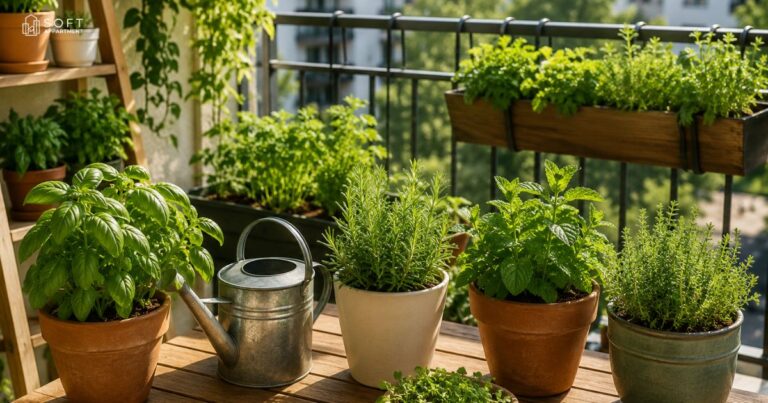
3. Start a Kitchen Herb Garden
Grow flavor right by the door. Basil, thyme, oregano, chives, and parsley thrive in small pots. Snip often to keep them bushy. A balcony herb garden costs $15 to $40. Follow our step-by-step balcony herb garden ideas to get started fast.
4. Create a Low-Maintenance Succulent Corner
Succulents love neglect. Group echeveria, jade, and sedum in shallow pots. Use gritty cactus mix and lots of sun. Cost runs $20 to $50. Add pebbles for a tidy, modern balcony garden design. In cold states, bring them indoors for winter.
5. Train Climbing Plants Up Railings
Let climbing plants cover your railing. Sweet peas, morning glories, and climbing beans grow fast. They add privacy and shade. Use a slim trellis or twine. Costs stay near $15 to $35. Check that your lease allows attaching supports.
6. Add a Mini Kitchen Garden with Tomatoes and Peppers
Cherry tomatoes and peppers love sunny balconies. Use 5-gallon buckets at minimum, with stakes. Bigger pots work even better. Plant basil nearby as a friendly companion. Budget $50 to $100. Self-watering pots work wonders here. They keep moisture steady and prevent split fruit in a balcony vegetable garden.
7. Make DIY Upcycled Planters from Cans, Crates, and Buckets
Old cans, crates, and buckets make charming pots. Punch drainage holes first. Paint them for a custom look. These DIY upcycled planters cost almost nothing. Ask cafes for free five-gallon buckets. Sand any sharp edges before planting.
8. Design a Zen Balcony Garden Retreat
Create calm with a Zen corner. Use bamboo, ferns, smooth stones, and a tiny fountain. Keep colors soft. Budget $60 to $150. A quiet outdoor living space like this helps you unwind after work. Add a small cushion for meditation.
9. Line the Railing with Flower Boxes
Flower boxes turn railings into color strips. Choose geraniums, pansies, and trailing lobelia. Mount boxes on the inside of the rail so they can’t fall. Railing planters cost $25 to $70. Deadhead spent blooms often for more flowers.
10. Stack Layered Shelves and Plant Stands
Tiered stands show off many pots in one footprint. A three-tier ladder shelf holds a dozen small plants. It costs $30 to $80. Place sun-loving plants on top and shade lovers below. This trick helps you maximize space.
11. Light It Up with Solar Lanterns and String Lights
Light extends your evenings. Solar lanterns need no wiring. String lights add warm sparkle. Plan $15 to $50. Good lighting is cheap balcony decor that changes the mood instantly. Choose warm white bulbs for a cozy glow.
12. Fit In a Bistro Table and Two Chairs
A bistro set gives you a real seat among the leaves. Choose foldable pieces with slim legs. Prices run $60 to $200. Measure first. Keep at least two feet of walking room. A small balcony garden still has space for coffee for two.
13. Anchor the Space with One Oversized Statement Planter
One big pot beats ten tiny ones. Fill a large resin planter with tall grass or a dwarf citrus tree. It becomes your focal point. Expect $50 to $150. Choose lightweight containers to respect weight restrictions. Add casters for easy moving.
14. Pick a Cohesive Color Scheme for a Small Balcony
Limit your palette to two or three colors. White pots with green leaves look fresh. Terracotta with orange blooms feels warm. Repeat colors on cushions and lanterns. A tight scheme makes any small balcony garden feel bigger. Paint costs under $20.
15. Turn Your Balcony into a “Fifth Room”
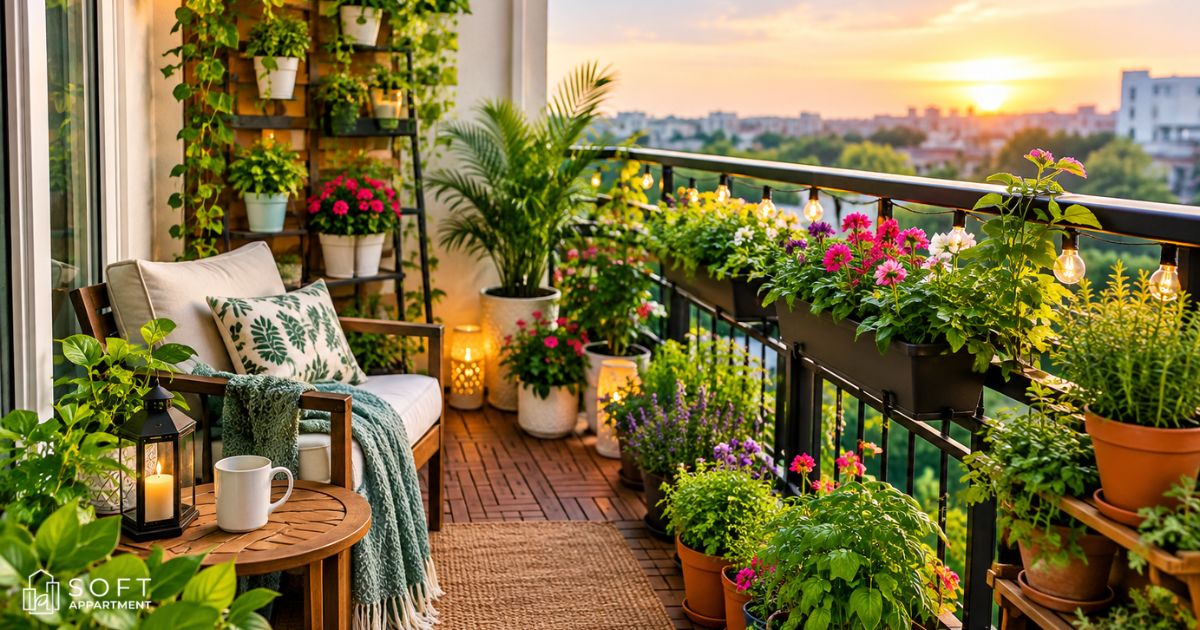
Treat your balcony like another room. Add an outdoor rug, a throw blanket, and a few plants. Give it a purpose such as reading or brunch. Budget $80 to $200. Suddenly you gain more outdoor living space without moving.
Here’s a quick snapshot to help you choose.
| Idea | Rough Cost | Difficulty | Best Light |
|---|---|---|---|
| Living wall | $40–$120 | Medium | Sun to part shade |
| Hanging planters | $20–$60 | Easy | Sun |
| Herb garden | $15–$40 | Easy | Sun |
| Succulent corner | $20–$50 | Easy | Full sun |
| Climbers | $15–$35 | Medium | Sun |
| Tomato and pepper garden | $50–$100 | Medium | Full sun |
| Upcycled planters | Under $20 | Easy | Any |
| Zen retreat | $60–$150 | Easy | Shade to part sun |
| Flower boxes | $25–$70 | Easy | Sun to part shade |
| Layered shelves | $30–$80 | Easy | Any |
| Solar lighting | $15–$50 | Easy | Any |
| Bistro set | $60–$200 | Easy | Any |
| Statement planter | $50–$150 | Easy | Sun |
| Color scheme | Under $20 | Easy | Any |
| Fifth room | $80–$200 | Medium | Any |
How Do You Water a Balcony Garden?
Watering trips up more beginners than anything else. Balcony pots dry fast because wind and sun hit them from all sides. Use the finger test. Push a finger one to two inches into the soil. Dry means water. Damp means wait.
Pick a method that fits your routine. A watering can works for a few pots. Drip irrigation suits bigger setups. Self-watering pots store a reservoir for you. Always empty saucers so roots don’t rot. Be kind to downstairs neighbors and water slowly. For more small-space tips, see the University of Minnesota Extension container gardening guide.
Drip Irrigation and Self-Watering Pots
A basic drip irrigation kit costs $25 to $60. It connects to a faucet or a small pump with a timer. Self-watering pots cost a bit more. Both save time and remove guesswork. They also protect your plants when you travel for a weekend.
Watering Tips for Hot Summers
In July heat, water every morning. Evening works too. Avoid midday because drops evaporate fast. Move delicate pots into afternoon shade. Cover the soil with mulch or coconut coir. Ask a friend to help or use timers when you go on vacation.
Choosing the Right Balcony Flooring and Tiles for Your Garden
Your floor sets the mood. Good balcony flooring must be slip-resistant, weather-proof, and easy to clean. It should also let water drain. Bare concrete looks cold and stains easily. A simple upgrade makes the whole space feel finished.
Look for anti-skid tiles with a textured surface. Porcelain and composite last longest. In sunny states like Arizona or Texas, choose light colors because dark balcony tiles get very hot. Renters should skip glue and pick click-together options instead.
Renter-Friendly Flooring Options
Interlocking deck tiles snap together in minutes. You need no tools and no glue. Lift them when you move out. Packs of ten often cost $30 to $60 at big-box stores. Slatted bases also let water drain underneath.
Interlocking Deck Tiles vs. Outdoor Rugs
Deck tiles feel like real wood underfoot. Outdoor rugs add softness and color. However, rugs trap moisture. Lift and dry them often. Deck tiles handle rain better. Many people combine both for a layered look.
| Option | Cost | Installation | Comfort | Rain Performance |
|---|---|---|---|---|
| Interlocking deck tiles | $$ | Snap together | Firm | Excellent |
| Outdoor rug | $ | Unroll | Soft | Fair |
| Artificial turf | $$ | Cut and lay | Soft | Good |
| Porcelain tiles | $$$ | Professional | Hard | Excellent |
How to Design a Balcony Garden on a Budget
Great balcony garden ideas don’t need a big wallet. Start from seed. A $3 packet grows dozens of plants. Take cuttings from friends. Choose budget-friendly ideas over showy ones. Grow the foods you eat most, and you’ll save money fast.
Reuse before you buy. Pallets, tins, jars, and crates make sturdy DIY upcycled planters. Shop end-of-season sales in early fall for big discounts. Check Facebook Marketplace, Craigslist, and Buy Nothing groups. A DIY balcony garden feels even better when it’s nearly free.
A $50 Starter Balcony Garden Plan
Here’s a simple setup. Buy fabric grow bags, one bag of potting mix, and a few starter plants. Add one small trellis. Prices vary by store and region. Still, this plan proves you can begin with one crisp fifty-dollar bill.
| Item | Estimated Cost |
|---|---|
| 3 fabric grow bags (5-gallon) | $12 |
| Potting mix (2 cubic feet) | $14 |
| 3 herb starter plants | $10 |
| Lettuce seed packet | $3 |
| Small trellis | $8 |
| Watering can | $3 |
| Total | $50 |
Free and Cheap Sources for Pots and Plants
Free stuff is everywhere. Ask neighbors for plant cuttings. Grab buckets from bakeries and delis. Visit thrift stores for baskets and mugs. Check local seed libraries too. Many public libraries in the US now lend seeds for free.
Mini case study (illustrative example): Maya, a renter in a Chicago apartment, spent about $48 on a 4-by-8-foot balcony. She bought grow bags, soil, and seeds. By midsummer she was harvesting lettuce, basil, and cherry tomatoes weekly. Her grocery herb bill dropped sharply.
“If you have a garden and a library, you have everything you need.” This line is often attributed to Cicero. It fits a balcony perfectly.
Tips to Maintain Your Balcony Garden Through the Seasons
Plants need different care each season. Good seasonal maintenance keeps your space thriving all year. Spring is for fresh soil and planting. Summer is for water and shade. Fall is for harvest and pruning. Winter is for protection.
Watch for pests year-round. Check the undersides of leaves weekly. Spray neem oil or mild soapy water at the first signs. Sweep debris so drainage holes stay clear. Choose weather-resistant plants to cut your work in harsh winters.
| Season | Key Tasks |
|---|---|
| Spring | Refresh soil, plant seedlings, add slow-release fertilizer |
| Summer | Water daily, add shade cloth, deadhead flowers |
| Fall | Harvest, plant cool-season crops, prune dead growth |
| Winter | Move tender plants inside, wrap pots, water less |
Balcony Garden FAQs
How do I arrange my balcony garden?
Start with a clear walkway. Put tall plants in the back and corners. Place medium pots in the middle. Keep low herbs near your door. Add a vertical garden on the wall to maximize space. Group pots with similar water needs together.
What plants grow well on a balcony?
Herbs like basil, mint, and chives grow easily. Cherry tomatoes, peppers, and lettuce also thrive in pots. Petunias, marigolds, and geraniums add color. Match each plant to your light level. Weather-resistant plants suit windy balconies best.
How do I start a small balcony garden?
Begin with three pots and one sunny spot. Check your lease first. Buy potting mix and pots with drainage holes. Pick easy plants like basil and lettuce. Water when the top inch or two feels dry. Expand once you feel comfortable.
How much does it cost to start a balcony garden?
You can start for about $50 with grow bags, soil, and seeds. A mid-range setup with a shelf and lights runs $150. A fully styled space with furniture and flooring can reach $300 or more. Upcycling cuts costs dramatically.
Can I grow vegetables on an apartment balcony?
Yes, you can. Choose compact varieties like cherry tomatoes, bush beans, radishes, and lettuce. Fruiting crops need six to eight hours of sun. Use large containers and steady watering. A balcony vegetable garden can feed you well.
Conclusion
A balcony doesn’t have to sit empty. You’ve seen how to check your rules, save space, choose light pots, and water smartly. You’ve also learned how to pick the right floor and keep everything alive through the seasons. Each step adds up.
Now it’s your turn. Pick one of these balcony garden ideas and start this weekend. Buy one pot. Plant one herb. Watch it grow. Then share a photo or drop a comment with your favorite idea. We’d love to see it.