






![Documents Needed to Rent an Apartment: 11 Must-Have Papers [2026]](https://softappartment.com/wp-content/uploads/2026/10/documents-needed-to-rent-an-apartment-11-must-have-papers-150x150.jpg)


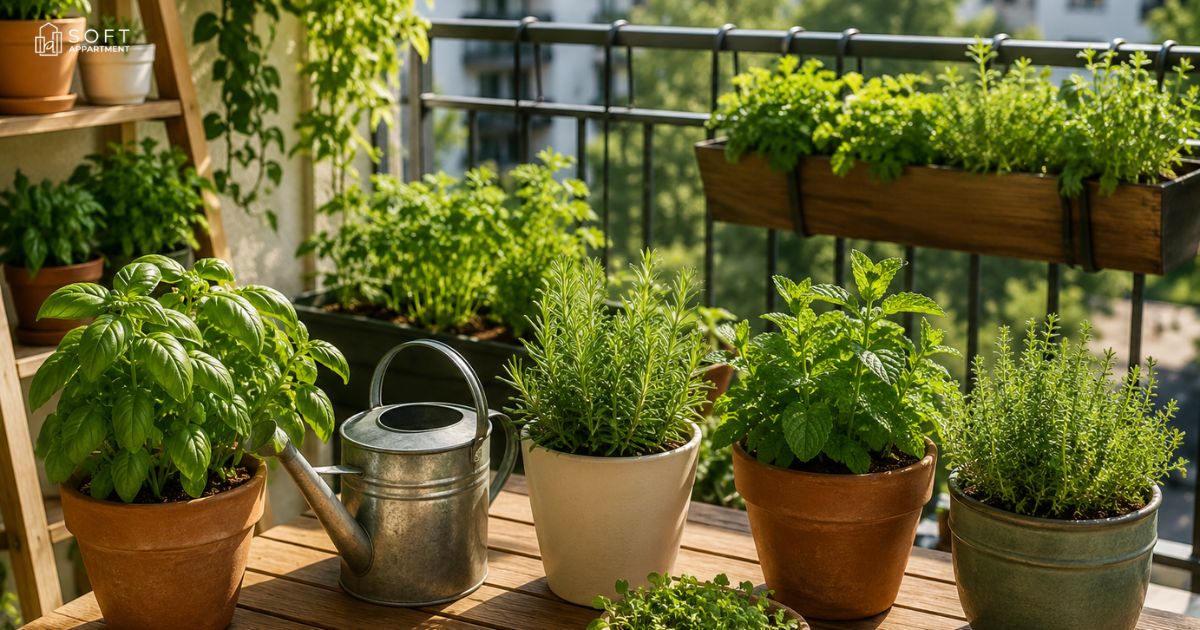
A Balcony Herb Garden can turn even a tiny apartment balcony into a fresh, useful growing space. You don’t need a backyard, expensive tools, or years of gardening experience to get started. With the right herbs for balcony spaces, suitable containers, and enough sunlight, you can grow flavorful plants close to your kitchen. Imagine snipping fresh basil for pasta or adding homegrown mint to a cool summer drink. It’s simple, rewarding, and surprisingly practical.
Whether you have a narrow railing or a spacious balcony, smart balcony garden design can make every inch count. In this guide, you’ll discover easy balcony herb garden ideas for choosing plants, planting, watering, harvesting, and protecting your herbs throughout the year.
Why Start a Balcony Herb Garden?
Fresh herbs can make everyday cooking feel more rewarding. A few pots can supply basil, parsley, or chives for pasta, salads, soups, and sauces. A balcony also gives renters a flexible small space herb garden without digging permanent beds or changing the property.Once your herbs are producing, they pair naturally with the everyday cooking staples covered in our First Apartment Kitchen Essentials Checklist.
Even a narrow outdoor area can produce useful harvests. Container gardening keeps plants close to your kitchen and makes care easier. Before planting, check your building rules and balcony weight limits. Then choose sturdy containers that won’t block doors, walkways, or emergency access the same lease-first mindset covered in our Apartment Safety Checklist.
What Are the Best Herbs for a Balcony Herb Garden?
The best herbs for balcony growing usually stay manageable in containers. Basil, parsley, cilantro, thyme, rosemary, oregano, chives, sage, and dill are useful choices. Annual herbs such as basil and cilantro finish within one season, while perennial herbs can return for years.
Mediterranean herbs such as rosemary, oregano, sage, and thyme prefer sunny conditions and well-drained soil. Mint grows vigorously, however, so give it a separate pot. Tarragon is another useful culinary choice, although French tarragon is usually grown from plants rather than seed.
| Herb | Light | Container Tip | Growing Type |
| Basil | Full sun | Medium pot | Annual herbs |
| Mint | Sun to partial shade | Keep separate | Perennial herbs |
| Parsley | Partial to full sun | Medium pot | Biennial |
| Rosemary | Full sun | Deep, well-drained pot | Perennial herbs |
| Thyme | Full sun | Smaller pot works well | Perennial herbs |
| Cilantro | Sun to partial shade | Succession sowing helps | Annual herbs |
Should You Grow Herbs From Seeds or Seedlings?
Starting with seedlings gives beginners a faster route to harvest. Young plants already have established roots and usually need less patience than tiny sprouts. Starting from herb seeds, however, costs less and gives you more variety. Basil, dill, parsley, and cilantro are practical choices for seed starting.
Your choice also depends on timing. Seeds need steady moisture, suitable temperatures, and patience during germination. Tender plants may also need protection before outdoor weather settles. For a first garden, combine both methods. Buy a few seedlings for quick results and grow herb seeds alongside them for a longer harvest.
How to Choose the Right Containers for Balcony Herbs?
Good herb garden containers need drainage holes, enough root space, and a stable base. A balcony herb planter can be plastic, terracotta, ceramic, or another suitable material. Lightweight plastic works well for renters, while heavier containers resist tipping in exposed locations. Drainage matters more than fancy materials.If you’re furnishing a balcony for the first time, our Small Apartment Decor Ideas guide has more tips on choosing pieces that fit a tight outdoor space.
Choose the container according to the mature plant, not its current size. A tiny pot may look efficient today but become cramped quickly. Use a deep pot for rosemary and similar plants. A raised herb planter can also make harvesting easier while creating a comfortable working height.
How to Design a Balcony Herb Garden in Small Spaces?
Smart balcony garden design turns unused areas into productive growing space. A vertical herb garden uses wall or railing height instead of valuable floor space. Tiered shelves can hold several pots while keeping shorter herbs in front. Always secure shelves and planters against strong wind.For more ways to use vertical space efficiently, see our Apartment Storage Ideas guide.
A balcony rail planter works especially well on narrow balconies. Keep taller plants toward the back and shorter herbs where they receive enough light. Group plants with similar needs together. This approach creates attractive balcony herb garden ideas without making the space feel crowded.
What Soil, Light, and Location Do Balcony Herbs Need?
Healthy roots begin with suitable potting soil for herbs. Avoid filling containers with heavy garden soil because it can drain poorly and restrict root oxygen. Use a quality container mix that balances moisture retention with drainage. Every pot should allow excess water to escape freely.
Next, study your balcony before choosing plants. Most culinary herbs prefer several hours of direct light, while some tolerate partial shade. Sunlight for balcony herbs changes with buildings, railings, seasons, and balcony direction. South- and west-facing spaces often provide strong light, although hot surfaces can increase heat stress.How Do You Water, Feed, and Care for Balcony Herbs?
Containers dry faster than garden beds, especially during hot, sunny weather. That’s why watering balcony herbs requires regular checking rather than a rigid calendar. Touch the soil before watering. When the upper layer feels dry, water thoroughly until excess moisture exits the drainage holes.
Feeding should remain modest because herbs don’t need heavy fertilization. Excess fertilizer can produce weak growth or unwanted leaf problems. Rotate pots when sunlight reaches one side more strongly. Also remove damaged leaves promptly. Good airflow, suitable spacing, and consistent moisture create a much healthier container herb garden.
How Should You Prune and Harvest Fresh Herbs?
Regular harvesting keeps many herbs compact and productive. Pinch growing tips on basil, for example, to encourage branching instead of letting one stem dominate. Harvest leafy herbs before heavy flowering when possible. Clean, sharp scissors make precise cuts without crushing tender stems.
Don’t strip a plant bare after one generous harvest. Annual leafy herbs can usually handle heavier harvesting once established. With woody perennial herbs, remove less at one time and allow fresh growth to recover. Fresh herbs taste wonderful immediately, but you can also dry or freeze surplus leaves for later meals.
How Do You Protect Balcony Herbs From Pests and Wind?
Balconies can reduce some garden problems, but pests still appear. Aphids, spider mites, thrips, and whiteflies may attack container plants. Inspect leaf undersides regularly, since university extension research shows that early detection combined with encouraging natural predators like lady beetles and lacewings is one of the most effective ways to keep these pests in check without heavy spraying.
Wind protection matters even more on higher floors. Place vulnerable pots near a sheltered wall without blocking airflow completely. Use stable containers and secure rail planters properly. Avoid overcrowding because dense foliage traps moisture. A balanced setup protects growing herbs on a balcony while keeping plants accessible and healthy.
How Do You Care for a Balcony Herb Garden Over Winter?
Winter care depends heavily on your location and the herb itself. Tender annual herbs such as basil usually finish after cold weather arrives. Hardy perennial herbs may survive outdoors in suitable climates. Check your USDA Plant Hardiness Zone and the plant’s cold tolerance before moving anything.
Bring tender indoor and outdoor herbs inside before damaging cold reaches them. Acclimate outdoor plants gradually rather than moving them directly into warm indoor air. Place them near your brightest window and reduce watering as growth slows. Some herbs may need supplemental light because winter days provide less usable sunlight.
Quick fact: Most culinary herbs need strong light, good drainage, and careful watering more than complicated equipment.
A successful balcony garden doesn’t require dozens of plants. Start with a few favorites that match your available light and cooking habits. Then expand gradually as you learn how each plant responds. With thoughtful balcony herb garden ideas, even a modest outdoor corner can become a convenient source of fresh flavor.Once your plants are established, a light routine of watering and airing out pots is easy to combine with the regular cleaning habits you already keep up around the rest of the apartment.
FAQs
1. What are the best herbs for a balcony herb garden?
Basil, mint, parsley, thyme, rosemary, and chives are excellent choices for most balconies. Choose herbs based on your available sunlight and container space.
2. How much sunlight does a balcony herb garden need?
Most herbs prefer 6–8 hours of sunlight daily. Some herbs, such as mint and parsley, can handle partial shade.
3. Can I grow herbs on a small balcony?
Yes, absolutely. Use vertical planters, railing pots, and compact containers to grow several herbs without using much floor space.
4. How often should I water balcony herbs?
Check the soil before watering. Water when the top layer feels dry, then soak thoroughly until excess water drains from the container.
5. Can balcony herbs survive winter?
Some hardy perennial herbs can survive winter outdoors in suitable climates. Tender herbs may need protection or should be moved indoors before freezing temperatures arrive.