







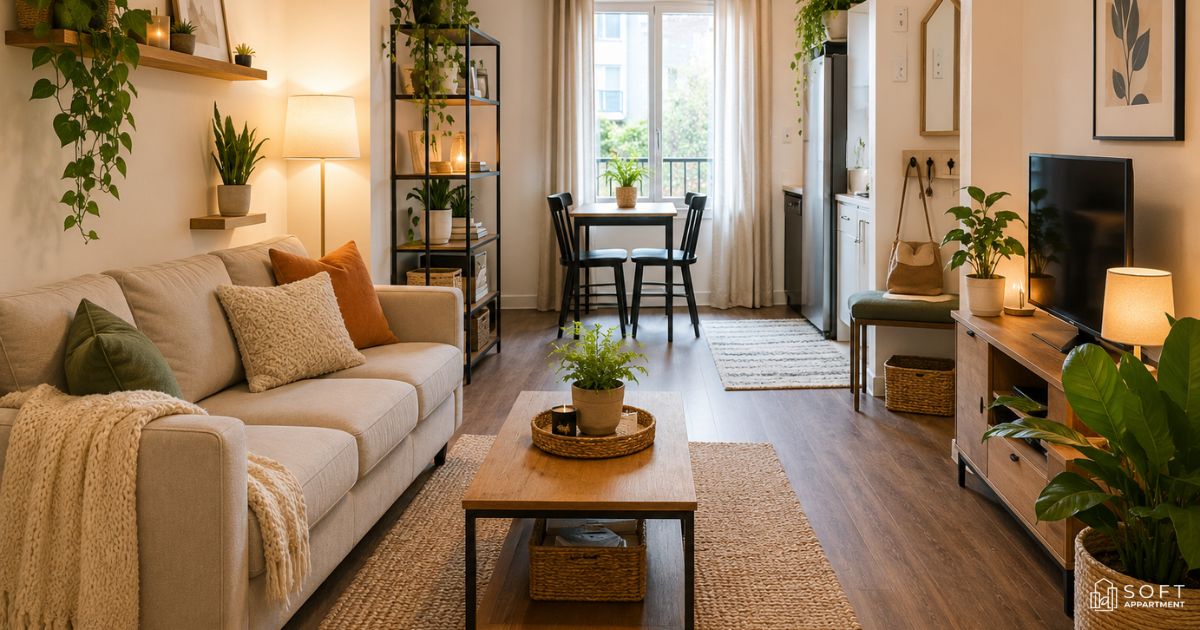
Living in a small apartment doesn’t mean you have to sacrifice style or comfort. With the right Small Apartment Decor Ideas, even a compact home can feel open, inviting, and well organized. The key is to make every corner work harder without making the space feel crowded. Smart furniture, thoughtful colors, and clever space-saving furniture can create more room for everyday life.
Simple small space decorating ideas can also transform blank walls, awkward corners, and limited storage areas. If you’re working with a tight budget, budget-friendly apartment decor makes it possible to create a polished look without overspending. If you’re moving in for the first time, pairing these ideas with a first apartment checklist can help you plan the whole space at once instead of buying piece by piece.
Start With a Budget-Friendly Small Apartment Decorating Plan
Before buying anything, take a close look at your apartment. Measure each room, wall, doorway, and window. Then decide how you want each area to work. This simple step can prevent expensive mistakes. A clear plan also makes apartment decorating on a budget much easier because you know what you actually need.
Start with essential furniture before buying decorative pieces. A comfortable sofa may matter more than a large collection of artwork. Good storage can also solve problems that decorative baskets cannot. If you’re wondering how to decorate a small apartment on a budget, begin with function. Decide where you sleep, eat, work, relax, and store everyday items.
| Decorating Priority | What to Consider | Budget Approach |
| Furniture | Size, comfort, and function | Buy fewer quality pieces |
| Storage | Hidden and unused areas | Use inexpensive organizers |
| Lighting | Natural and artificial light | Add lamps gradually |
| Decor | Color, texture, and personality | Shop secondhand |
| Walls | Style without permanent changes | Choose removable options |
A useful rule is simple: don’t decorate an empty space just because it looks empty. Empty space can actually make a small room feel calmer. Instead, give every major purchase a purpose. This approach keeps your apartment useful, attractive, and easier to maintain. For a full room-by-room breakdown, our guides on bedroom essentials and bathroom essentials can help you prioritize what to buy first.
Choose Multi-Functional Furniture With Hidden Storage
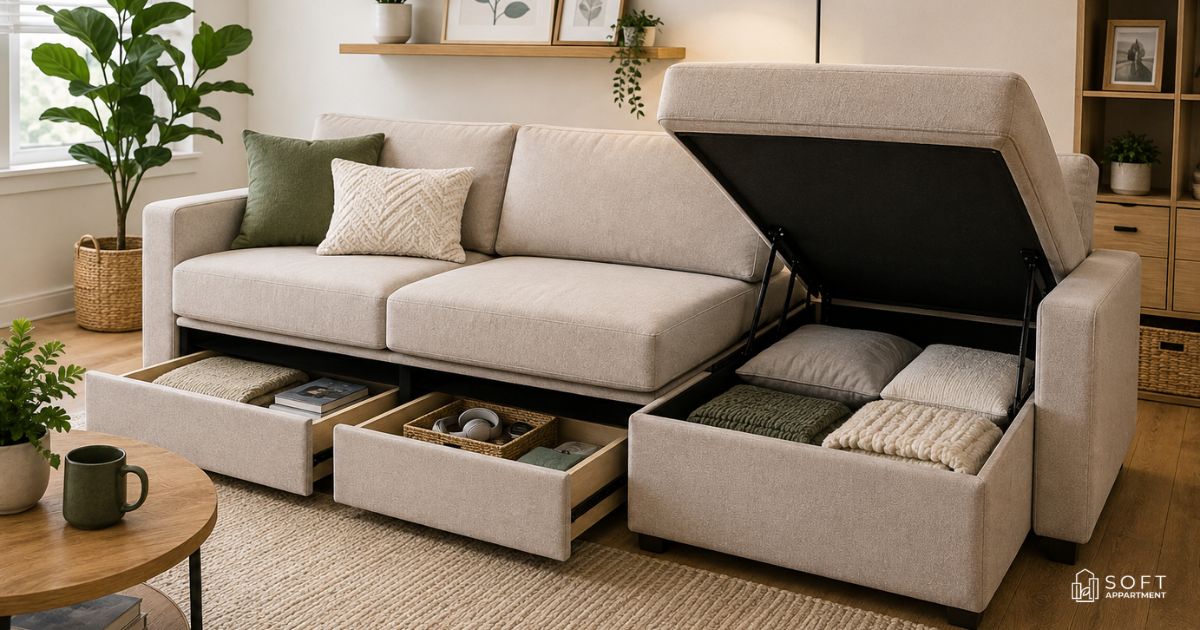
Furniture takes up valuable floor space in a small home. Therefore, each large piece should ideally serve more than one purpose. Multifunctional furniture can turn one small area into several useful spaces. A storage ottoman can work as seating, a footrest, and a place for blankets.
When choosing space-saving furniture, think beyond appearance. Look for beds with drawers, nesting tables, foldable desks, and extendable dining tables. A sofa bed can also help if you regularly host guests. These choices reduce the number of separate items you need. That leaves more open floor space for movement.
Choose Furniture That Performs More Than One Job
The best furniture solves two problems at once. A narrow console can become a work desk. A bench can provide seating while hiding shoes underneath. A small dining table can also serve as a workspace during the day. These choices are especially useful in studio apartments.
Size matters just as much as function. A huge sectional may look impressive in a showroom. In a compact living room, however, it can swallow the entire floor. Measure the available area first. Then check the furniture dimensions before ordering anything.
Look for Furniture With Built-In or Hidden Storage
Hidden storage is useful because it keeps everyday items out of sight. That can make a room feel calmer almost instantly. Storage beds can hold seasonal clothing. Ottomans can hide blankets. Coffee tables can provide space for books, games, or electronics.
Don’t underestimate simple furniture either. A tall cabinet can hold far more than a wide low unit. Choose pieces that use unused areas without blocking walkways. Good storage should make daily life easier rather than create another chore.If you’re outfitting a bedroom specifically, see our bedroom essentials checklist for more storage-smart picks.
Use Vertical Space With Shelves and Smart Storage
When floor space runs out, look upward. Walls often provide valuable storage that renters ignore. Vertical storage can hold books, plants, kitchen items, bathroom supplies, and decorative pieces. It also keeps important belongings within reach without covering the floor.
Wall-mounted shelving works particularly well in small rooms. Place shelves above a desk, sofa, bed, or kitchen counter where appropriate. Tall bookcases can also use height efficiently. If you’re wondering how to use vertical space in a small apartment, look at every unused wall before buying another floor cabinet.
Turn Empty Walls Into Useful Storage
A blank wall can become a practical storage zone. Floating shelves can display books and artwork. Narrow shelves can hold small plants or framed photos. Pegboards can organize office or craft supplies. Tall cabinets can use vertical space while keeping clutter hidden.
However, don’t cover every wall with storage. Too many shelves can make a room feel busy. Leave some empty areas between objects. This creates visual breathing room and helps decorative items stand out.
Use the Space Above and Around Furniture
Look at the spaces above your existing furniture. The wall above a desk can hold shelves. The area above a sofa can display artwork. Space above a toilet can hold bathroom storage. Even the back of a door can provide useful organization.Even the back of a door can provide useful organization — check our bathroom essentials list for compact storage ideas that fit these overlooked spots.
This strategy answers how to maximize space in a small apartment without adding more floor furniture. The goal isn’t to fill every available inch. Instead, use overlooked areas for things you genuinely need.
Make Small Rooms Look Bigger With Light Colors and Lighting
Color can change the way a room feels. A neutral color palette can create a bright and connected appearance. Soft white, warm beige, pale gray, and muted earth tones can work well. You don’t need to avoid dark colors completely. Use them as accents instead.
Lighting matters just as much. Natural light can make a compact room feel open during the day. At night, layered lighting creates depth and warmth. Combine ceiling lights with floor lamps, table lamps, or small accent lights. If you’re searching for how to make a small apartment look bigger, start with light and visual balance.
Start With a Light and Flexible Color Palette
A consistent color scheme helps rooms flow together. This matters when your living room, dining area, and kitchen share one space. Similar colors can make separate areas feel connected. You can still add personality through artwork, pillows, rugs, and small accent pieces.
Mirrors can also help reflect light. Place one near a window when possible. A large mirror can create more visual depth. The trick is to use reflection thoughtfully. Too many mirrors can feel distracting instead of spacious.
Layer Different Types of Lighting
Good lighting does more than brighten a room. It creates different moods and makes separate areas easier to use. A desk needs focused light. A sofa may benefit from a reading lamp. Dining areas can feel warmer with softer lighting.
Use lighting at different heights when possible. Floor lamps add height. Table lamps create warmth. Under-shelf lights can brighten darker corners. This combination gives a small apartment more depth without taking much floor space.
Create Stylish Walls With Affordable DIY Decor
Blank walls can make an apartment feel unfinished. Fortunately, you don’t need expensive artwork to fix that. DIY apartment decor can add character for very little money. Photos, printable artwork, thrifted frames, fabric, and removable wallpaper can all change the mood of a room.
For renters, flexibility matters. Renter-friendly decorating allows you to personalize your space without making permanent changes. Always check your lease before installing anything. Some landlords have specific rules about paint, nails, wallpaper, and wall fixtures.
Try Renter-Friendly Wall Treatments
Peel-and-stick wallpaper can create an accent wall without traditional wallpaper installation. Washi tape can create simple geometric patterns. Removable hooks can display lightweight artwork. These options can give a rental a more personal appearance.
If you’re asking how to decorate apartment walls without damage, choose removable products carefully. Follow the manufacturer’s instructions. Test adhesive products in an inconspicuous area when possible. A small amount of planning can protect both your walls and your security deposit.
Build an Affordable Gallery Wall
A gallery wall doesn’t need expensive frames or designer artwork. Mix family photos with inexpensive prints. Look for frames at thrift stores. You can also reuse frames from other rooms. Keeping a similar color or frame style can make different pieces look intentional.
Arrange the pieces on the floor before hanging them. This helps you test spacing and balance. A gallery wall should feel collected rather than crowded. Leave enough space around each piece so the artwork can breathe.
Use Rugs and Furniture to Create Functional Zones
Open layouts can feel confusing without clear zones. A rug can visually define the living room. A dining table can establish the eating area. A desk can mark a small work corner. These techniques help you create separate functions without building walls.
This approach works especially well for studio apartments. You can use furniture placement to guide movement. Keep walking paths open. Avoid placing large pieces directly in front of doors or narrow passages. A good layout should feel natural when you move through the room.
Define Living, Dining, and Work Areas
A rug can anchor a sofa and coffee table. A small dining table can sit near the kitchen. A narrow desk can occupy an unused corner. These zones make a single room feel more organized.
You don’t need a separate piece for every function. A dining table can become a workspace. A console can hold office equipment. A storage bench can separate areas while providing extra seating.For dining-area specifics, check our kitchen essentials guide.
Choose the Right Rug Size
Rug size can change the proportions of a room. A tiny rug floating in the center may make furniture look disconnected. A properly sized rug can visually tie a seating group together.
Choose a rug based on your furniture layout rather than the room alone. Consider how much floor you want visible. Light-colored rugs can also help maintain an airy appearance. However, choose materials that match your cleaning routine and lifestyle. Light-colored rugs help maintain an airy appearance, but be sure to choose materials that match your cleaning routine and lifestyle — our cleaning essentials checklist covers the supplies that make rug and floor care easier.
Add Personality With Plants, Textures, and Accent Decor
A functional apartment shouldn’t feel like a storage unit. Personality makes a home feel comfortable. Plants, pillows, throws, artwork, and woven textures can add warmth without requiring much space. These details are often more affordable than replacing major furniture.
Plants can also soften hard lines. Small plants work well on shelves. Hanging plants save floor space. A narrow plant stand can fill an unused corner. Choose plants based on the natural light available in your apartment.
Use Plants to Add Life Without Taking Much Floor Space
Plants can make a room feel fresh and lived-in. They also add color without overwhelming a neutral interior. If floor space is limited, use shelves or hanging planters. Window areas can work well for light-loving plants.
Don’t buy plants simply because they look attractive online. Consider your apartment’s sunlight and your routine. A low-maintenance plant may be a better choice for a busy renter.
Layer Textures Instead of Buying More Furniture
Texture creates visual interest without adding bulky objects. A soft throw can change the look of a sofa. Woven baskets can provide storage and warmth. Curtains can soften hard windows. Wood accents can bring a natural feel to modern spaces.
This is one of the easiest small space decorating ideas because texture takes little room. You can refresh an apartment simply by changing fabrics. That makes seasonal updates cheaper too.
Decorate Your Living and Dining Area on a Small Budget
The living and dining areas often receive the most attention. They are where you relax, eat, work, and welcome guests. Therefore, these spaces deserve thoughtful planning. Start with the furniture you use most often. Then add decorative layers slowly.
For renters wondering how to create a stylish apartment on a budget, secondhand shopping can be extremely useful. Look at thrift stores, resale shops, local marketplaces, and clearance sections. Inspect furniture carefully before purchasing. Check measurements too. A cheap item isn’t a bargain if it doesn’t fit.
Build a Comfortable Living Room Without Overspending
A comfortable sofa can become the foundation of your living room. You don’t need a matching furniture set. Mixing pieces can create a more relaxed and personal look. Add an affordable rug, a few pillows, and useful lighting.
Choose affordable furniture carefully. Look for sturdy construction and simple shapes. Neutral pieces can work with different decorating styles. That flexibility matters when you move or change your decor later.
Create a Functional Dining Area in Limited Space
A compact dining area can still feel welcoming. Round tables can work well in tight corners. Drop-leaf tables provide flexibility. Benches can seat more people while fitting neatly against a wall.
If you rarely host large groups, don’t buy a huge dining table. Choose the size that fits your everyday life. You can always use a folding table when extra guests arrive.
Try DIY and Upcycling Ideas to Save More Money
Decorating doesn’t always mean buying something new. Upcycling can turn ordinary household items into useful pieces. Old jars can become storage containers. Wooden crates can become shelves. Existing frames can hold new artwork. Small changes can create a surprisingly different result.
DIY projects can also help you develop a unique style. Instead of copying a showroom, you create pieces that reflect your personality. This makes affordable home decor feel less generic. Start with simple projects that require basic tools and little material.
Repurpose Everyday Items Into Decorative Pieces
Look around your home before visiting a store. A glass jar can organize bathroom items. A decorative tray can gather small objects on a coffee table. An old basket can store blankets. Even leftover fabric can become simple wall art.
The key is restraint. Not every old object needs a new purpose. Choose items that solve a real problem or improve the appearance of a room.
Refresh Old Furniture Instead of Replacing It
Sometimes furniture only needs a small update. New cabinet handles can change the look of a storage unit. A fresh coat of approved paint can refresh suitable furniture. New fabric can give an old chair another life.
Before starting a project, consider the total cost. Supplies, tools, and time all have value. If a DIY project costs almost as much as a new item, compare both options first.
Avoid Common Small Apartment Decorating Mistakes
Even good small apartment decor ideas can fail when the room becomes overcrowded. Too much furniture blocks movement. Too many decorations create visual noise. Oversized pieces can make a compact apartment feel even smaller.
Another common mistake involves buying items before measuring. Always check furniture dimensions. Measure doorways and stairways too. A beautiful sofa doesn’t help if it can’t reach your living room. Smart decorating is partly about creativity and partly about careful planning.
Don’t Fill Every Empty Corner
Empty space isn’t wasted space. It helps the room breathe. Leave clear areas around furniture where possible. This makes movement easier and creates a calmer visual effect.
Instead of filling every corner, choose one strong feature. It could be a plant, artwork, floor lamp, or accent chair. One intentional piece often looks better than several random objects.
Don’t Buy Furniture Before Measuring
Measurements should guide every major purchase. Check the item’s width, depth, and height. Then compare those numbers with your available space. Consider door swings, drawers, walking paths, and electrical outlets.
This simple habit can prevent costly returns. It also helps you understand what furniture is best for a small apartment. The best piece isn’t always the smallest. It is the one that fits the room and performs its job well.
Don’t Ignore Lighting and Storage
A beautiful apartment can still feel uncomfortable without good lighting and storage. Clutter quickly takes over when everyday objects have nowhere to go. Poor lighting can also make a room feel darker and smaller.
Think about storage during the decorating process. If you’re asking how to create storage in a small apartment, look at unused walls, furniture interiors, cabinet tops, and overlooked corners. Good storage should blend into the design.
Don’t Follow Trends at the Expense of Function
Trendy decor can look appealing online. Yet your apartment needs to work for your actual life. Don’t buy something simply because it is popular. Ask whether you will use it regularly.
Your home should support your routines. If you work from home, prioritize a useful workspace. If you cook often, protect kitchen storage. If you host friends, prioritize flexible seating. Style works best when it follows function.
Final Thoughts on Small Apartment Decor Ideas
Great Small Apartment Decor Ideas don’t require a huge budget or a designer’s eye. They require thoughtful choices. Use furniture that works harder. Use walls when floor space disappears. Improve lighting before buying more decorations. Keep colors connected and clutter under control.
Most importantly, decorate around your real lifestyle. Your apartment should support how you live every day. Start with one room and make a few meaningful changes. Over time, those small improvements can turn a cramped rental into a comfortable and stylish home.
Frequently Asked Questions About Small Apartment Decor
What are some tips for decorating a small apartment on a budget?
You can decorate a small apartment on a budget by choosing multifunctional furniture, using light colors, adding affordable lighting, shopping secondhand, and using DIY decor.
What are some small apartment decorating simple budget simple living room ideas?
Simple budget living room ideas include using a compact sofa, adding a small rug, choosing multifunctional furniture, using wall shelves, and decorating with affordable pillows, plants, and artwork.
What are some budget-friendly DIY wall decor ideas for small apartments?
Budget-friendly DIY wall decor ideas include creating a gallery wall with thrifted frames, using Washi tape for simple patterns, making fabric wall hangings, displaying personal photos, and installing removable shelves.
What are some creative ways to decorate a small apartment on a budget?
Creative ways to decorate a small apartment on a budget include repurposing old furniture, using vertical storage, adding mirrors, creating functional zones with rugs, shopping secondhand, and decorating with plants and textiles.
How can I decorate a corner in the living room on a small budget?
You can decorate an empty living room corner cheaply by adding a floor lamp, small plant, narrow shelf, accent chair, basket, or compact side table.
How do I decorate modern small apartments?
You can decorate a modern small apartment by using clean-lined furniture, a neutral color palette, simple lighting, functional storage, natural textures, and a few carefully chosen accents.