






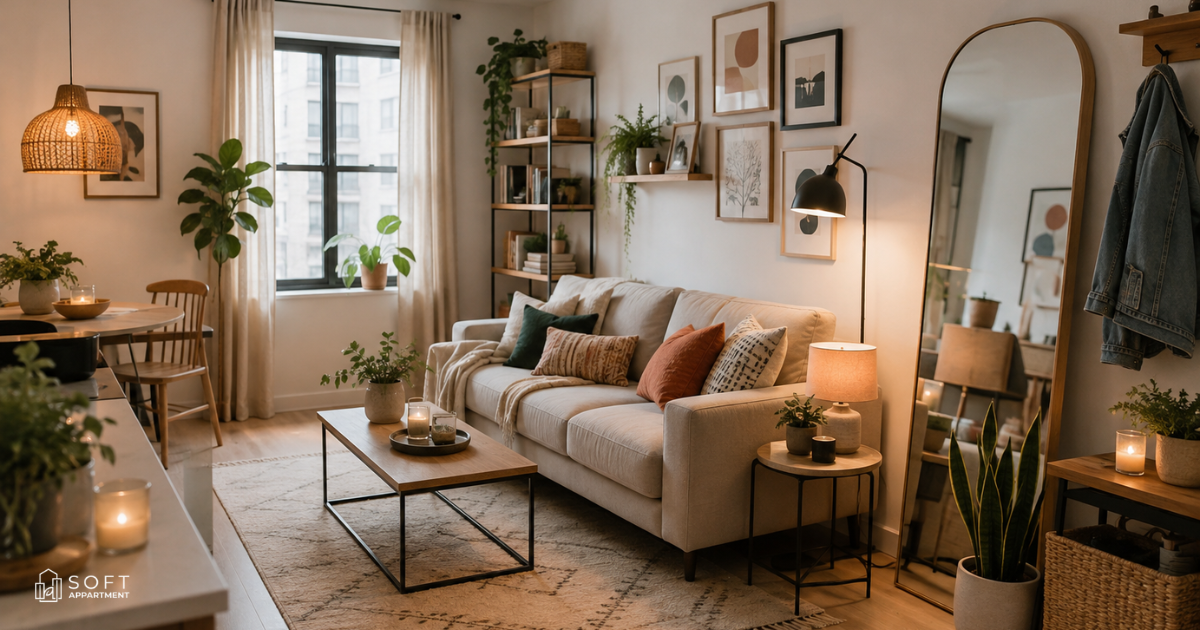
Decorating a rental can feel tricky when space is limited and permanent changes aren’t allowed. However, the right Apartment Decorating Tips can turn a plain rental into a comfortable and stylish home. Smart small apartment decorating starts with understanding your layout, choosing furniture that fits, and using every corner wisely.
You can also create warmth through color, lighting, mirrors, rugs, and personal accents. Even simple renter-friendly decor can make a noticeable difference without risking your security deposit. Whether you’re furnishing your first apartment or refreshing an older space, thoughtful apartment decor ideas can help you create a home that feels spacious, practical, and truly yours without spending a fortune.
Start With a Plan for Your Apartment
Great apartment decorating ideas begin with measurements rather than shopping bags. Measure walls, windows, doorways, and walking paths before buying anything. Sketch your layout on paper or use a simple room-planning app. This prevents expensive mistakes and helps your rental space work harder.
Next, decide what each area needs to accomplish. Mark natural light, awkward corners, and useful walls. Then choose a style direction. Your plan becomes the foundation for practical apartment decorating tips and prevents random purchases from taking over your home.If you’re setting up a rental for the first time, pairing this plan with a First Apartment Checklist makes sure nothing essential gets missed along the way.
| Planning Task | What to Check | Why It Matters |
| Room measurements | Walls, doors, and windows | Prevents furniture mistakes |
| Walking paths | Entryways and clearances | Keeps the room comfortable |
| Natural light | Windows and bright areas | Helps plan colors and lighting |
| Storage | Closets and unused corners | Prevents clutter |
| Budget | Essential and decorative items | Keeps spending under control |
Choose a Color Scheme and Focal Point
A thoughtful color scheme gives your apartment visual rhythm. Choose one main shade, one supporting tone, and one accent. Then repeat those colors through pillows, artwork, fabrics, and accessories. This approach makes apartment decor ideas feel connected rather than scattered.
Every room also needs a focal point. It could be artwork, a sofa, a beautiful rug, or an interesting view. In a bedroom, the headboard can anchor the room take a look at our Bedroom Essentials guide for ideas on building the rest of the space around that focal point.
| Color Element | Recommended Approach | Example |
| Main color | Use throughout larger areas | Warm white |
| Supporting color | Add through furniture and textiles | Beige or soft gray |
| Accent color | Use sparingly for interest | Terracotta or navy |
| Focal point | Choose one strong feature | Artwork or sofa |
Make Small Spaces Feel Bigger
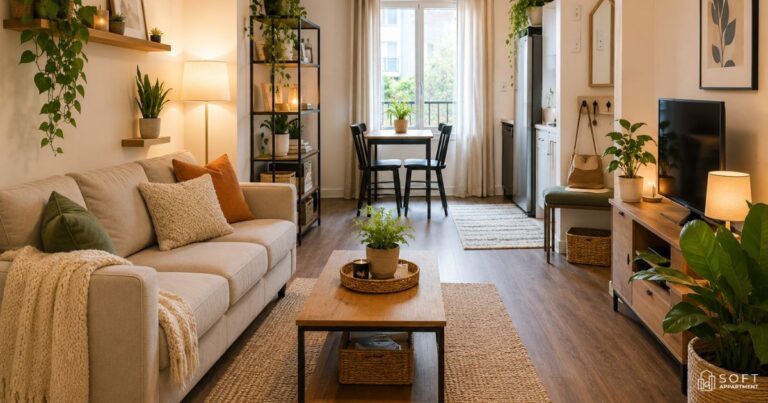
Smart small space decorating can make compact rooms appear surprisingly open. Keep walking paths clear and avoid furniture that overwhelms the room. Choose pieces with visible legs or open frames. These details create breathing room and make the floor feel more continuous.
Light also changes perception. Decorative mirrors can bounce daylight across darker areas. Tall curtains can emphasize ceiling height. Meanwhile, vertical artwork draws the eye upward. Together, these simple tricks can make a small apartment feel brighter, taller, and less cramped HGTV’s small-space decorating experts recommend the same light-and-scale approach.. For more budget-friendly tricks specifically for tight layouts, check out Small Apartment Decor Ideas.
Use Lighting to Transform Your Apartment
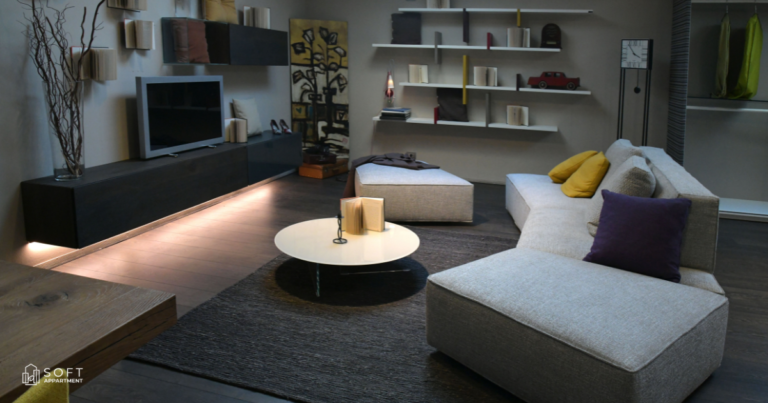
Good lighting can completely reshape apartment interior design. Instead of depending on one ceiling fixture, combine several light sources. Layered lighting creates depth and gives you control over different moods throughout the day.
Use floor lamps beside sofas or reading chairs. Place table lamps near beds and desks. Where suitable, renter-friendly wall sconces can add focused light without consuming floor space. Warm bulbs usually create a softer atmosphere, while brighter task lighting works better for desks and kitchen counters. For more layered-lighting inspiration, browse our Interior Design & Decor category.
Choose Furniture That Fits Your Space
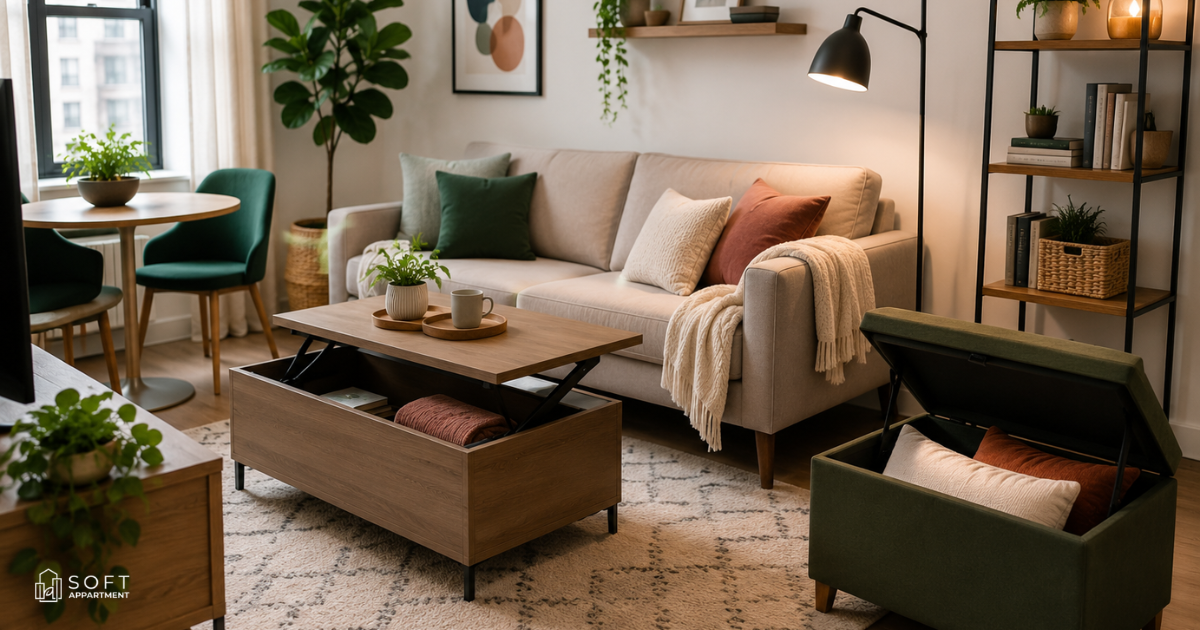
Furniture should serve your room instead of swallowing it. Measure every piece before buying it. Leave enough space around doors and major pathways. These simple apartment furniture ideas make daily movement easier and keep rooms visually calm.
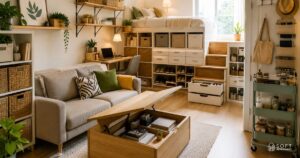
Look for small space furniture that performs more than one job. A storage ottoman can provide seating and hidden storage. An extendable table can serve two people today and several guests tomorrow. These choices create practical rental apartment decor without sacrificing comfort or personality. For a full room-by-room breakdown of what to look for, see Living Room Essentials.
| Furniture | Small-Space Benefit | Best Location |
| Storage ottoman | Seating and hidden storage | Living room |
| Nesting tables | Flexible surface space | Sofa area |
| Extendable table | Expands when needed | Dining area |
| Sleeper sofa | Seating and guest bed | Living room |
| Floating shelf | Storage without floor space | Wall |
Decorate Walls Without Losing Your Security Deposit
Blank walls can make a rental feel unfinished. Fortunately, renter-friendly decor offers plenty of temporary options. Lightweight artwork, removable hooks, and carefully chosen frames can add character without permanent changes. Always check your lease before installing anything substantial.
For dramatic impact, consider peel-and-stick wallpaper on an approved surface. A removable accent wall can introduce pattern without repainting the entire room. You can also create a gallery wall with photographs, prints, and small artwork for a collected look. For more wall-friendly personal touches, explore our Bedroom & Closet Styling category.
Add Layers With Rugs, Curtains, Mirrors, and Textiles
Rooms often feel cold when they lack texture. Start with area rugs to define seating or dining zones. Then add soft cushions, throws, and bedding. These layers bring warmth without requiring major renovations.
Well-chosen curtains can make windows appear taller and wider. Add decorative mirrors where they can reflect light or interesting views. The result feels richer without becoming cluttered. This simple approach works especially well for affordable renter-friendly decorating ideas the same layering principle applies well in smaller spaces like the ones covered in our Bathroom Essentials checklist.
Maximize Storage With Smart, Stylish Solutions
Storage becomes essential when every square foot matters. Use shelves, baskets, storage benches, and under-bed containers to control clutter. Vertical storage is particularly useful because it uses wall height instead of valuable floor area.
Think beyond traditional cabinets. A narrow shelf can occupy an unused corner. Baskets can hide everyday items while keeping them accessible. This form of space-saving decor makes organization part of the room’s design rather than something you need to hide. Once your storage is set up, pair it with our Cleaning Essentials guide to keep those areas dust-free.
| Storage Solution | Space Saved | Ideal For |
| Under-bed storage | Floor area | Bedrooms |
| Floating shelves | Floor space | Living rooms |
| Over-door organizers | Unused door space | Bathrooms |
| Storage bench | Seating plus storage | Entryways |
| Tall shelving | Vertical space | Any small room |
Create Flexible and Multi-Purpose Living Areas
Small rentals often require rooms to perform several jobs. A dining table might become a workspace. A sofa might provide guest sleeping space. Multi-purpose furniture makes these transitions easier without adding unnecessary pieces.
Room dividers can also create separate zones. Try an open bookcase, curtain, rug, or strategically placed sofa. These methods provide structure without construction. They work particularly well in studios where one room must function as a bedroom, office, dining area, and living room our Kitchen & Dining Design category has more ideas for multi-use zones.
Add Personality With Color, Art, and Decorative Accents
Your home shouldn’t look like a showroom. Add objects that reflect your interests, memories, and everyday life. Plants, books, photographs, ceramics, and artwork can make modern apartment decor feel personal instead of generic.
Start slowly rather than filling every surface. A few meaningful pieces usually create more character than dozens of random accessories. Good budget apartment decor can come from secondhand finds, inherited pieces, and simple DIY projects. Let your apartment evolve naturally as you discover what suits you.
Final Thoughts on Apartment Decorating Ideas
The best apartment decorating ideas balance beauty with everyday function. Start with measurements, choose a clear color direction, improve lighting, and select furniture carefully. Then add storage, texture, artwork, and personal details gradually.
You don’t need a huge budget or permanent renovations. With smart planning and creative choices, even a modest rental can feel polished and inviting. Your apartment doesn’t need to look bigger than it is. It simply needs to work beautifully for you. Once it’s styled the way you want, don’t forget the practical side too our Apartment Safety Checklist and Moving Checklist can help you keep it running smoothly.
FAQs About Apartment Decorating Tips
What is the 3-5-7 rule in decorating?
The 3-5-7 rule suggests grouping accessories in odd-numbered clusters. It creates visual balance while keeping displays interesting and natural.
What is the 70/30 rule in decorating?
The 70/30 rule means using about 70% of a room for the main style and 30% for contrasting elements. This creates a balanced, layered look.
What is the 80/20 rule in decorating?
The 80/20 rule uses roughly 80% neutral or consistent elements and 20% bold accents. It adds personality without making the room feel chaotic.
What color makes a house look expensive?
Warm neutrals such as soft beige, creamy white, taupe, and greige can create an elegant, expensive-looking atmosphere when paired with quality textures.
What décor is trending in 2026?
In 2026, warm minimalism, natural materials, curved furniture, earthy colors, vintage accents, and layered lighting are popular choices for creating inviting interiors.